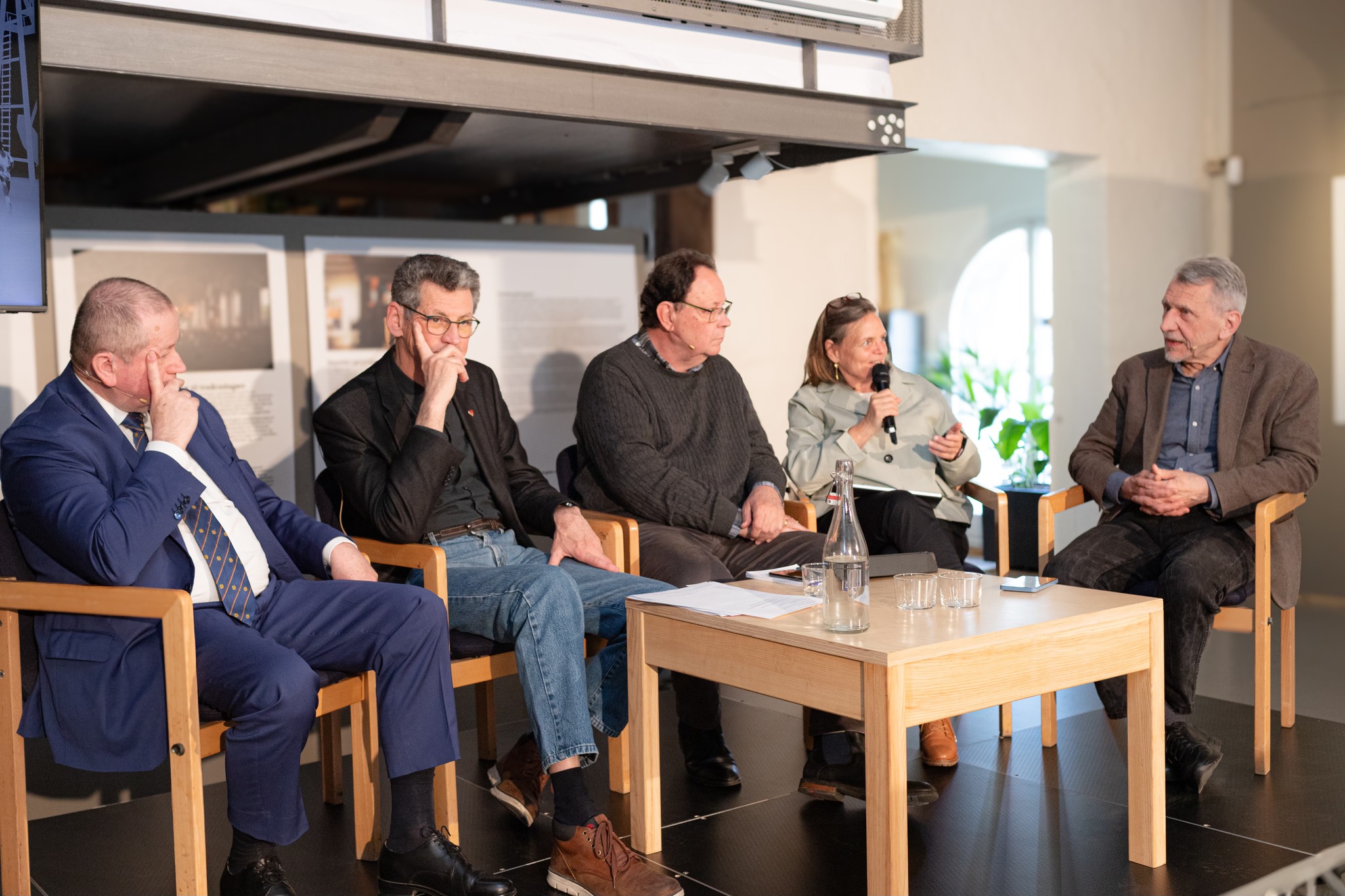
On April 27, Mykola Riabchuk, a principal research fellow in the Department of Political Culture and Ideology, took part in a two-day Polish-Ukrainian forum titled “Paths to Ukraine’s Recovery: Security and Defense Dimensions”, where he participated in a panel discussion with Łukasz Adamski, a renowned expert on Polish-Ukrainian relations and deputy director of the J. Mieroszewski Center. The forum organizers framed the topic of the discussion as “Beyond Social Media: Preliminary Findings from Public Opinion Surveys in Poland and Ukraine after 2022.” Both speakers agreed that over the past four years, mutual attitudes between Poles and Ukrainians have noticeably deteriorated, with this deterioration being particularly notable on the Polish side.
Despite the truly significant role played by Russian online propaganda in this deterioration, and despite a certain disappointment felt by Poles and Ukrainians toward one another following the euphoria of spring 2022, the main reason for the rapid deterioration on the Polish side (whereas on the Ukrainian side it is minimal) lies, according to the Ukrainian scholar, in deep-seated Polish resentments, postcolonial traumas, and a complex of the eternal innocent victim, to whom everyone is guilty and responsible, while she herself owes nothing to anyone. This is precisely why Russian propaganda proves so effective here—far more effective than anti-Polish propaganda in Ukraine—because it falls on fertile psychological ground. Both Poles and Ukrainians have their own prejudices and stereotypes, but these can only be overcome through honest dialogue—through awareness and acknowledgment, rather than one side’s unconditional and unconstrained condemnation of the other.