THE ELEVENTH SEMINAR OF THE “STATE SYSTEM IN ACTION” SERIES TOOK PLACE AT THE UNIVERSITY OF WARSAW

On May 7, 2026, the University of Warsaw (Republic of Poland) hosted another academic seminar within the framework of the “State System in Action” project, with the participation of the Deputy Director for Research, Professor Halyna Zelenko, as well as researchers from the Department of Political Institutions and Processes: Doctor of Political Sciences Tetiana Liashenko and Candidates of Political Sciences Nataliia Kononenko and Rostyslav Balaban.
The topic of discussion focused on anti-corruption mechanisms, the transparency of anti-corruption bodies, and access to public information. The Ukrainian presentation, entitled “The Evolution of the Institutional Architecture of Ukraine’s Anti-Corruption Policy: Development, Effectiveness, and Evaluation,” was delivered by Yuliia Kobets from Vasyl Stefanyk Precarpathian National University. The author noted that anti-corruption policy in Ukraine has evolved as a long-term process shaped by a combination of internal political transformations. Despite the institutional reforms introduced after 2014, corruption continues to affect public administration and the perception of Ukraine as a partner in reconstruction and European integration. The situation further deteriorated during the constitutional crisis of 2020, linked to the Constitutional Court’s decision restricting the powers of the National Agency on Corruption Prevention (NACP) and effectively abolishing electronic asset declarations. According to the speaker, by 2025 Ukraine had achieved noticeable progress in strengthening institutional capacity and improving transparency; however, problems of political interference, incomplete judicial reform, and growing war-related risks still persist.
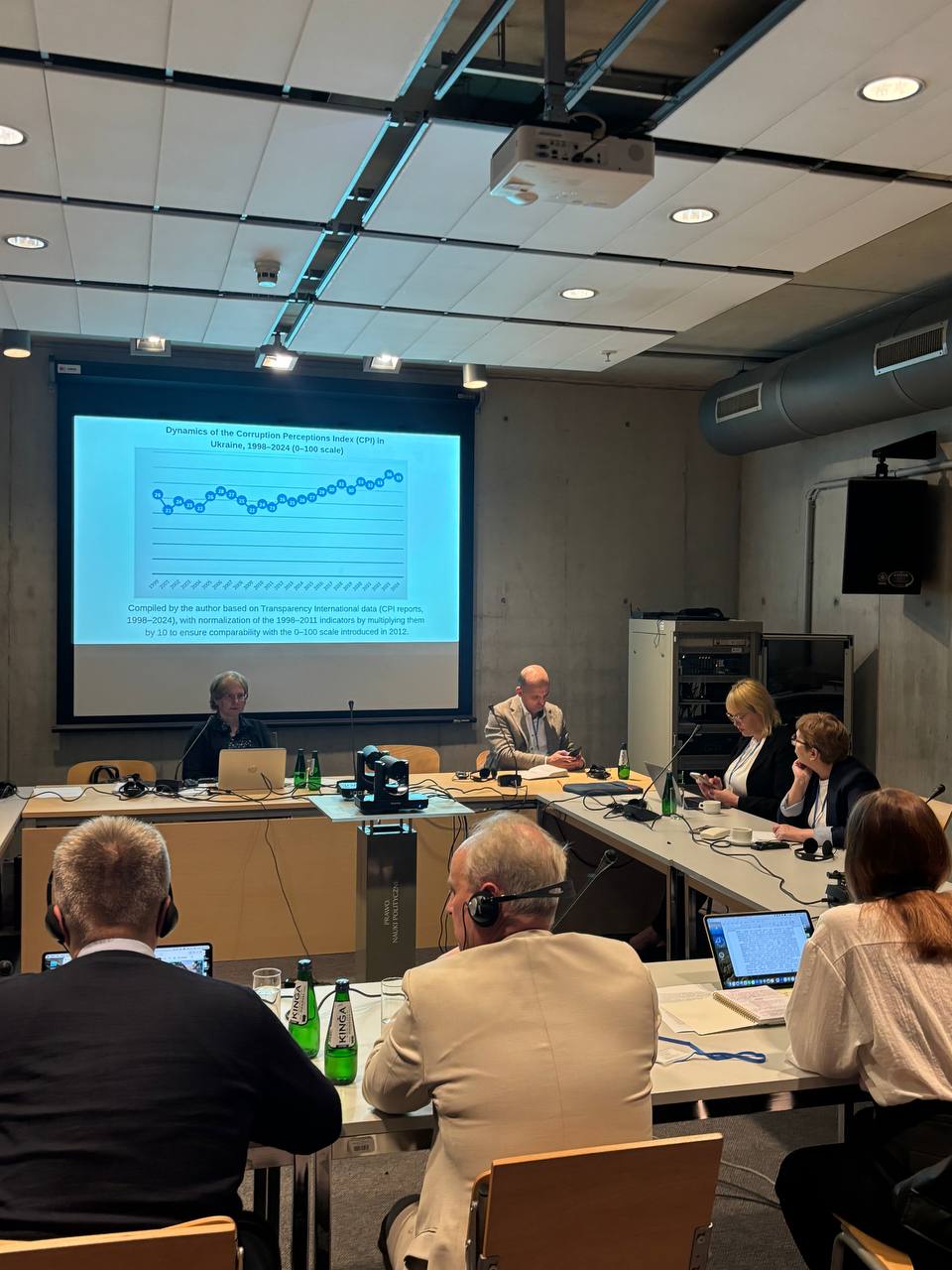
From the Polish side, Professor Mariusz Jabłoński of the University of Wrocław presented a report entitled “Openness of Information on the Functioning of Public Authorities and the Activities of Public Officials as a Guarantee of a Democratic State Governed by the Rule of Law.” The presentation focused on the right of access to public information in Poland as one of the key guarantees of a democratic state governed by the rule of law. The speaker emphasized that the system of transparency guarantees in Polish law is comprehensive and includes both the general right of access to information and specialized mechanisms (transparency of public finances, public procurement, competitive procedures, and asset declarations, etc.), which complement one another. According to Professor Jabłoński, the most effective instrument of civic oversight over public authorities remains the Act on Access to Public Information of September 6, 2001, which has fundamental importance. At the same time, administrative courts play a particularly significant role in the development of the right to information by protecting the principle of maximum openness and limiting the possibility of unjustified refusals to provide information. The author stressed that transparency in the activities of public authorities and persons performing public functions is a key element in preventing corruption, increasing citizens’ trust in the state, and strengthening the principles of a democratic state governed by the rule of law.
Following the presentations, participants engaged in a discussion on ways to combat corruption risks, the role of courts—especially administrative courts—in developing the right to information, and the transparency of asset declarations in both Ukraine and Poland.