
ROUND TABLE DEDICATED TO THE DAY OF UNITY OF UKRAINE

On January 22, 2026, a round table dedicated to the Day of Unity of Ukraine “National Communities of Ukraine – Historical Events and Modernity in a National Context” was held at the I. F. Kuras Institute of Political and Ethno-National Studies of the NAS of Ukraine.
The event was attended by the Chairman of the Public Union “Council of National Communities of Ukraine,” Honored Worker of Culture of Ukraine Ashot Avanesyan, Members of Parliament of Ukraine Maksym Tkachenko and Nelli Yakovleva, Representative of the Ukrainian Parliament Commissioner for Human Rights Oleksandr Osipov, Deputy Minister of Youth and Sports of Ukraine Ulyana Tokareva, Project Coordinator of the Council of Europe Office in Ukraine Nataliia Oliinyk, Director General of the Directorate of School Education of the Ministry of Education and Science of Ukraine Inna Kilderova, and Attaché of the Department for Global Ukrainian Community and Humanitarian Cooperation of the Ministry of Foreign Affairs of Ukraine Viktor Cholovskyi.
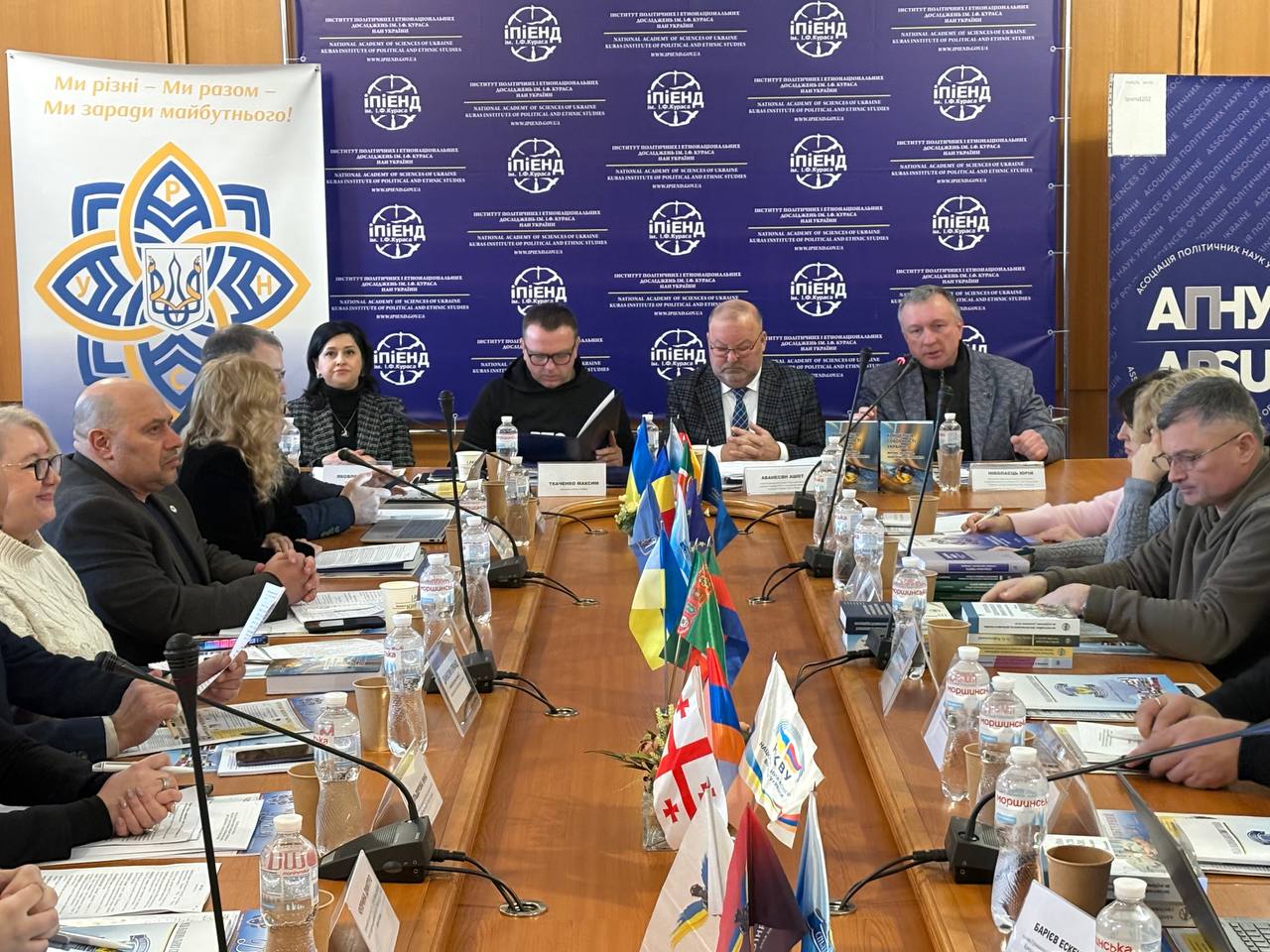
The round table was opened by Yurii Nikolaiets, Deputy Director of the Institute of Political and Ethnonational Studies, Doctor of Historical Sciences, and Professor. The participants noted that under the conditions of the modern Russian-Ukrainian war, civic identity is of paramount importance. The cohesion of citizens in organizing resistance to the aggressor prevented the enemy from realizing its plans and liquidating Ukrainian statehood.
During the round table, a presentation was held for the monograph “The Concept of Sobornist (Unity): Origins, Evolution, Political Relevance,” authored by staff members of the I.F. Kuras Institute of Political and Ethnonational Studies. Presenting this scholarly work, Tetiana Bevz — Chief Researcher of the Institute, Doctor of Historical Sciences, and Professor — noted that on the Day of Unity of Ukraine, revisiting the idea of sobornist acquires not only symbolic but also fundamental scientific and methodological significance. Within political science, sobornist should be viewed as a multidimensional normative category that combines territorial integrity, identity, political loyalty, and the responsibility of citizens for a shared political space. It serves simultaneously as a way of conceptualizing state unity and as a criterion for its functional capacity under conditions of external coercion and internal tension.
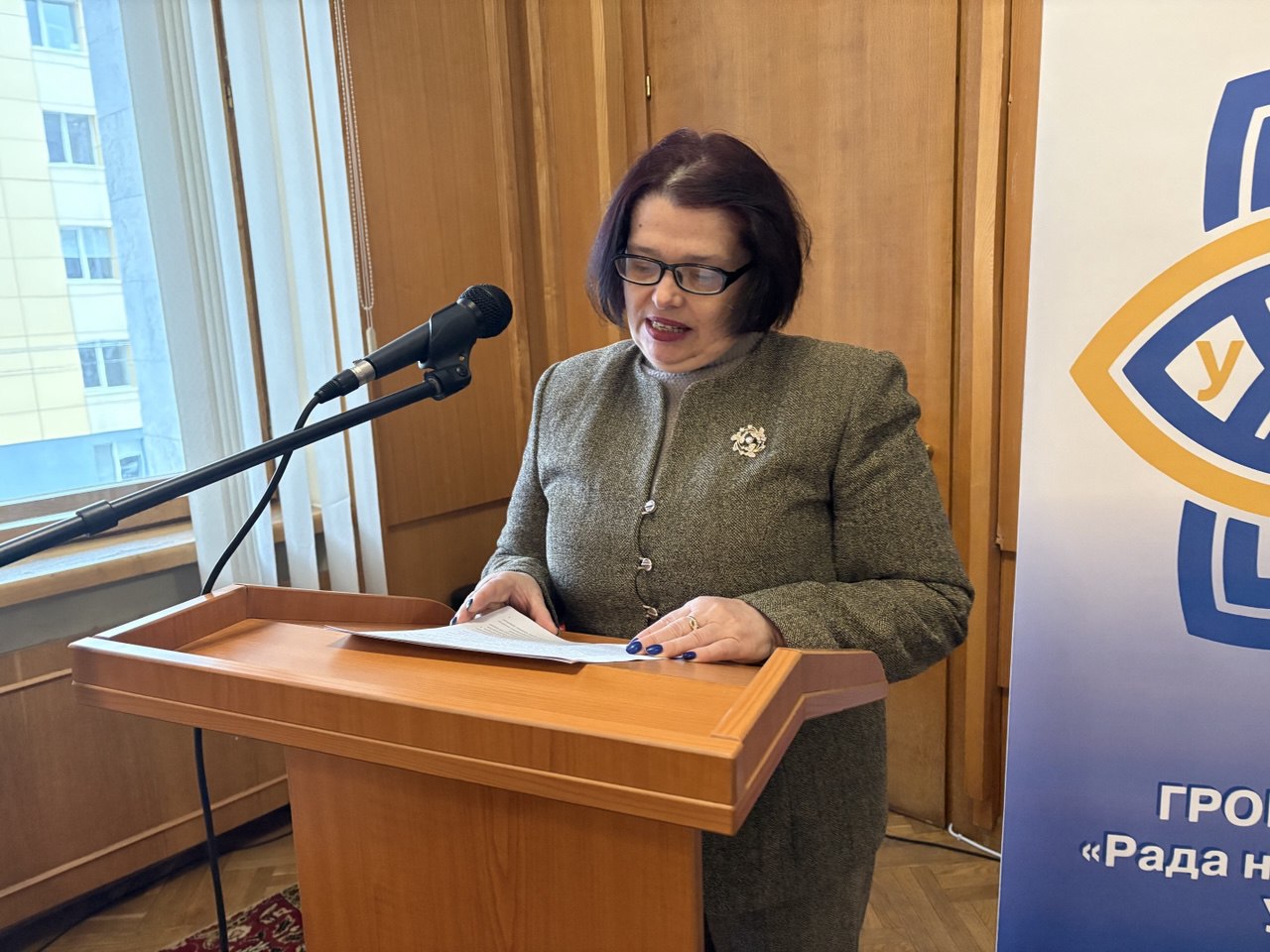
Sobornist is realized as a daily socio-political practice — through horizontal ties of solidarity, mutual aid, and citizen participation in defending the state and supporting its institutions. In this sense, sobornist emerges as a dynamic process of reproducing the political community rather than a once-and-for-all fixed state. It stands not only as a category of historical memory or an element of national myth but as a key analytical tool for studying state resilience, the logic of political consolidation, and the forms of survival of a national community during a prolonged war.
The participants of the event expressed their views on the importance of the unity of Ukrainian citizens in organizing resistance to the enemy invasion and focusing efforts on restoring the territorial integrity of our state.