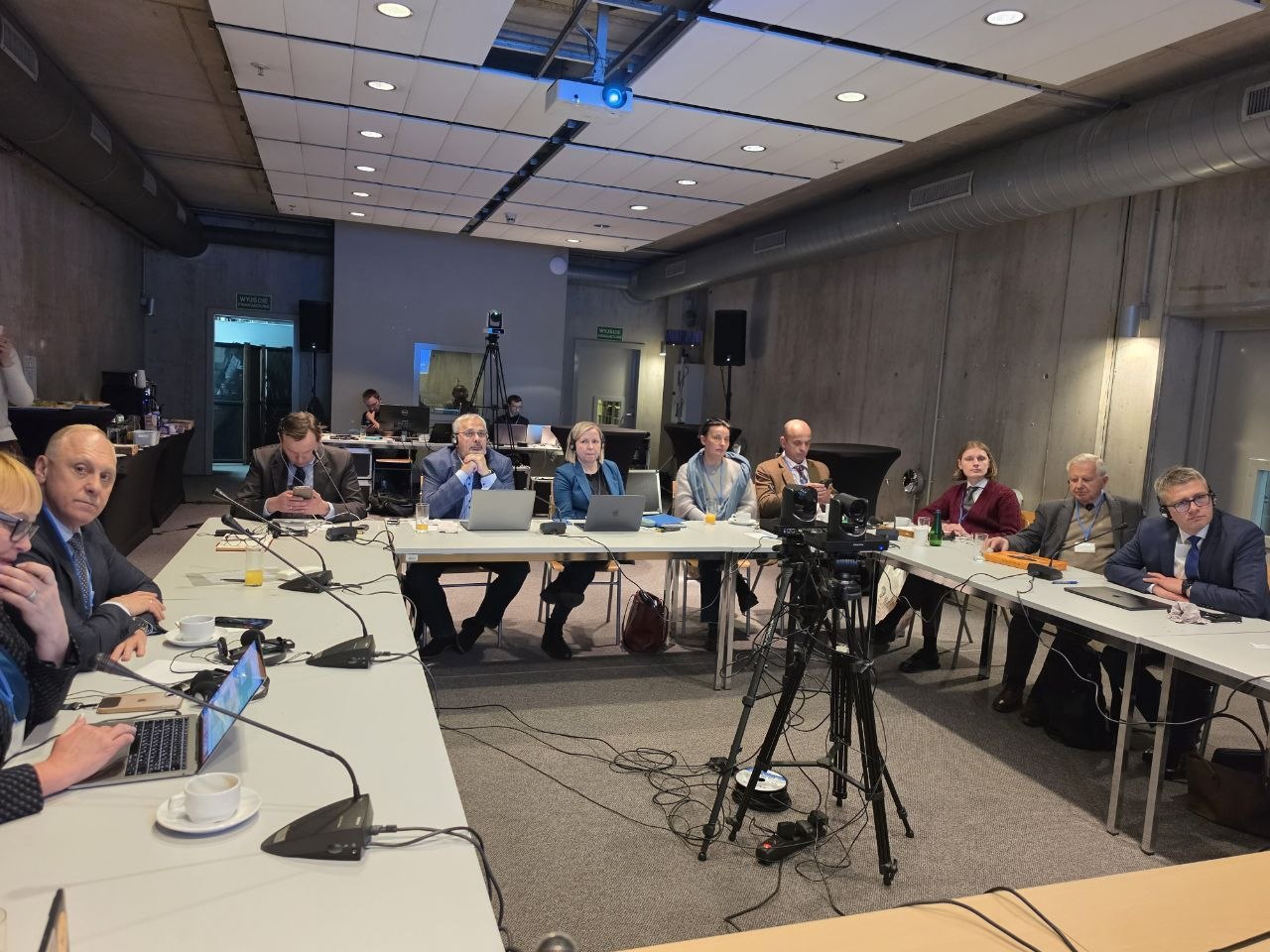
THE TENTH SEMINAR OF THE PROJECT “STATE STRUCTURE IN ACTION” HELD AT THE UNIVERSITY OF WARSAW

On April 9, 2026, the tenth academic seminar was held, devoted to the issue of the resilience of the human rights protection system and the functioning of civil society in Poland and Ukraine. The event took place within the framework of the project “State System in Action,” funded by the Ministry of Education and Science of the Republic of Poland.
During the seminar, three academic presentations were delivered.
Resilience of the Human Rights Protection System in Poland
Prof. Monika Florczak-Wątor (Jagiellonian University) argued that the system of human rights protection in Poland has not collapsed but has undergone a process of transformation. She referred to theoretical approaches to constitutional resilience, particularly the concept developed by Christoph Grabenwarter, who defines resilience as the ability of a constitution and constitutional institutions to withstand and respond to crises and threats to democracy, the rule of law, and judicial independence. The position of András Jakab was also mentioned, according to whom constitutional resilience means the system’s capacity to resist attempts to undermine its core elements and depends not only on legal design but also on the political and social context.
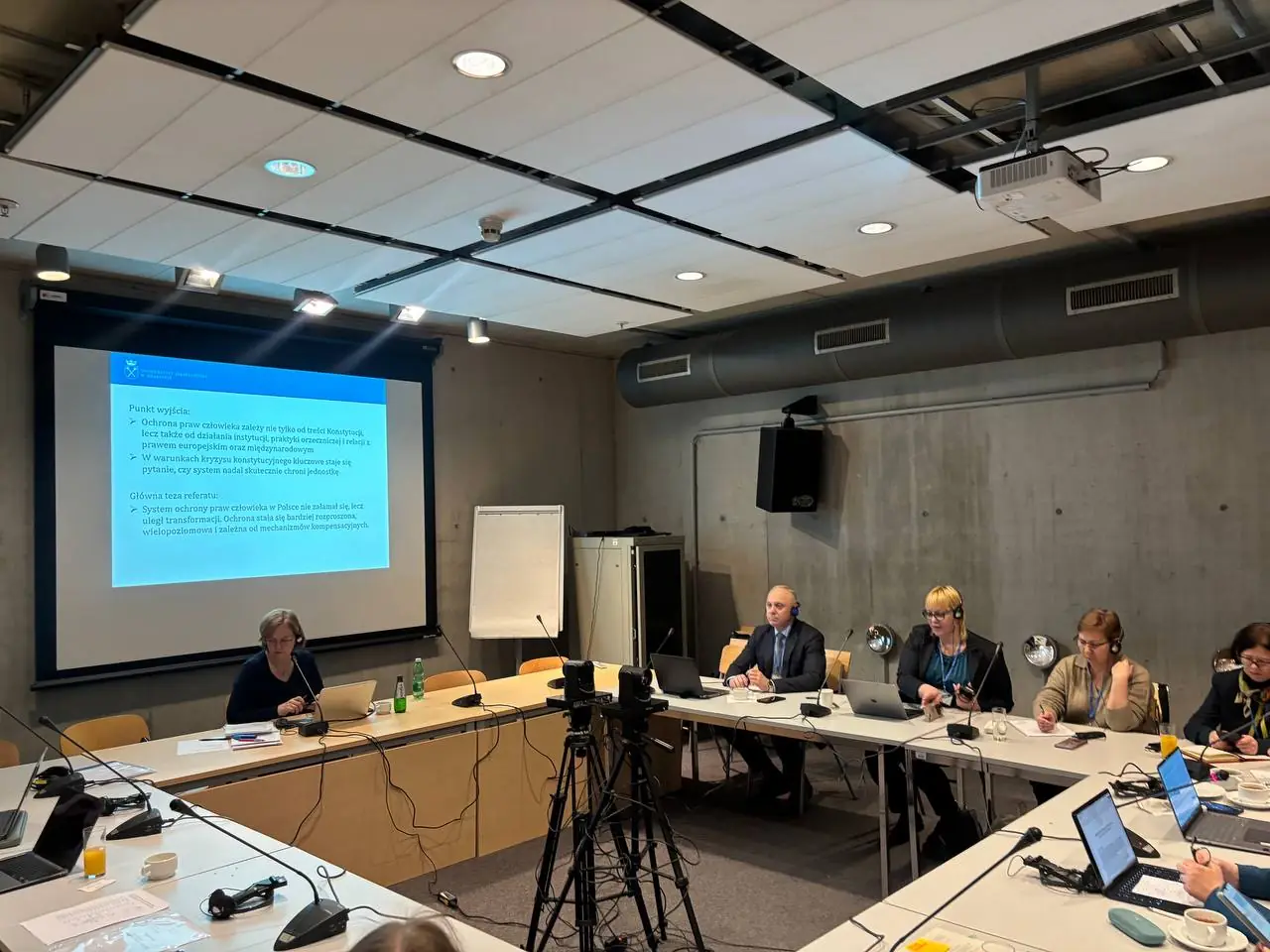
In the subsequent part of her presentation, the speaker analyzed the consequences of the crisis of the Constitutional Tribunal, which led to the shifting of the main burden of human rights protection to ordinary courts and the Supreme Court. As a result, the system currently functions in a less coherent and less predictable manner than in the classical constitutional model. It was emphasized that although compensatory mechanisms allow for maintaining a certain level of protection, their long-term use cannot be considered a sufficient solution.
During the discussion, particular attention was paid to the scale of the constitutional crisis and its impact on the functioning of state institutions. It was stressed that even a crisis affecting a single key institution may have systemic consequences, and that the long-term effectiveness of the system requires the restoration of fundamental constitutional guarantees.
Civil Society in Poland
The second presentation, delivered by Ryszard Balicki (Poznań University), focused on the development and functioning of civil society in Poland. The speaker emphasized that its development took place under specific historical conditions, different from those of Western European countries. A special role was played by the “Solidarity” movement, which united millions of citizens in the 1980s.
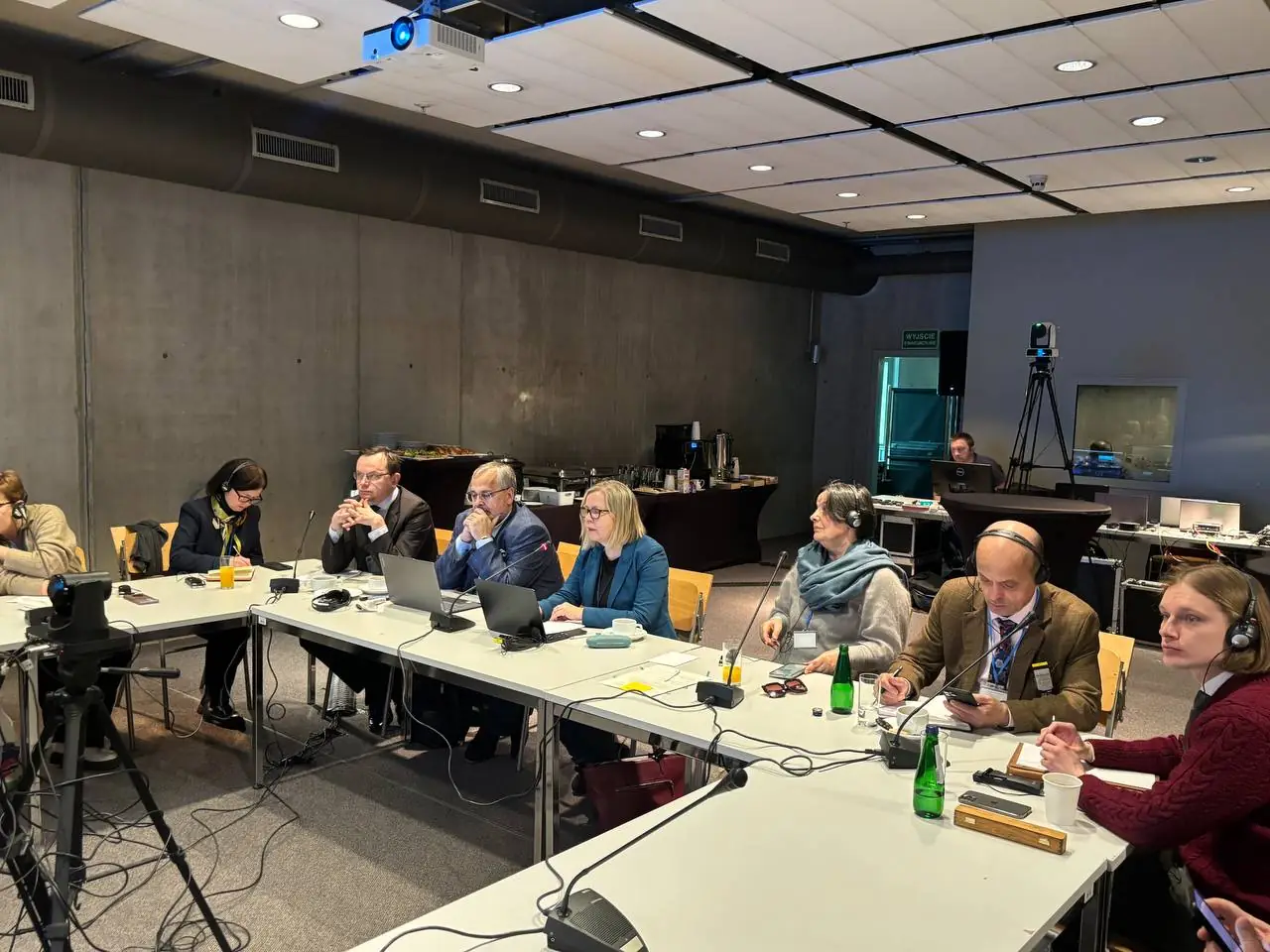
Civil society was presented as a sphere of activity between the individual and the state, encompassing various forms of self-organization. The presentation also addressed the legal foundations of its functioning. Although the Constitution of Poland does not explicitly use the term “civil society,” its elements are present, particularly in the principle of subsidiarity. Important roles are also played by the law on access to public information and the regulation of local self-government. It was emphasized that civil society organizations can act as partners of the state, while also performing a monitoring and critical function. Problems arise when the authorities equate themselves with the state and perceive criticism as disloyalty.
The discussion addressed issues of organizational funding, transparency, and levels of public trust. The importance of mechanisms such as the allocation of 1.5% of income tax to public organizations was highlighted. Questions of volunteering and the degree of institutionalization of civil society in Poland and Ukraine were also discussed.
Civil Society, Media, and Social Partners in Ukraine under Wartime Conditions
The third presentation was delivered by Senior Research Fellow Tetiana Liashenko from our Institute, focusing on the functioning of civil society in Ukraine during wartime. She highlighted the high level of trust in volunteers, which has persisted since 2014 and exceeds trust in charitable organizations. Volunteering was identified as a key element of civil society functioning during the war.
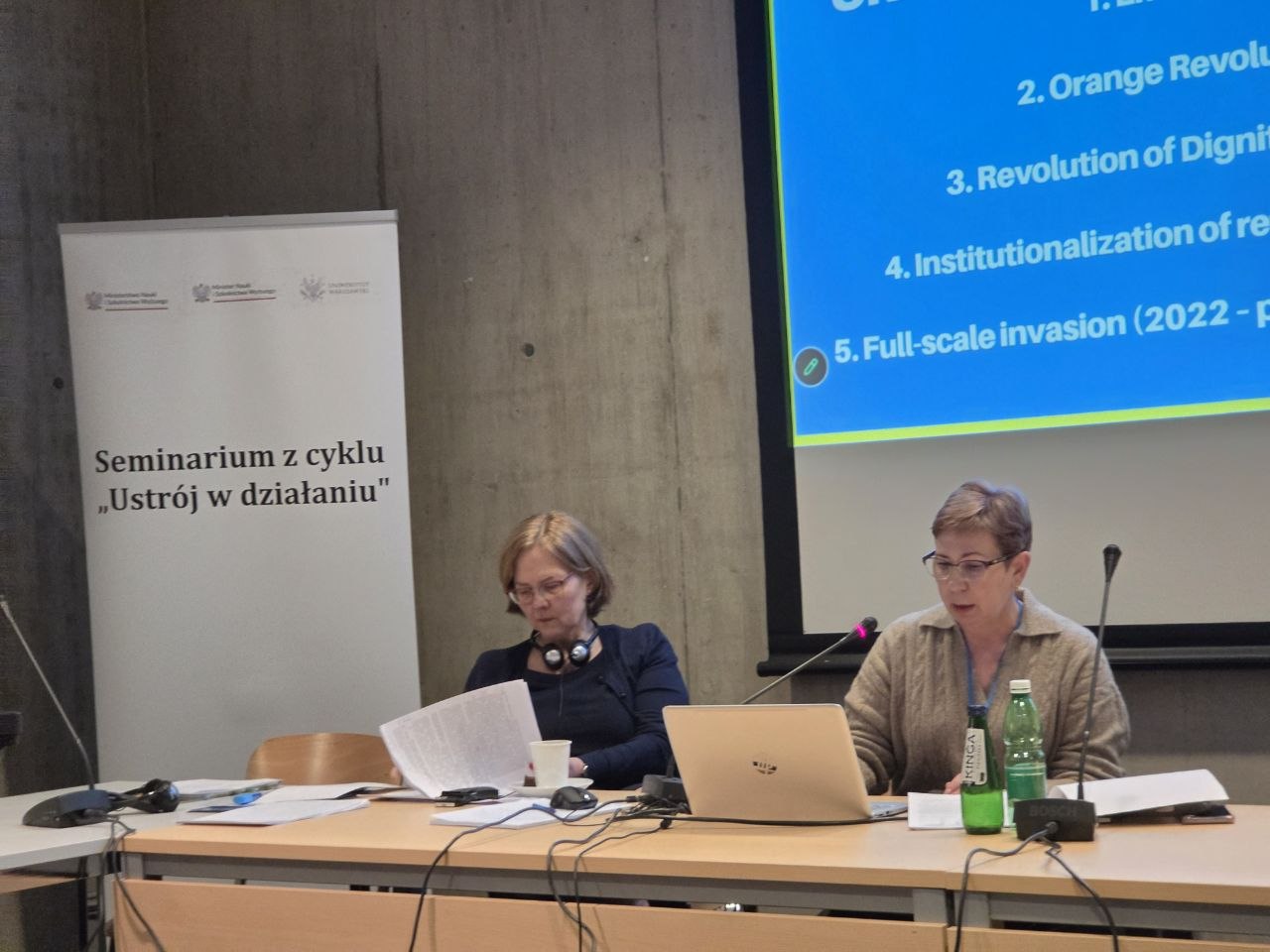
The role of the media was also emphasized, as it performs both monitoring and mobilizing functions, influencing the formation of public opinion. At the same time, limitations on media pluralism under martial law were noted, along with the dominance of centralized information broadcasting, particularly the “United News” telethon.
The discussion explored the prospects for the development of civil society after the war, including the risk of activist fatigue. At the same time, Ukrainian experts expressed the view that the volunteer movement will remain an important component of public life. Issues related to the limits of media freedom and levels of trust in different information sources were also raised.
From the Kuras Institute of Political and Ethnic Studies of the National Academy of Sciences of Ukraine, the seminar was attended by Deputy Director for Research, Professor Halyna Zelenko, as well as researchers from the Department of Political Institutions and Processes: Candidates of Political Sciences Nataliia Kononenko, Associate Professor Svitlana Sytnyk, Rostyslav Balaban, Svitlana Brekharia, and Ihor Symysenko.
The seminar confirmed the importance of joint analysis of institutional mechanisms for human rights protection and civic engagement for the effective functioning of both states. A shared conclusion was that the resilience of political systems depends not only on formal legal solutions but also on social, cultural, and institutional factors. At the same time, prolonged functioning under crisis conditions cannot substitute for stable and properly functioning institutions of the rule-of-law state.