
INTERDISCIPLINARY SCIENTIFIC AND PRACTICAL SEMINAR “HISTORY IN THE POLITICAL-PSYCHOLOGICAL DIMENSION: PERSONALITY, CULTURE, NATION”

On 15 January 2026, the I. F. Kuras Institute of Political and Ethno-National Studies of the National Academy of Sciences of Ukraine hosted an interdisciplinary scientific and practical seminar entitled “History in the Political-Psychological Dimension: Personality, Culture, Nation.”
The event was co-organized by the I. F. Kuras Institute of Political and Ethno-National Studies of the NAS of Ukraine and the Institute of Social and Political Psychology of the National Academy of Educational Sciences of Ukraine.
Welcoming remarks were delivered by Mykola Sliusarevskyi, Corresponding Member of the NAES of Ukraine and Director of the Institute of Social and Political Psychology of the NAES of Ukraine, and Yurii Nikolaets, Deputy Director of the I. F. Kuras Institute of Political and Ethno-National Studies of the NAS of Ukraine.
Presentations were given by Pavlo Hornostai, Doctor of Psychological Sciences, Professor, Chief Research Fellow at the Institute of Social and Political Psychology of the NAES of Ukraine, as well as by Yurii Nikolaets, Deputy Director of the I. F. Kuras Institute of Political and Ethno-National Studies of the NAS of Ukraine, Doctor of Historical Sciences, Professor.
Participants emphasized the importance of analyzing the impact of collective memory, identity, trauma, and historical narratives on the formation of political processes, culture, and the nation. Special attention was paid to the interaction of psychological mechanisms—particularly resentment, heroization, and demonization—with historical events and political ideologies, as well as to their role in shaping political decisions and societal orientations.
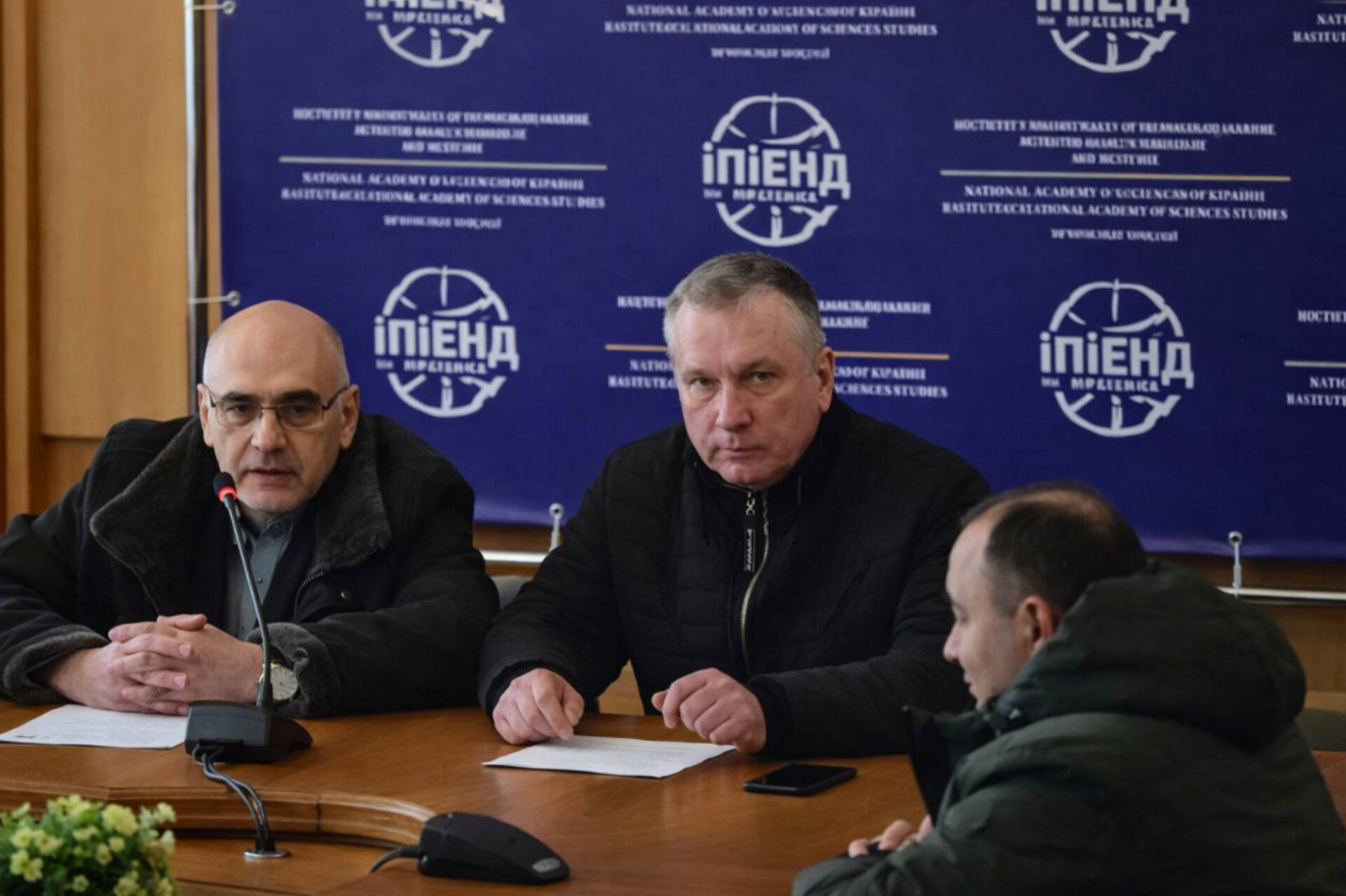
In the context of the ongoing Russian-Ukrainian war, the seminar highlighted the accelerated transformation of perceptions of the past, present, and future, as well as the growing importance of shared (often traumatic) historical experience as a foundation of national identity. Issues related to the use of historical narratives by political actors for societal mobilization and for constructing images of “friends” and “enemies” were discussed.
Particular attention was devoted to changes in Ukrainian public consciousness as a result of the full-scale military invasion by the Russian Federation. It was noted that the war has fostered an unprecedented level of social solidarity, the growth of volunteer and civic movements, the strengthening of horizontal social ties, and a deeper identification of citizens with the values of freedom, dignity, and justice.
At the same time, participants drew attention to problems of institutional incapacity of the state to fully meet societal demands for the establishment of basic values, particularly in the areas of integrity, the rule of law, and anti-corruption policy.
It was emphasized that under conditions of war, Ukrainian identity has become a crucial factor in the resilience of the state and its subjectivity in the international arena. The growing awareness of belonging to the Ukrainian nation as an inclusive civic community, regardless of ethnic origin, was highlighted.
The participants also noted that the war has led Ukrainians to reconsider their own history, revise established myths and symbols, and, in particular, to the final deconstruction of the imperial myth of “one people,” which Russia had long used as an instrument of political and cultural domination.
The seminar demonstrated the relevance of an interdisciplinary approach to analyzing historical, psychological, and political factors of contemporary transformations in Ukrainian society.
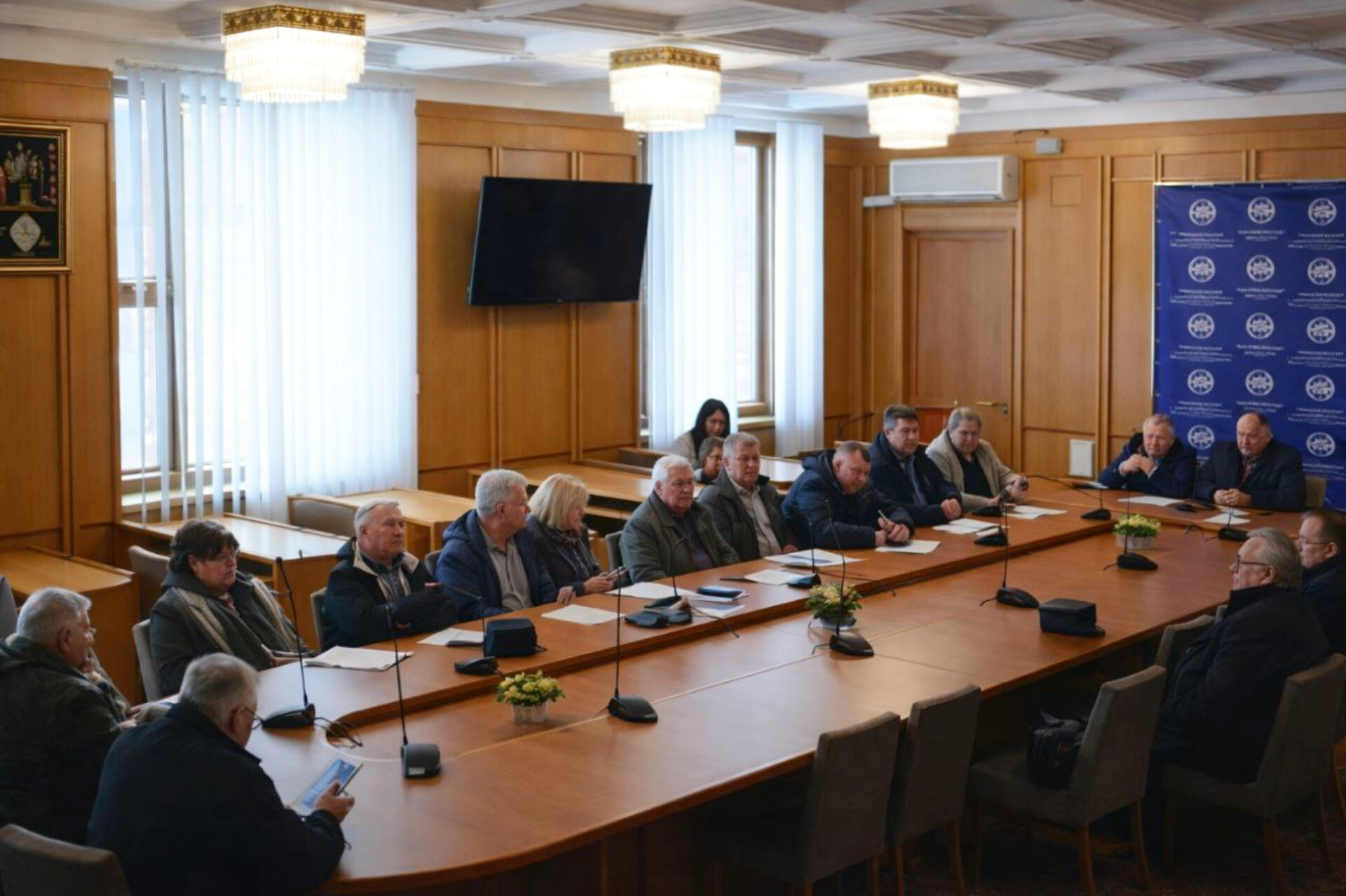
The discussion was attended by staff members of the I. F. Kuras Institute of Political and Ethno-National Studies, including Oleksandr Mayboroda, Head of the Department of Global Political Development; Viktor Kotyhorenko, Head of the Department of Ethnopolitology; Maksym Rozumnyi, Head of the Department of Theory and History of Political Science; Pavlo Hai-Nyzhnyk, Doctor of Historical Sciences; Zoreslav Samchuk, Doctor of Philosophical Sciences; Anatolii Podolskyi, Candidate of Historical Sciences; Ivan Leontiev, PhD; as well as representatives of the Institute of Social and Political Psychology of the NAES of Ukraine—Svitlana Chunikhina, Deputy Director; Vadym Vasiutynskyi, Chief Research Fellow of the Department of Psychology of Masses and Communities; Nataliia Dovhan, Head of the Department of Psychology of Political and Legal Relations; Olena Sushii, Head of the Department of Psychology of Masses and Communities; Lidiia Chorna, Head of the Department of Psychology of Small Groups and Intergroup Relations; Olha Volianiuk, Candidate of Political Sciences; Borys Lazorenko, Leading Research Fellow; Olha Diachenko, Acting Head of the Department of Special Fields of Historical Knowledge and Didactics of History at Oles Honchar Dnipro National University; Olha Sviderska, Professor of the Department of Military Political Science at the Military Institute of Taras Shevchenko National University of Kyiv, and others.