
MUSEUM PRACTICES AND TRANSFORMATIONS IN THE COVERAGE OF WORLD WAR II

On May 27-28, 2026, the National Museum of the History of Ukraine in the Second World War, funded by the Memory, Responsibility and Future Foundation (Berlin, Germany), held a two-day international conference “Museum Practices and Transformations in the Coverage of World War II”.
The event brought together scholars and museum professionals, representatives of 43 leading institutions from 15 countries around the world, including such world-renowned institutions as the Imperial War Museum (London, Great Britain), the Auschwitz-Birkenau State Museum (Auschwitz, Poland), the Terezin Memorial (Terezin, Czech Republic), the University of Miami (Oxford, Ohio, USA), the University of Victoria (Canada), and the network of European museum organizations NEMO (Berlin, Germany).
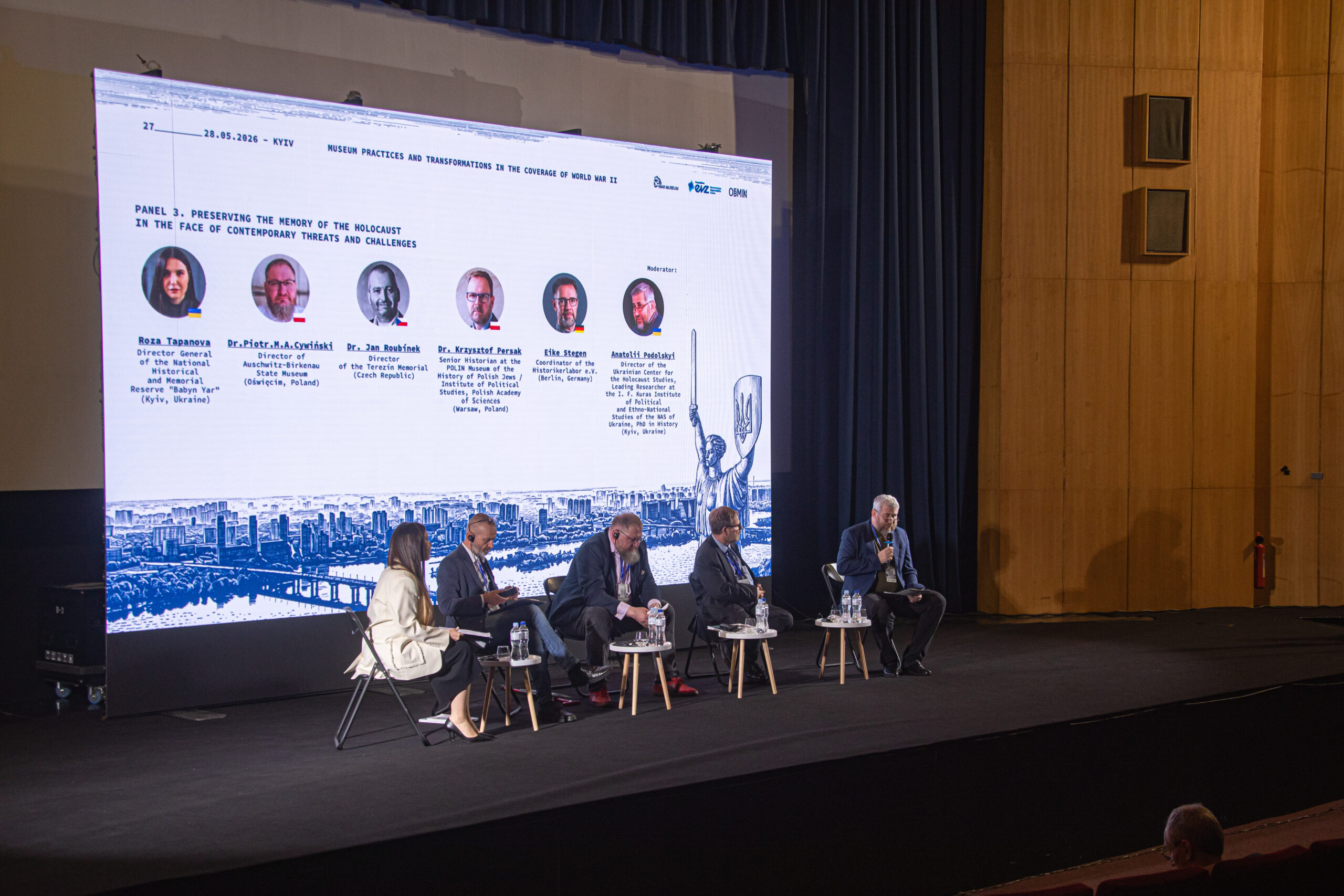
During the panel on commemoration of the victims of the Holocaust
The panel, which discussed the issues of preserving the memory of the Holocaust in the face of modern threats and challenges, was moderated by Anatolii Podolskyi, a leading researcher in the Department of Ethnopolitical Science of our Institute, Candidate of Historical Sciences. The introductory presentation on the activities of the National Historical and Memorial Reserve “Babyn Yar” was presented by the Director General of the Reserve, Roza Tapanova. The panel participants discussed the issues of memorialization, the responsibility of museums and international cooperation in combating the distortion of history. The discussion was attended by the Director of the Auschwitz-Birkenau State Museum Piotr M.A. Tsywinski, the Director of the Terezin Memorial Jan Rubinek, the Senior Historian of the POLIN Museum Krzysztof Persak and the Coordinator of the Historikerlabor e.V. Aike Stegen.
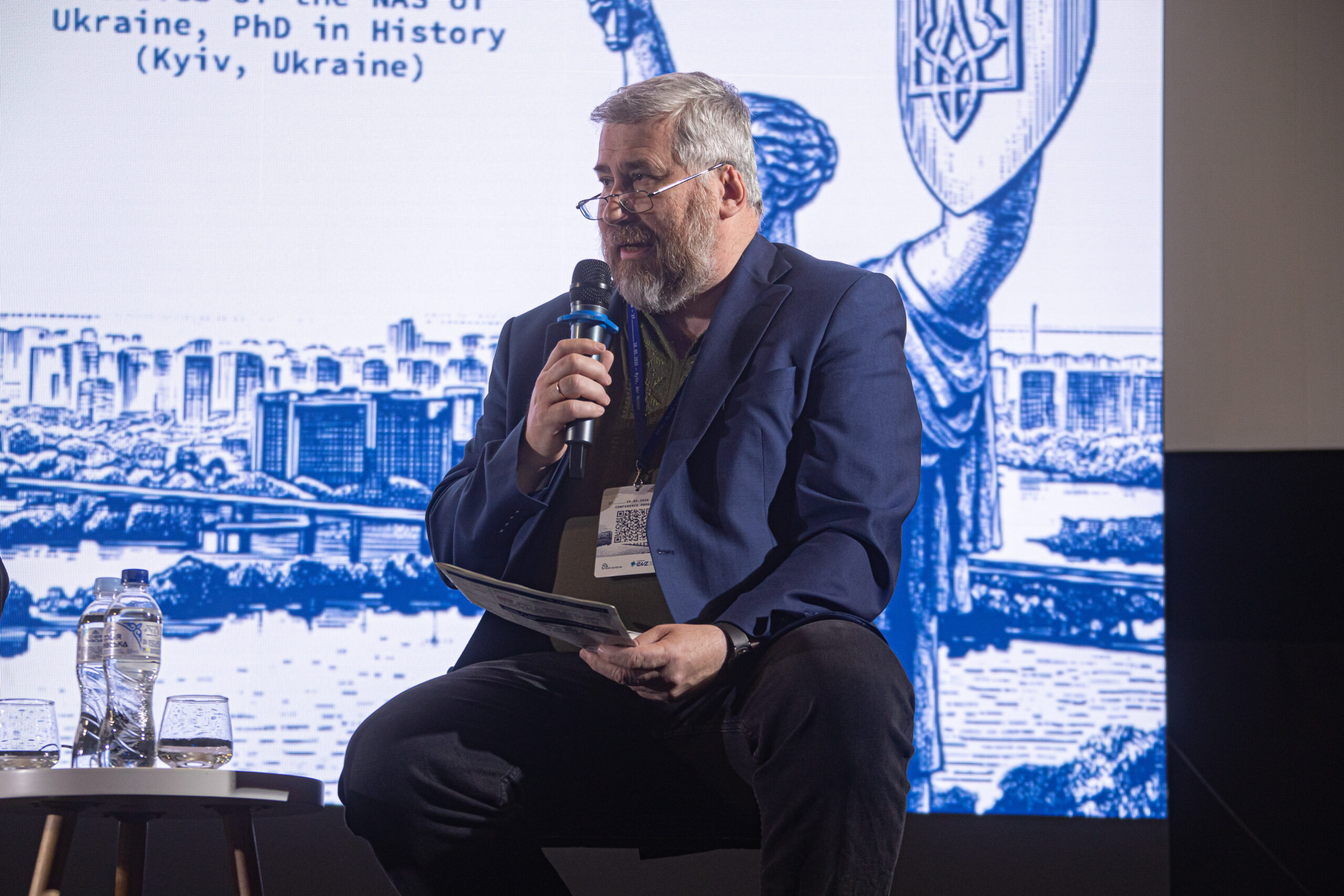
Speaking Anatoliy Podolsky
The conference became a platform for professional discussion and exchange of experience between museums, memorials and scientific institutions in Europe and the world. The focus of the discussion is the reinterpretation of World War II, particularly in post-communist countries, the memorialization of armed conflicts of the modern era, the preservation of historical memory in times of global instability, when anti-democratic forces seek to turn history into an ideological weapon. Special attention was paid at the conference to the experience of Ukraine, which, in the conditions of large-scale Russian aggression, is forming its own culture of memory and implementing unique practices of museification of war in real time.
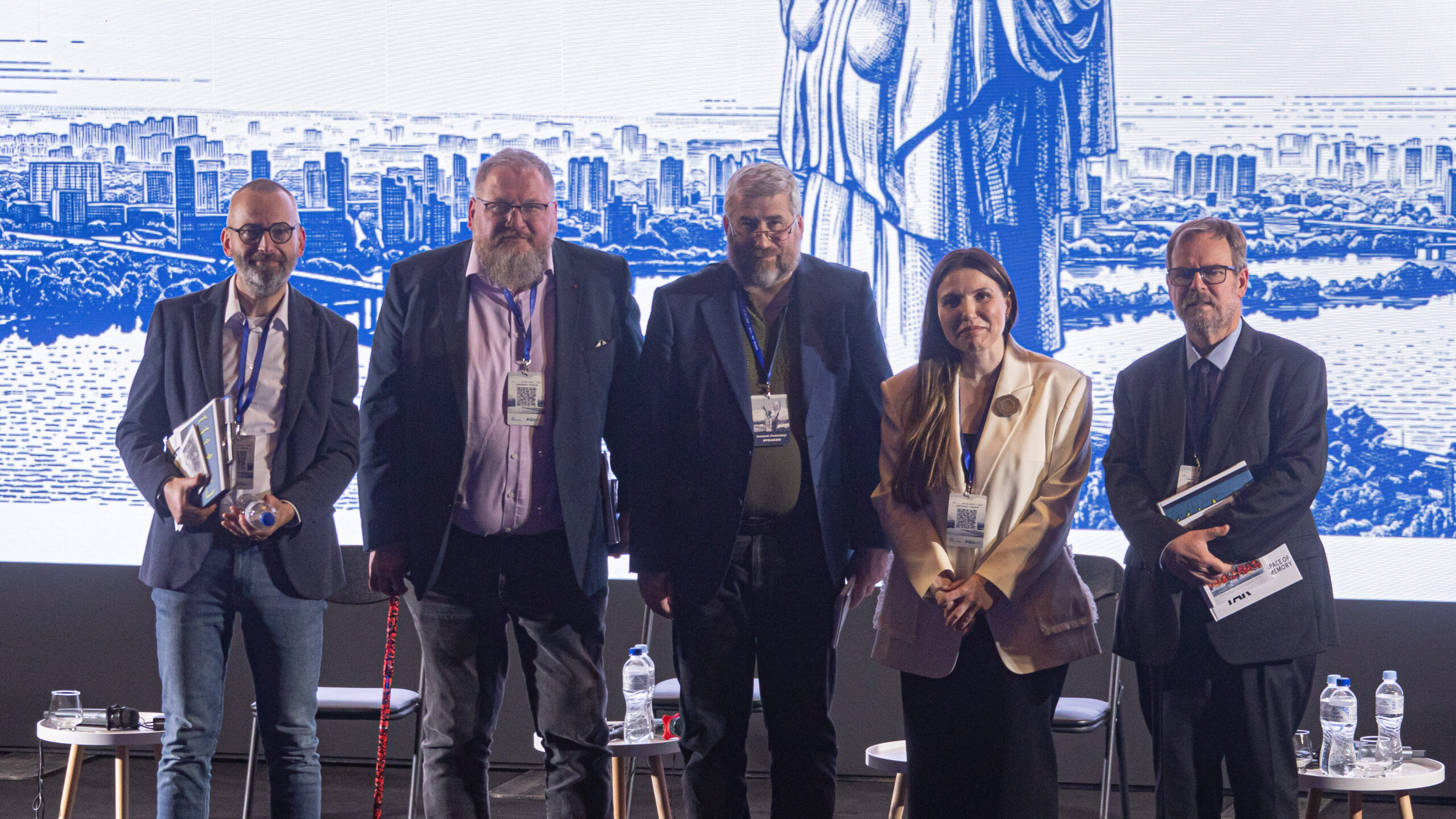
Jan Rubinek, Piotr Tsywinski, Anatoliy Podolsky, Roza Tapanova, Krzysztof Persak