
ROUNDTABLE: “BABYN YAR: 85 YEARS LATER”

Eighty-five years ago, Babyn Yar became one of the most harrowing milestones of Nazi terror—a place where people were deprived of their lives solely because of who they were born to be. The roundtable “Babyn Yar: 85 Years Later,” organized by the State Service of Ukraine for Ethnic Policy and Freedom of Conscience in Kyiv on September 28, 2026, became far more than a mere reflection on the events of 1941 or a commemoration of the victims. It was a conversation about shifting perspectives—moving from a narrow memorial discourse toward a profound understanding of the mechanisms of mass violence.
The participants—historians, political scientists, civic activists, religious leaders, and officials—gathered to examine the tragedy from a broader perspective, free from grandiloquence or empty formalism. They sought to understand how a society slides, step by step, into the abyss of totalitarian madness; how ideological evil emerges and spreads; and why, at certain historical junctures, specific groups come to be viewed as “different,” “dangerous,” or “superfluous.” Alongside the Holocaust, the discussion encompassed the genocide of the Roma, the persecution of Ukrainians, and the fates of many other victims of the Nazi regime—all those whose suffering had long remained on the periphery of official Soviet history.
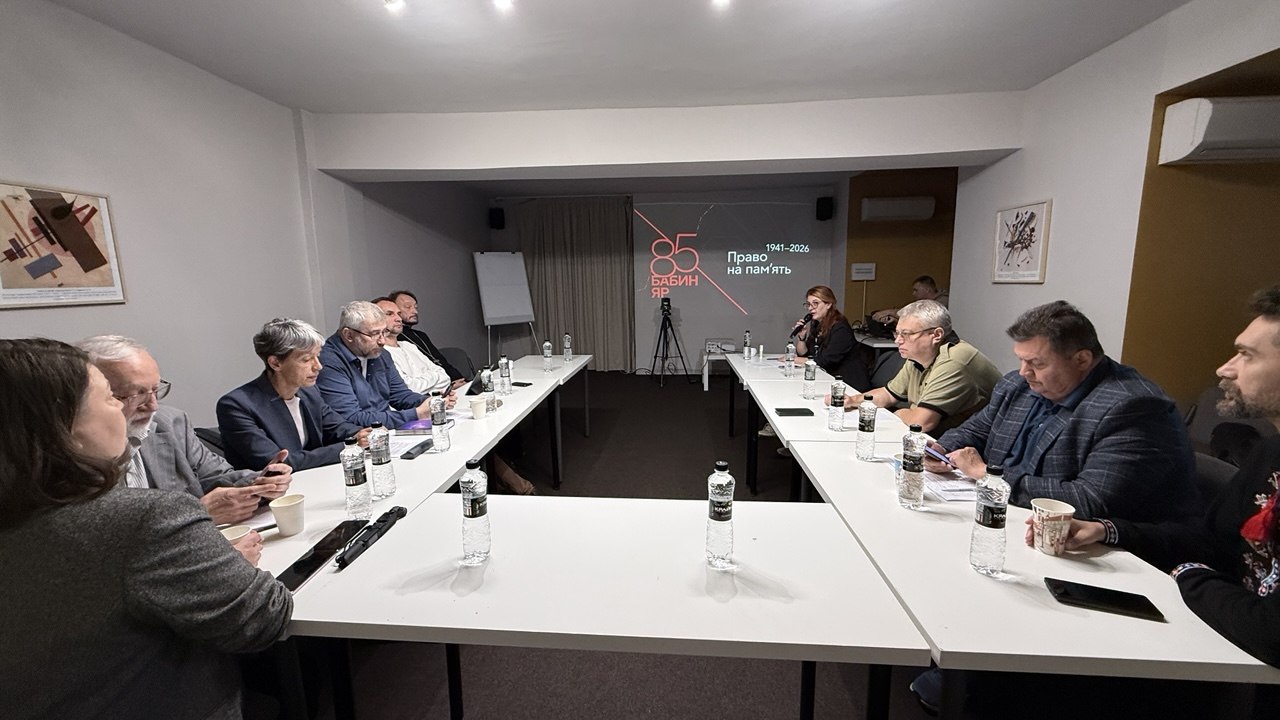
Roundtable participants
Anatolii Podolskyi, a leading researcher at our Institute’s Department of Ethnopolitology and a Candidate of Historical Sciences, spoke at the roundtable. In his address, the scholar emphasized: “In Soviet times, the victims of Babi Yar were consigned to oblivion, yet speaking about the Jews was strictly forbidden above all else. Today, our challenge is to recognize that this is an integral part of Ukrainian history and the culture of remembrance. Babyn Yar is both a symbol of the Holocaust—where, in the opening days, Jewish residents of Kyiv were murdered solely for the fact of their birth—and a site where Ukrainian nationalists, civilians, prisoners of war, Roma, and hospital patients subsequently perished”.
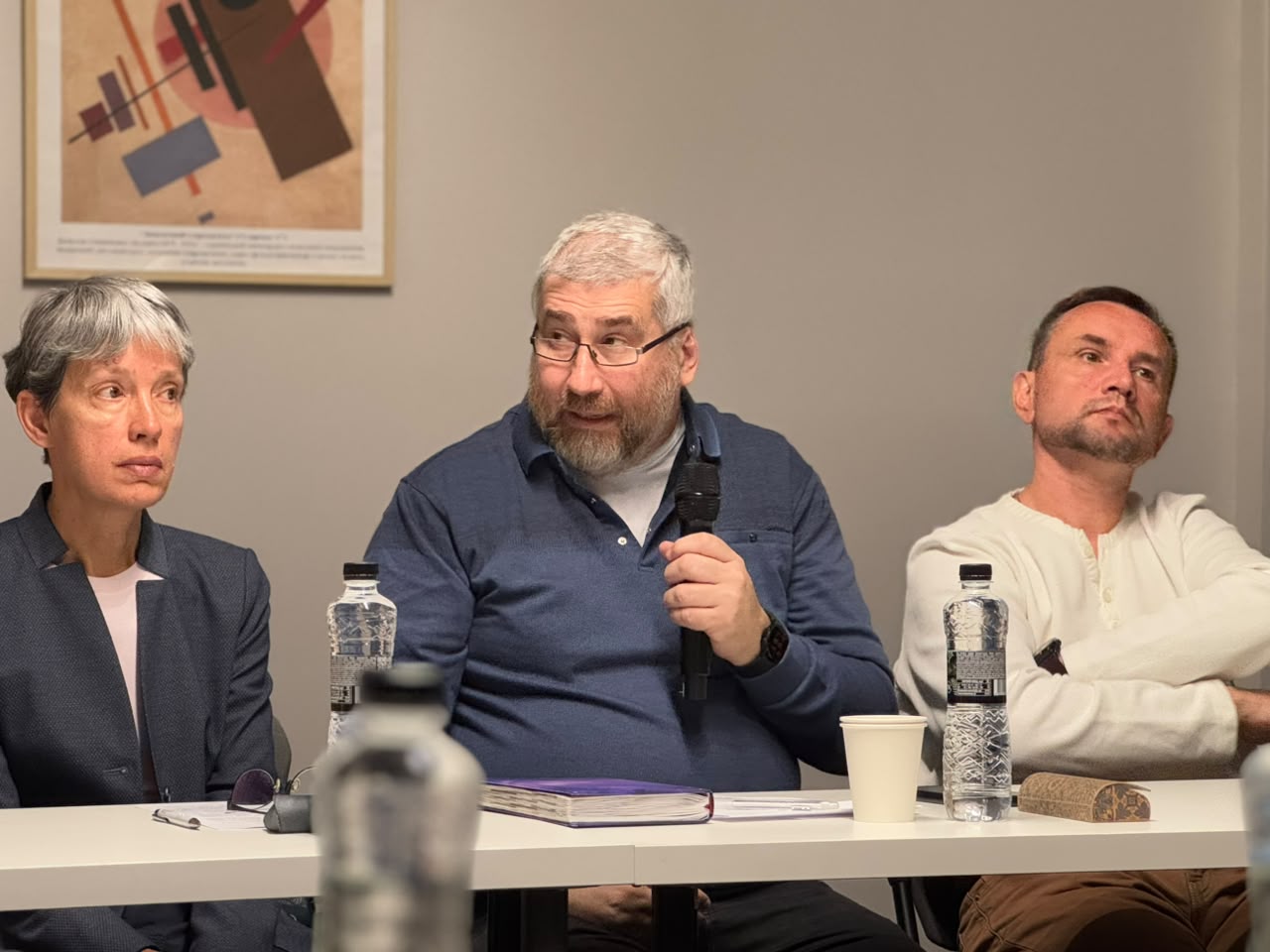
Anatoliy Podolskyi
Other speakers at the roundtable included Viktor Yelenskyi, Doctor of Philosophical Sciences and Head of the State Service of Ukraine for Ethnic Affairs and Freedom of Conscience (DESS); Volodymyr Viatrovych, Member of Parliament and historian; Roman Podkur, Senior Researcher at the Department of the History of Soviet-Era State Terror (Institute of History of Ukraine, NAS of Ukraine) and Head of the National Rehabilitation Commission; Oleksandr Alfiorov, Head of the Ukrainian Institute of National Memory; Nadiia Honcharenko, Senior Researcher at the Department of Cultural Heritage and Monument Preservation (Institute of Cultural Research, NAMS of Ukraine); and others.
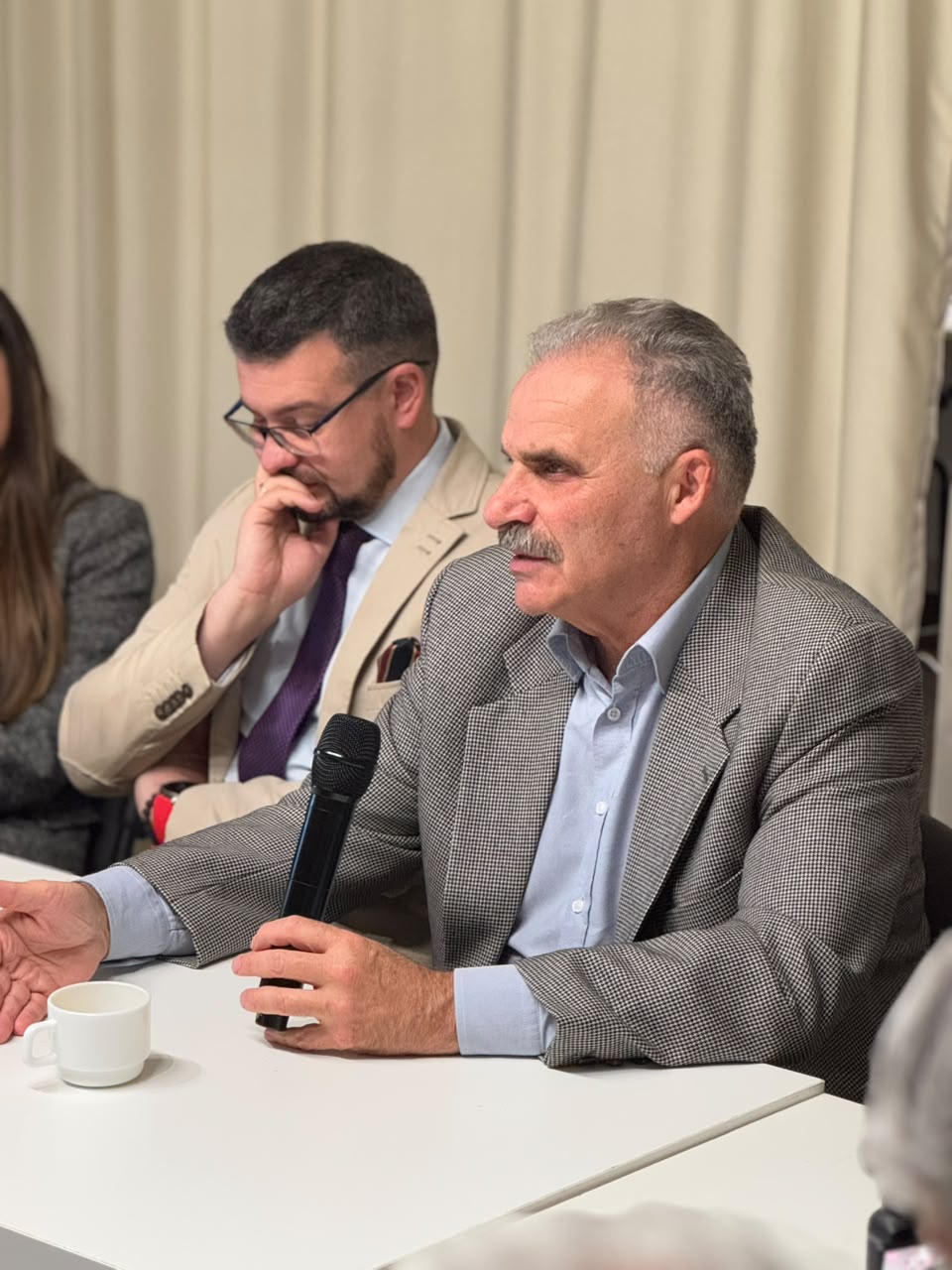
Viktor Yelenskyi
The discussion was not about a “competition of tragedies,” but rather about the right to remembrance and the restoration of individual identities. It focused on what helps preserve dignity and a moral compass when the familiar rules and norms around us crumble into dust. Yet the most painful dimension of this meeting lay in its contemporary context. Today’s Ukraine—enduring the horrors of Bucha, Izium, Mariupol, and countless other towns and villages—vividly demonstrates that mass violence is neither a static museum exhibit nor a thing of the distant past. Evil has a way of returning if it is not condemned promptly and uncompromisingly, and the slogan “Never Again” proves defenseless against modern aggression.
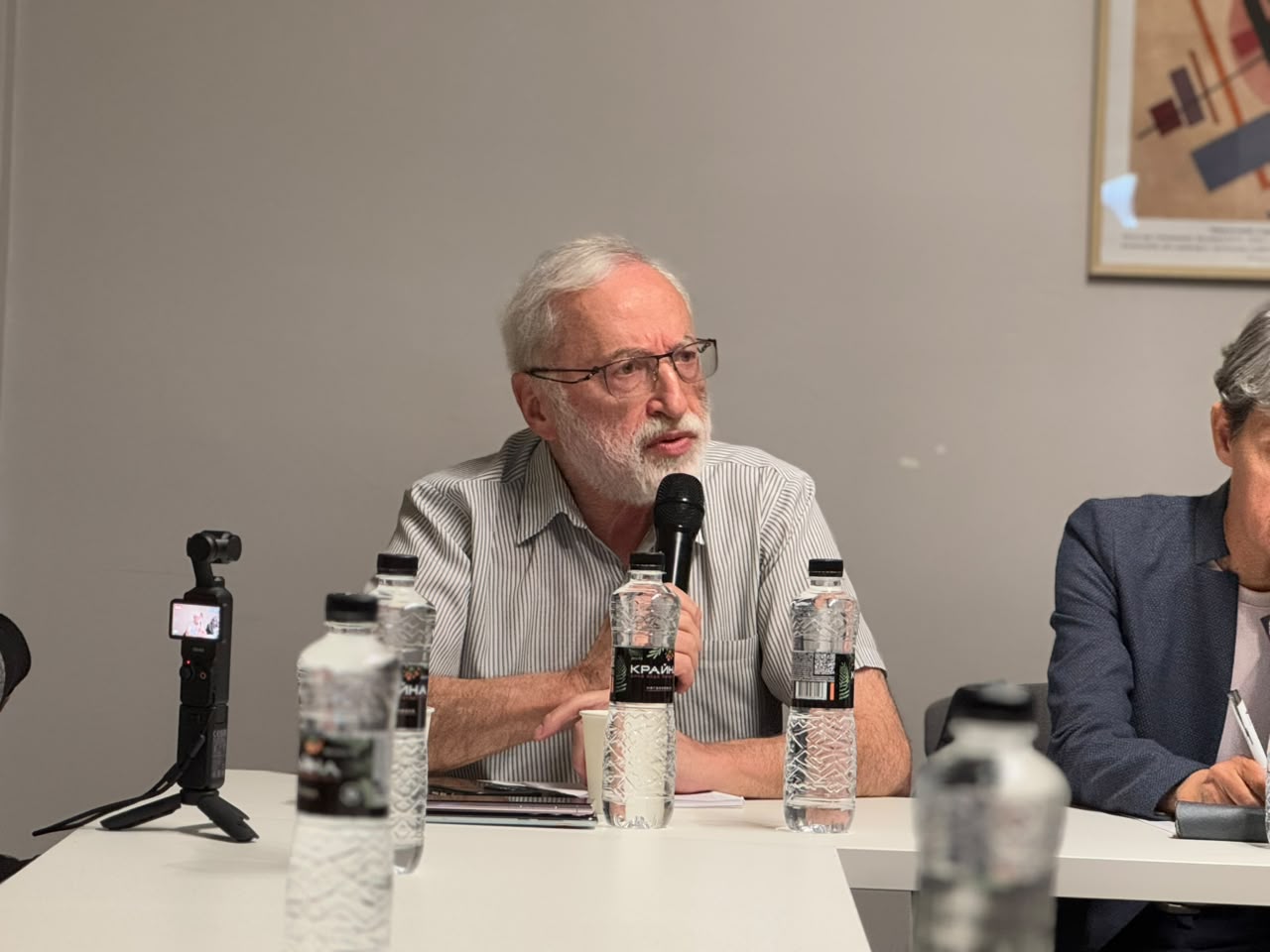
Yosyp Zisels
It was both symbolic and chilling: at the very moment speakers in the hall were discussing Babyn Yar and the mechanisms of totalitarian terror, a Russian barrage struck Kyiv, and a hostile “Shahed” drone hit the Presidium building of the National Academy of Sciences of Ukraine. People were dying just a few hundred meters away from the discussion participants. On that day, the past and the present converged—not in theory or on the pages of textbooks, but literally right outside the window.