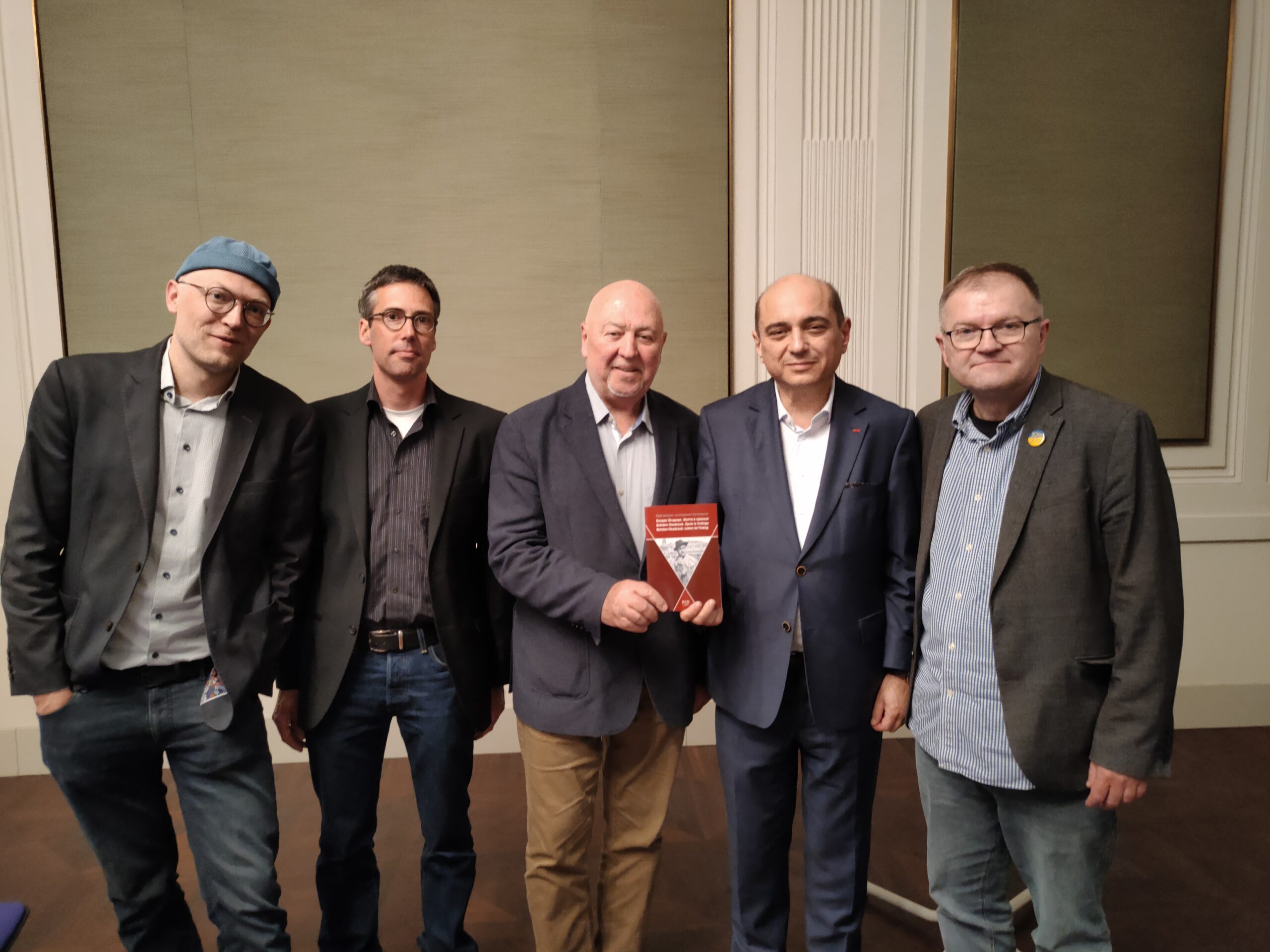
THE PRESENTATION OF THE BOOK TOOK PLACE IN BERLIN

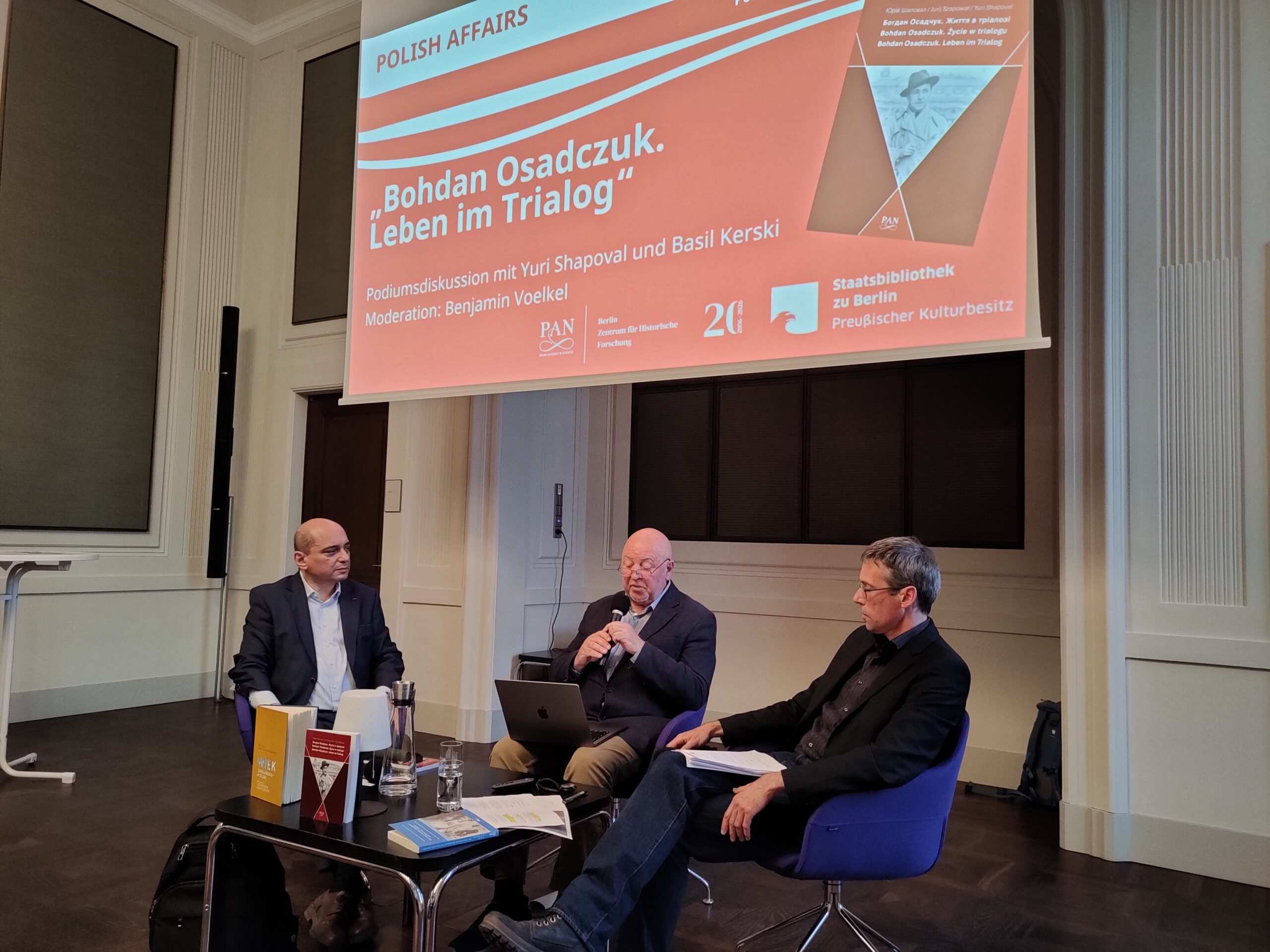
On April 22, 2026, the State Library of Berlin (Staatsbibliothek zu Berlin, Unter den Linden 8) hosted the presentation of the book “Bohdan Osadchuk. A Life in Anxiety” by Yurii Shapoval, a chief researcher of our institute, Doctor of Historical Sciences, and Professor. The publication was initiated by the Center for Historical Research of the Polish Academy of Sciences in Berlin and is part of the “Ukraine-Poland-Germany. Triangle of Dialogue” series. The book contains text in German, Polish, and Ukrainian. The research is dedicated to Bohdan Osadczuk (1920-2011), a journalist and scholar, and a professor at the Free University of Berlin. Born in Kolomyia, Osadczuk lived in Berlin for 70 years. Thanks to his fluency in Polish, German, and Ukrainian (he spoke and wrote them freely), he became a “man of the borderland” who, through his publications and speeches, united Poland, Germany, and Ukraine.
He prepared many important texts in German, which were published in the most influential periodicals of West Germany and Switzerland. His scientific and journalistic work as a renowned analyst of events in the countries of the “socialist camp” and the Soviet Union during the Cold War became part of the canon of Sovietology and remains relevant in many aspects today. Thanks to his many years of cooperation with Jerzy Giedroyc, the head of the Literary Institute in Maisons-Laffitte (France) and editor of the magazine “Kultura,” Osadczuk made an enormous contribution to the cause of Polish-Ukrainian understanding and reconciliation.
The book presentation took the form of a discussion event, which featured Basil Kerski, a former postgraduate student of Bohdan Osadczuk at the Free University of Berlin and currently the president of the “House of the History of North Rhine-Westphalia” Foundation (Stiftung Haus der Geschichte Nordrhein-Westfalen). The life and activities of Bohdan Osadczuk sparked great interest and numerous questions from the audience, which included Germans, Poles, and Ukrainians.