WORLD CONVENTION OF THE ASSOCIATION FOR THE STUDY OF NATIONALITIES

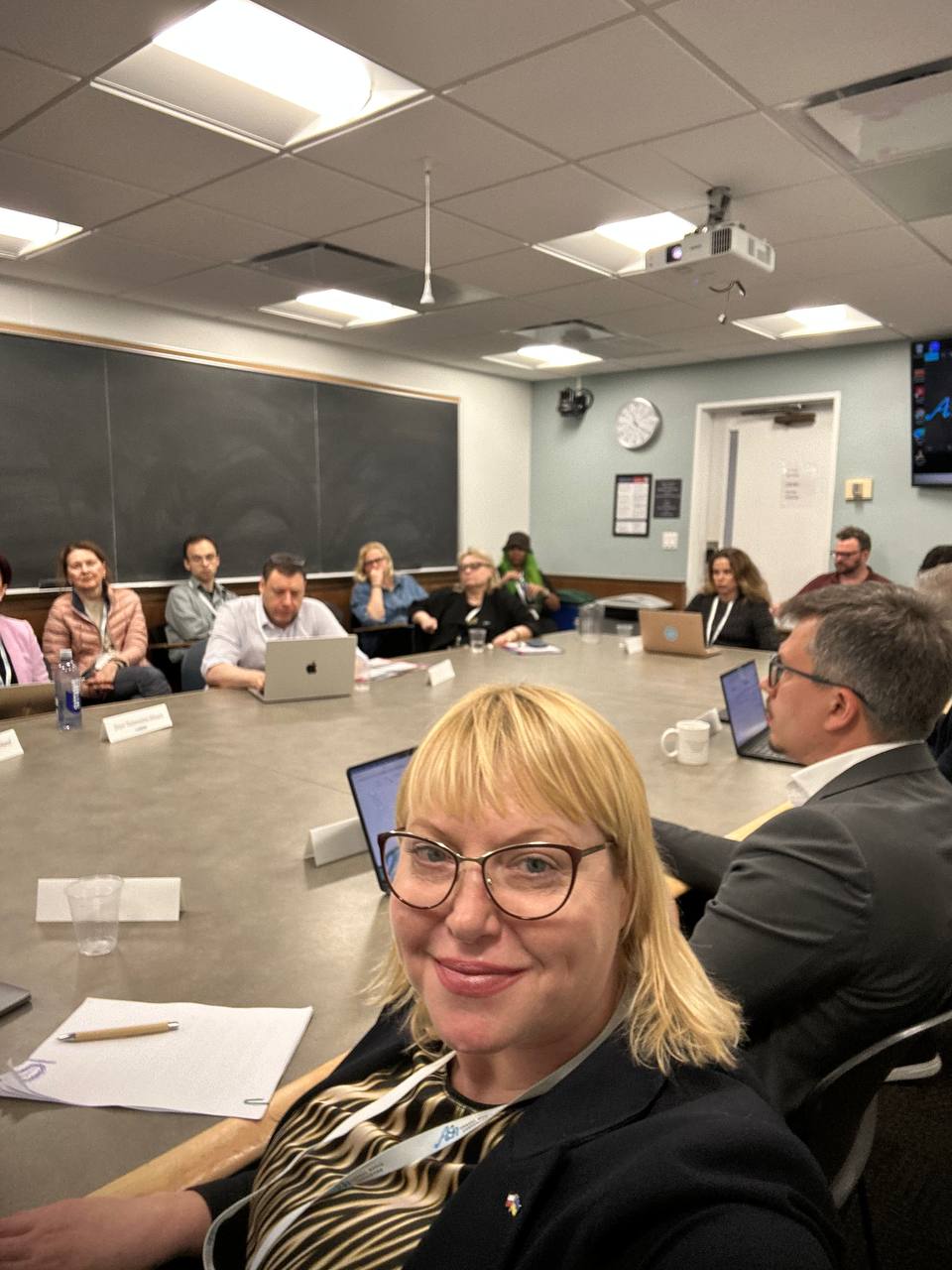
May 27–30, 2026, Columbia University (New York, USA) hosted the 30th Anniversary World Convention of the Association for the Study of Nationalities (ASN) – one of the largest international multidisciplinary scholarly forums dedicated to the issues of nationalism, ethnicity, political conflicts, and identities, where leading scientists traditionally present their research findings.
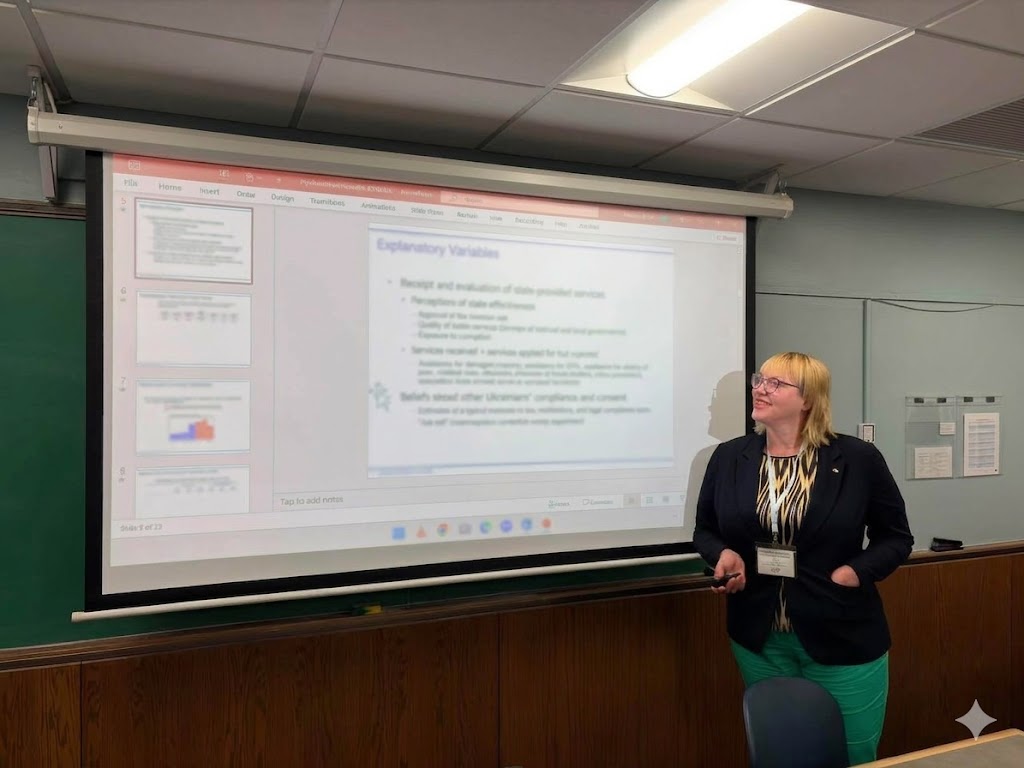
This year, a large block of the program was dedicated to Ukrainian studies. Galyna Zelenko, Deputy Director for Research at the Institute, Professor, and Corresponding Member of the National Academy of Sciences (NAS) of Ukraine, took part in the ASN Convention. Within the thematic section focused on modern political transformations in Ukraine, the researcher presented a report titled “The Transformation of Ukraine’s System of Checks and Balances under the Impact of the War: A Quantitative and Qualitative Analysis.”
In the report Galyna Zelenko analyzed the impact of the Russian-Ukrainian war on the functioning of the system of checks and balances of power in Ukraine. Based on quantitative (statistics regarding the implementation of the right to legislative initiative, the right of presidential veto) and qualitative analysis (spheres of competence of central government bodies), it was shown that the full-scale war indeed became an important factor in transforming the mechanisms of interaction between branches of power. At the same time, the prerequisites for strengthening the positions of the institution of the presidency were formed much earlier and are a consequence of the current constitutional model of state power organization, as well as the impact of the political results of the 2019 parliamentary elections, which resulted in a single-party pro-presidential majority in the Verkhovna Rada. It was the combination of institutional features of the constitutional system and political circumstances that created the conditions for the concentration of power resources even before the start of the full-scale aggression.
Avoiding value judgments, the researcher emphasized that the current configuration of power relations is an objective reality of wartime. Although such a model does not favor the full development of democratic processes and mechanisms of mutual control between branches of power, in conditions of war it largely acts as a necessary tool for ensuring effective state governance and national security.
Separately, the presentation raised the issue of perspectives for the development of the political system after the end of hostilities. According to Halyna Zelenko, there are reasons to assume the possibility of the so-called “wormhole effect” – the gradual habituation of society to the concentration of power and a decrease in demands for democratic procedures. At the same time, large-scale civic mobilization, the development of the volunteer movement, and an unprecedented level of public self-organization during the war significantly reduce the likelihood of such a scenario and create prerequisites for restoring full-fledged democratic mechanisms in the post-war period.
Participation in the ASN World Convention became an important opportunity to present the research results of Ukrainian scientists to the international academic community and to discuss current transformations of the political system of Ukraine in conditions of war.