
Kyiv Metro has launched a public online poll on the renaming of 5 metro stations whose names are related to Russia or Belarus. The new names will be chosen for the stations “Minska”, “Heroiv Dnipra”, “Beresteiska”, “Druzhby Narodiv” and “Ploscha Lva Tolstogo”.
On April 12, 2022, the National Academy of Sciences of Ukraine addressed the Kyiv City Mayor V. Klitschko and the head of the Kyiv Metro Municipal Enterprise V. Brahinsky with a proposal to rename the “Druzhby Narodiv” metro station to “Borys Paton”.
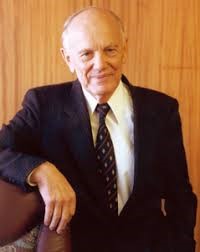
Borys Yevhenovych Paton (1918–2020)
We offer to support the proposal of the National Academy of Sciences of Ukraine by participating in an online survey.
The poll will last until May 15, 2022.
Anatoliy Podolsky, a leading researcher at our Institute and head of the Center for Jewish History and Culture, took part in the television marathon “Unbreakable Country” on Channel 5 of Ukrainian television.

Podolsky during a speech on “Channel 5”
In an interview for the TV channel, the scientist drew historical parallels between the aggression of Nazi Germany during World War II and the current Russian aggression against Ukraine. Russia still, the scientist said, has not recognized or condemned the crimes of the Stalinist period and has not repented for them. On the contrary, the policy of rehabilitation of this dictator and criminal in the minds of Russians has led to the emergence of the modern Russian tyrant and war criminal. A. Podolsky stressed that the war crimes of the Russian armed forces in Ukraine are crimes against humanity and have all the hallmarks of genocide against the Ukrainian people.
Video of A. Podolsky’s interview
Until the end of 2022, Ukrainian scientists are provided with free access to full-text electronic resources available within the Research4Life project, according to an official statement on the Research4Life website.
The list of available resources has been significantly expanded – more than 15 publishers have opened electronic collections of books and magazines for users from Ukraine. In particular, access to the resources of the following major publishers is provided:
Elsevier;
Springer Nature;
John Wiley & Sons;
Taylor & Francis;
Emerald;
Sage Publications;
IOP Publishing and others.
Currently, almost 75 thousand books and more than 12.5 thousand journals are available for specialists of higher education and research institutions of Ukraine.
Journal “Political Studies” founded by the Kuras Institute of Political and Ethnic Studies of the National Academy of Sciences of Ukraine is included in the list of scientific professional editions of Ukraine in political science, speciality 052 – “political science”, category “B” (decree of the Ministry of Education and Science of Ukraine from 07.04.2022 № 320).
The Cabinet of Ministers of Ukraine has decided to terminate international agreements in the field of education and science with the Republic of Belarus. The relevant resolution was adopted at a government meeting on April 9.
The agreements were concluded more than 20 years ago, but due to the support of the Republic of Belarus for the unprecedented, open, large-scale armed war of the Russian Federation against Ukraine, these documents were terminated.
Thus, intergovernmental agreements on mutual recognition and equivalence of documents on education and academic titles, cooperation in the field of attestation of scientific and scientific-pedagogical staff of higher qualification, as well as the agreement between the Government of Ukraine and the Government of Belarus on cooperation in science and technology were denounced.
After the complete cessation of cooperation in the field of education and science with Russia, the denunciation of all agreements with the country that supports the aggressor was a consistent step. As is known, on March 24, the Cabinet of Ministers annulled agreements in the field of education and science with Russia.
On April 6, 2022, a session of the Presidium of the National Academy of Sciences of Ukraine was held, at which a number of important issues were considered and relevant decisions were made.
On the National Report of the National Academy of Sciences of Ukraine “National Fortitude of Ukraine: a Strategy for Responding to Challenges and Preventing Hybrid Threats”.
During the meeting, the report of the Vice President of the NAS of Ukraine, Academician of the NAS of Ukraine Serhiy Pyrozhkov on the main provisions of the National Report of the NAS of Ukraine “National Fortitude of Ukraine: Strategy for Responding to Challenges and Anticipating Hybrid Threats” was heard.
The National Report comprehensively examines the issue of resilience of Ukrainian society and national-state projects to external challenges and threats in historical retrospect and in recent times. The main types of hybrid threats to Ukraine in the conditions of Russian aggression are analyzed. The priority directions and stages of realization of the strategy of national stability of Ukraine, and also institutional, legal and informational factors of its maintenance in political, economic, social, humanitarian and military spheres are defined.
The report is an integrated result of scientific research carried out within the research projects of the National Academy of Sciences of Ukraine in the field of socio-humanitarian sciences in 2021. Specialists from the Institute of History of Ukraine of the National Academy of Sciences of Ukraine, Kuras Institute of Political and Ethnic Studies of the National Academy of Sciences of Ukraine, Institute of Sociology of NAS of Ukraine, Koretsky Institute of State and Law of NAS of Ukraine, Skovoroda Institute of Philosophy of the National Academy of Sciences of Ukraine, State Institution “Institute of World History of the National Academy of Sciences of Ukraine” took part in the preparation of the National Report of the National Academy of Sciences of Ukraine
The President of the National Academy of Educational Sciences of Ukraine and Academician of the National Academy of Sciences of Ukraine Vasyl Kremen, Corresponding Member of the National Academy of Sciences of Ukraine Oleksandr Vlasiuk, Academician of the National Academy of Sciences of Ukraine Yaroslav Yatskiv, Academician of the National Academy of Sciences of Ukraine Hanna Skrypnyk took part in the discussion.
Oleh Rafalskyi, Vice President of the National Academy of Sciences of Ukraine, Corresponding Member of the National Academy of Sciences of Ukraine, noted that the relevance of the Academy’s research is confirmed by today’s events. He also noted the sharpness and timeliness of the question. In his opinion, the report answers the main question of international experts on the nature of the strength of the Ukrainian people against Russian aggression. Volodymyr Horbulin, First Vice President of the National Academy of Sciences of Ukraine and Academician of the National Academy of Sciences of Ukraine, also stressed the timeliness of the report.
After hearing and discussing the report of the Vice President of the NAS of Ukraine Academician of the NAS of Ukraine Sergiy Pyrozhkov on the main provisions of the National Report of the NAS of Ukraine “National Fortitude of Ukraine: Strategy for Responding to Challenges and Anticipating Hybrid Threats”, the Presidium of the National Academy of Sciences of Ukraine noted, that in the conditions of the military aggression of Russian Federation against Ukraine, an extremely urgent task for our country is to strengthen the national system of fortitude as a key segment of protecting state independence and preserving the civilizational subjectivity of the country.
Following the discussion of this issue, the Resolution “On the National Report of the National Academy of Sciences of Ukraine “National Fortitude of Ukraine: Strategy for Responding to Challenges and Preventing Hybrid Threats” was approved.
On the participation of the National Academy of Sciences of Ukraine in the development of the Strategy for the Protection, Preservation and Promotion of the History of Ukrainian Statehood
Having considered the issue of participation of the National Academy of Sciences of Ukraine in the development of the Strategy for Protection, Preservation and Promotion of the History of Ukrainian Statehood, in order to ensure the participation of the National Academy of Sciences of Ukraine in the development of the state policy on Ukrainian history, initiated by the Decree of the President of Ukraine of August 24, 2021 № 423/2021 “On the Day of Ukrainian Statehood”, the Presidium of the National Academy of Sciences of Ukraine adopted a resolution stating that research aimed at developing a project Strategy for Protection, Preservation and Promotion of Ukrainian History is one of the priority area of activity of the profile institutions of the Section of Social Sciences and Humanities NAS of Ukraine.
On the results of the implementation of the Section of Social Sciences and Humanities of the National Academy of Sciences of Ukraine the target programs of scientific research of the National Academy of Sciences of Ukraine in 2019-2021
The Presidium of the NAS of Ukraine heard information from the Vice President of the NAS of Ukraine, Head of the Section of Social Sciences and Humanities of the NAS of Ukraine Academician of the NAS of Ukraine Sergiy Pyrozhkov on the main scientific and practical results obtained as a result of their implementation. The Presidium of the National Academy of Sciences of Ukraine notes that the implementation of these programs has made significant theoretical and applied achievements in studying the current state and prospects of Ukrainian society, developing conceptual approaches to solving urgent problems in political, economic and cultural spheres.
The implementation of these programs, according to the Resolution of the Presidium of the National Academy of Sciences of Ukraine, allowed to implement scientific results in the form of analytical and prognostic materials, projects of regulations, recommendations on socially important issues concerning the practice of activity of the highest bodies of state power and administration of Ukraine, profile committees of the Verkhovna Rada of Ukraine, ministries and departments.
The Resolution of the Presidium of the National Academy of Sciences of Ukraine in particular notes the high scientific and practical level of research conducted by scientists of our Institute within the program “Social Ideal and Political Interests in Ukraine” (head – Corresponding Member of the National Academy of Sciences of Ukraine Oleh Rafalskyi), scientific topic “Hierarchy of values among the population of the East and South of Ukraine: ethno-political aspect in the context of Russian aggression” (Doctor of Political Science Victor Voynalovych etc.), monographic study “Responsible Politics in Modern Ukraine: Illusions and Realities” (edited by Corresponding Member NAS of Ukraine Oleksandr Maiboroda).
Resolution of the Presidium of the National Academy of Sciences of Ukraine approved the corresponding member of the National Academy of Sciences of Ukraine Oleh Rafalskyi as the head of the target research program of the National Academy of Sciences of Ukraine “Strategy of social transformation in Ukraine: project, potential, prospects” – Kuras Institute of Political and Ethnic Studies of the National Academy of Sciences of Ukraine.
On the postponement of the evaluation of the effectiveness of scientific institutions of the National Academy of Sciences of Ukraine
In connection with the military aggression of the Russian Federation against Ukraine and the imposition on February 24, 2022 by Decree of the President of Ukraine of 24.02.2022 № 64/2022 martial law in Ukraine, the Presidium of the NAS of Ukraine made a decision to postpone in the time of the martial law in Ukraine the evaluation of the effectiveness of scientific institutions of the National Academy of Sciences of Ukraine and to suspend preparatory activities for such assessment.
The world’s largest publishers of scientific journals condemn Russia’s invasion of Ukraine, shocked by the humanitarian crisis, and call for an end to aggression.
On March 31, 2022, the world’s largest publishers of scientific journals published a joint statement terminating services for Russian and Belarusian scientific organizations and institutions, as well as access to full texts of articles in scientific journals. This means that in the territory of the Russian Federation and the Republic of Belarus legal access to the largest full-text collections of articles published by Elsevier, Springer / Nature, IOP Publishers and others, as well as to the abstract databases Web of Science and Scopus will be terminated.
Among the publishers who signed the appeal: ACS Publications, Apple Academic Press, Brill, Cambridge University Press & Assessment, De Gruyter, Elsevier, Emerald Publishing, Future, Science Group, IOP Publishing, Karger Publishers, Springer Nature, The Geological Society, The Institution of Engineering and Technology, Thieme Group, Wolters Kluwer.
Issues of international scientific activity of the National Academy of Sciences of Ukraine under martial law were considered at the meeting of the Presidium of the National Academy of Sciences of Ukraine on March 30, 2022.
The President of the National Academy of Sciences of Ukraine Anatoliy Zagorodniy informed about the state of affairs in this area of activity. Thus, in accordance with the decision of the Presidium of the National Academy of Sciences of Ukraine to terminate all forms of cooperation between the National Academy of Sciences of Ukraine and Russian scientific organizations and Russian scientists, the National Academy of Sciences of Ukraine withdrew from the International Association of Academies of Sciences, which didn’t bother neither to blame unprovoked military aggression of the Russian Federation against Ukraine, nor to call for an immediate end to the bloody violence by the aggressor against the civilian population of Ukraine, to stop the destruction of the industrial and scientific potential of our country.
The National Academy of Sciences of Ukraine terminated agreements on scientific and technical cooperation with the Russian Academy of Sciences, the Siberian Branch of the Russian Academy of Sciences, and Mikhail Lomonosov Moscow State University, Moscow Institute of Physics and Technology.
Scientists of the National Academy of Sciences of Ukraine, who were elected by the Russian Academy of Sciences as foreign members of this academy, sent a collective statement to the Presidium of the RAS about their resignation from foreign members of the RAS.
With regard to foreign members of the NAS of Ukraine who supported the criminal actions of the leadership of the Russian Federation, the Presidium of the NAS of Ukraine at its meeting on March 17, 2022 instructed the Academy to submit to the General Meeting of the NAS of Ukraine the submission on expulsion of these persons from the membership of foreign members of the NAS of Ukraine in the manner prescribed by the Statute of the National Academy of Sciences of Ukraine.
Also, figures of Russian science, culture, Russian statesmen and public figures who supported the armed aggression of the Russian Federation against Ukraine will be deprived of the title of “Honorary Doctor of the National Academy of Sciences of Ukraine.”
Members of the Presidium of the National Academy of Sciences of Ukraine discussed the further participation of the National Academy of Sciences of Ukraine in the activities of the International Intergovernmental Research Center Joint Institute for Nuclear Research (JINR) (Dubna, Russia). Since the beginning of the armed invasion to our country, the JINR leadership has not expressed any words condemning the war, any calls to stop the violence, stop bombing peaceful cities and destroy civilian, including scientific, infrastructure, or words of support for the permanent JINR member state – Ukraine. Specialists in nuclear and high-energy physics working at the JINR, who know the possible consequences of radiation accidents, also did not react to Russia’s nuclear terrorism, including the capture of nuclear facilities at the Chernobyl and Zaporizhzhya nuclear power plants and bombing of the research facility “Source of neutrons” in Kharkiv. In view of this, the Presidium of the National Academy of Sciences of Ukraine decided to suspend cooperation with the Joint Institute for Nuclear Research.
The Vice-President of the National Academy of Sciences of Ukraine, Director of the Kuras Institute of Political and Ethnic Studies of the National Academy of Sciences of Ukraine O. Rafalsky took part in the work of the Presidium.
The European Commission has set up an Internet platform that brings together informational and support services for researchers fleeing the war or staying under siege in Ukraine.
The portal offers assistance in finding house, employment and recognition of educational qualifications. The portal summarizes information from 30 European countries, non-governmental groups and initiatives within the EU.
The ERA4Ukraine platform is based on the existing EURAXESS network, which brings together information for researchers from more than 600 centers and 43 national portals in the EU and Horizon Europe.
In particular, the European Research Council appealed to its 5,600 current grant holders to provide employment opportunities for refugee researchers and support staff from Ukraine. Since then, 380 proposals have been received and will be posted on the ERA4Ukraine platform.
A separate service, which contains a list of internship and employment opportunities for Ukrainian refugee researchers in Europe, has been created by the EURAXESS network.
With the start of the Russian military invasion of Ukraine, the European Commission stopped cooperating with Russian organizations under the Horizon Europe program and allocated additional funds to Ukrainian researchers who received funding from the program. “Awaiting ratification of Ukraine’s association with Horizon Europe, we have made sure that successful beneficiaries can already receive funding from EU R&I programs,” said EU Research Commissioner Maria Gabriel.
In the face of full-scale Russian aggression, the entire democratic world has united and supported Ukraine. The scientific community of our country also needs the full support and solidarity of the world scientific community. The maximum restriction to use information in the field of science and technology by the Russian Federation, its institutions and citizens will be an appropriate response to the use of tanks and missiles against our country. The Ministry of Education and Science appealed to Clarivate and Elsevier, which own the largest abstract bibliographic databases Web of Science and Scopus, to:
- completely suspend cooperation with the Russian Federation, deprive Russian institutions, as well as institutions established since 2014 in the temporarily occupied territories of Ukraine, access to Web of Science, Scopus and all other electronic databases and tools owned by companies:
- to terminate cooperation with citizens of the Russian Federation who work in companies and their representative offices;
- to stop indexing with abstract, bibliographic databases of Web of Science and Scopus journals published by Russian institutions, as well as institutions operating in the temporarily occupied territories of Ukraine;
- to stop carrying out by the companies different trainings and other actions intended for scientists from the Russian Federation;
- to cease the existence of the Russian Index of Scientific Citation (RSCI) as a separate index of the Web of Science platform.
“These measures are completely justified and logical, taking into account that Russian science is used by their authorities for aggressive purposes, for criminal propaganda, and also works to strengthen the military-industrial potential of a state that openly threatens the world with nuclear weapons,” said the Deputy Minister for European Integration Alexey Shkuratov.
Nobel laureates in physics, mathematics, chemistry, economics, peacekeeping and literature expressed their support for Ukraine and Ukrainian people, and opposed Russian military aggression.
Just as Nazi Germany attacked Poland in 1939 (using similar tricks and false provocations) and Soviet Union in 1941, the Russian government led by President Putin launched an unreasonable military aggression – nothing else but war – against a neighboring state of Ukraine. Together, we condemn these military actions and President Putin’s denial of the very legitimacy of Ukraine’s existence», the statement said.
The Nobel laureates stressed that the Russian invasion of Ukraine tarnished the international reputation of the Russian state for decades.
“We have united around this appeal to call on the Russian government to stop the invasion and withdraw its troops from Ukraine”, the Nobel laureates said in a letter.
Open letter from Nobel laureates
During the war, in March 2022, Russian aggressor twice fired on Holocaust memorials in Ukraine: Babyn Yar in Kyiv (March 1) and Drobitsky Yar in Kharkiv (March 26). Modern putin’s russia, by destroying memorials created by Ukraine over the years of independence, continues Stalin’s policy of destroying a memory of civilian victims of World War II.
In this regard, Anatoliy Podolsky who is a leading researcher of the Kuras Institute of Political and Ethnic Studies and a Candidate of Historical Sciences of the National Academy of Sciences of Ukraine, expressed his position in an interview with Radio Liberty: “This is another crime of the putin regime against the civilian population,” he said.

“Yesterday I felt the succession from Hitler through Stalin to Putin. I wrote that Hitler killed the Jews of Ukraine and Stalin destroyed the memory of them. During the Soviet era, it was forbidden to come and honor the memory of those who were killed. And only when Ukraine became sovereign we got the opportunity to honor the victims. The “Stalinist” assassination of memory continued yesterday. And who should the world call Nazis today? Apparently, not Ukrainians, but those who agree with putin regime, which should have been demolished a long time ago, “Podolsky said.
President of Ukraine on the shelling of the Memorials
On March 24, 2022, the Cabinet of Ministers of Ukraine adopted a resolution “On the denunciation of the Agreements in the field of education and science with the Russian Federation.”
The relevant decision terminates the action:
- Agreement between the Government of Ukraine and the Government of the Russian Federation on Cooperation in the Field of Culture, Science and Education, consulted at Moscow on July 26, 1995;
- Agreement between the Cabinet of Ministers of Ukraine and the Government of the Russian Federation on Mutual Recognition and Equivalence of Documents on Education and Academic Titles, consulted in Moscow on May 26, 2000;
- Agreement between the Cabinet of Ministers of Ukraine and the Government of the Russian Federation on cooperation in the field of attestation of scientific and scientific-pedagogical personnel of the highest qualification, consulted in Kharkiv on June 21, 2002.
The Presidium of the National Academy of Sciences of Ukraine adopted a resolution from March 17, 2022 № 79 “On the international activities of the National Academy of Sciences of Ukraine under conditions of martial law.”
Expressing deep gratitude to international organizations, academies of sciences and foreign research centers, individual scientists for the support of Ukraine, the National Academy of Sciences of Ukraine and its institutions and staff, the Presidium resolution notes that a broad international campaign to support Ukrainian scientists by providing them with employment opportunities by profession in other countries is associated with a certain threat of a new wave of scientific emigration, in particular the strengthening of the departure of talented scientific youth abroad. Therefore, while paying tribute to the collegial solidarity and support of our scientists from foreign scientific circles, while staying deeply grateful to the world scientific community for their support, we consider the expansion of the activity of our scientists abroad as a temporary phenomenon caused by martial law and we hope for a restoration of the normal scientific process.
A number of important decisions were made by the resolution of the Presidium of the National Academy of Sciences of Ukraine. In particular,
– on preparation, together with the Ministry of Foreign Affairs of Ukraine, of appeals to international scientific organizations regarding the exclusion from their membership (or suspension of membership) of scientific organizations of the Russian Federation and termination of any cooperation with Russian scientific organizations;
– on the termination of any forms of cooperation between the National Academy of Sciences of Ukraine and Russian scientific organizations and Russian scientists and those international scientific organizations that are in fact under Russian control;
– on the revision of approaches to the format of participation of the National Academy of Sciences of Ukraine and its institutions in those international scientific organizations that have not condemned Russian military aggression, or forms of assessment of the situation from which Russian narratives are reproduced.
Resolution of the Presidium of the National Academy of Sciences of Ukraine
The National Academy of Sciences of Ukraine and the Scientific Publishing Council of the National Academy of Sciences of Ukraine have formed a position on publishing activities under martial law.
According to the official position of the National Academy of Sciences of Ukraine, set out in an open letter of the National Academy of Sciences of Ukraine from 07.03.2022, collective appeal of members of the National Academy of Sciences of Ukraine – foreign members of the Russian Academy of Sciences to the Presidium of the Russian Academy of Sciences and the order of the Presidium of the National Academy of Sciences of Ukraine from 07.03.2022 № 145 “On the termination of cooperation with scientists of the Russian Federation in the field of publishing” all scientific institutions and scientists of the National Academy of Sciences of Ukraine must immediately:
1) to withdraw from the editorial boards of all domestic scientific periodicals of the National Academy of Sciences of Ukraine scientists affiliated with the Russian Federation, as well as to stop their involvement in reviewing materials submitted to domestic publications;
2) all domestic scientists to withdraw from the editorial boards of scientific periodicals of the Russian Federation, as well as to stop reviewing materials submitted to these publications;
3) completely stop publishing articles by authors affiliated with the Russian Federation in scientific periodicals of the National Academy of Sciences of Ukraine (this also applies to materials submitted before February 24, 2022);
4) completely stop co-authorship and review of any types of scientific publications affiliated with the Russian Federation (monographs, collections of scientific papers, encyclopedic and reference publications, reports and abstracts of conferences, etc.);
5) not to transfer any materials to any aggregators of scientific information of the Russian Federation, in particular to the Russian index of scientific citations (RINC).
Similar restrictions apply to cooperation with scientists and institutions affiliated with the Republic of Belarus.
On January 31, Dr. Mykola Riabchuk, a Senior Research Fellow of the Ethnopolitics Department, presented his views on current developments in Ukraine at the Institute for Advanced Studies in Paris, under the title “Making sense of the ‘Ukraine crisis’: origins, interpretations, and (possible) consequences”. His pre presentation was discussed by Françoise Thom (Sorbonne University) and Philippe de Lara (Paris 2 Panthéon-Assas University), and moderated by the scientific director of the Institute Dr. Simon Luck.
In his presentation, the speaker argued that the Russo-Ukrainian conflict is essentially irresolvable for two fundamental reasons. First, Russia is stuck in the imperial vision of its history, geography, and identity that leaves Ukraine neither any space in the past nor any legitimacy at present. And, secondly, Moscow is strongly committed to a revisionist policy aimed at carving up Europe for allegedly “legitimate” spheres of influence.

Mykola Riabchuk
All this is naturally perceived in Ukraine as an existential threat to both its identity and sovereignty, and pushes the country further away from the aggressive, authoritarian, and unpredictable neighbor.
The speaker contended also, that all the protracted, two decades-long, attempts to engage Russia in a meaningful dialogue and cooperation have failed, and that it is the high time for the West to recognize the rogue nature of the Kremlin regime and to focus rather on its containment than engagement. Russian elite, unlike Iranian or North Korean, is deeply integrated into the West at a level of property ownership and leisure practices, and therefore is very vulnerable to the real – coherent and comprehensive – personal sanctions applied with due determination.
The video-record of the conversation
On November 29-30, the Canadian Institute of Ukrainian Studies (CIUS) organized an international conference “Ukraine in the Context of Thirty Years of Identity-Building in Post-Communist Europe” as a follow-up to the recently published volume “Meandering in Transition. Thirty Years of Reforms and Identity in Post-Communist Europe” (ed. by Ostap Kushnir and Oleksandr Pankieiev) that contains 17 essays by a dozen international authors. At the opening of the conference, Dr. Mykola Riabchuk, a Senior Research Fellow of the Ethnopolitics department of the Institute of Political and Ethnic Studies, presented a paper “Shifting the wall further east: What remains of ‘Eastern Europe’ thirty years later?” where he examined divergent trajectories of postcommunist states and attempted to outline the key factors that determined the process. He argued that not only structural factors, primarily the level of westernization in the pre-communist past, played a substantial role nowadays, but also specific decisions and policies of domestic and, sometimes, international actors contributed to the success of failure of postcommunist transformations.
The streamline of the conference can be viewed at the CIUS web-page:
In his book V. Soldatenko, a chief researcher at the Kuras Institute of Political and Ethnic Studies of the National Academy of Sciences of Ukraine, Doctor of Historical Sciences, Professor, Corresponding Member of the National Academy of Sciences of Ukraine, collected short materials about the most prominent representatives of the national elite, from whose positions and actions in the crucial historical period (1917-1920) largely dependent the vector of development of the Ukrainian people, their full-fledged revival, and the choice of prospects for social progress.
The book was recommended for publication by the Academic Council of the Kuras Institute of Political and Ethnic Studies of the National Academy of Sciences of Ukraine, and published within the project “Scientific Book”. For scientists, teachers, students, anyone interested in Ukrainian history.
On November 24–25, 2021 the IX All-Ukrainian Scientific Conference “Problems of Political Psychology and Its Role in Becoming a Citizen of the Ukrainian State” took place.Conference participants were greeted by the Vice President of the NAS of Ukraine, Corresponding Member of the NAS of Ukraine, Academician of the NAPS of Ukraine, Director of the Kuras Institute of Political and Ethnic Studies of the National Academy of Sciences of Ukraine O. Rafalsky.

During the conference
Reports during the plenary section sessions were devoted to current issues of modernity and the development of political psychology as a scientific field.The reports discussed in particular the dynamics of ideas and public attitude to national symbols (M. Slyusarevsky), features of the psychology of understanding politics (T. Traverse), training of political psychologists in higher education (T. Andrushchenko), etc.
Within the framework of the All-Ukrainian Conference, several round tables were held to discuss the problems of influencing the public consciousness via modern media and political myth.Doctor of Political Sciences, Professor Yu. Shaihorodskyi attended and spoke at the conference.
In his book V. Soldatenko, a chief researcher at the Kuras Institute of Political and Ethnic Studies of the National Academy of Sciences of Ukraine, Doctor of Historical Sciences, Professor, Corresponding Member of the National Academy of Sciences of Ukraine, collected short materials about the most prominent representatives of the national elite, from whose positions and actions in the crucial historical period (1917-1920) largely dependent the vector of development of the Ukrainian people, their full-fledged revival, and the choice of prospects for social progress.
The book was recommended for publication by the Academic Council of the Kuras Institute of Political and Ethnic Studies of the National Academy of Sciences of Ukraine, and published within the project “Scientific Book”. For scientists, teachers, students, anyone interested in Ukrainian history.
Scientific journal «POLITICAL STUDIES»
Новини
Оголошення

