
On Thursday, May 29, 2025, the Institute of Foreign Policy Studies, with the organizational assistance of the State Enterprise “General Directorate for Servicing Foreign Missions”, held a round table on the topic: “World Order after the End of World War III”.
The event was moderated by the Director of the Institute of Foreign Policy Studies, Doctor of Political Sciences, Professor of the Department of International Relations and Foreign Policy of the Educational and Scientific Institute of International Relations of the Taras Shevchenko National University of Kyiv, Captain 1st Rank Hryhoriy Perepelytsia.

The active discussion was joined by scientists, university teachers and students, as well as diplomats.
During the round table, experts expressed professional forecasts on such important issues as:
the transformation of the system of international relations depending on the balance of power — between unipolarity, bipolarity, tripolarity and multipolarity;
the possibility of achieving a just peace in the conditions of the Third World War;
the geopolitical ambitions of the main players — the USA, China, Russia, Europe and Ukraine;
scenarios for dismantling the Yalta system and forming new alliances;
the potential of the USA and the Russian Federation to cooperate in containing China;
the likelihood of a transition to a China-centric world;
the limits of a global compromise to achieve stable peace;
the role of Europe as a possible autonomous global geopolitical player;
and the place of Ukraine in the new configuration of the world order.

Kuras Institute of Political and Ethnic Studies of the National Academy of Sciences of Ukraine was represented by: Oleg Kondratenko, Leading Research Fellow of the Department of Problems of World Political Development, and Pavlo Gai-Nyzhnyk, Leading Research Fellow of the Department of Political Culture and Ideology.


On the Institute’s website (in the “Our Publications” section), the electronic version of the monograph “Adaptive Changes in the Functioning of the Political System of Ukraine in the Conditions of Post-War Reconstruction“.
The monograph contains an analysis of scenario approaches to problems that should become priority issues for Ukraine in the period of post-war reconstruction. The attention of the author team is focused primarily on the issue of ways and mechanisms for updating the system of government, the institutional basis of the political system, and establishing a balance of power that would ensure both the decisive role of the state in economic and social revival and the maximum full involvement of society in determining the national development strategy.
Special attention is paid to increasing the efficiency of public administration, continuing the democratization of the information, spiritual, and legal spheres, and establishing universal justice in society. The monograph also considers the issues of the prospects for Ukraine’s participation in the European process and the importance of public diplomacy for its integration into the global space.
For scientists, teachers, higher education students, and everyone who pays attention to issues of the country’s political development.
From 20 to 23 May 2025, the annual Joint Sessions of Workshops organized by the European Consortium for Political Research (ECPR) took place at Charles University in Prague. This event is one of the most prestigious platforms for intensive academic dialogue in the field of political science.
Anastasiia Dehterenko, Leading Research Scientist of the Ethnopolitics Department, PhD (Political Science), Associate Professor of the Kuras Institute of Political and Ethnic Studies of the National Academy of Sciences of Ukraine and a Gerda Henkel Foundation fellow, presented her paper at the workshop External Influences on Democratisation and Autocratisation: How (Non)Traditional Donor’s Competition Shapes Political Regimes. Title of the presentation by Anastasiia Dehterenko: Ethnopolitical Management in the System of Resilience of Territorial Communities of Ukraine. Link to the paper: https://ecpr.eu/Events/Event/PaperDetails/78456.

The presentation of the study by Anastasiia Dehterenko: Ethnopolitical Management in the System of Resilience of Territorial Communities of Ukraine.
In her presentation, the researcher showcased the outcomes of the EPES project (The Ethnopolitical Experts Survey), a SWOT-TOWS analysis, resilience index assessments for Ukraine, a case study of Ukrainian Northern Pryazov’ye focusing on the Greek community, and a conceptual model for a future system of ethnopolitical governance integrating elements of artificial intelligence.

Working group of the workshop ECPR 2025 External Influences on Democratisation and Autocratisation: How (Non)Traditional Donor’s Competition Shapes Political Regimes.
Participation in the workshop provided valuable feedback from leading European scholars and opened a discussion on the prospects of integrating the Ukrainian experience into the broader context of European political transformations.
More information about the event: https://ecpr.eu/Events/274
On the Institute’s website (in the “Our Publications” section), the electronic version of the monograph “Socio-political solidarity in Ukraine in times of war”.
The monograph contains an analysis of the state of unity of Ukrainian society based on the conceptualisation of the phenomenon of solidarity, including in its socio-political manifestation. The author considers the importance of socio-political solidarity for the national stability of the country, assesses its level in the context of national trials, including depending on the development of the military situation. The role of such factors of Ukrainian solidarity as the activities of state and political institutions, the national elite, civil society organisations, and people’s self-organisation is analysed. The importance of collective historical memory for the political consolidation of the Ukrainian population is considered.
The monograph was prepared based on the results of the research work ‘Socio-political solidarity of Ukrainians in the conditions of war’ (state registration number: 0124U003403).
From April 24 to 26, 2025, Alyona Hurkivska, an acting research fellow at the Department of Political Culture and Ideology at the I. F. Kuras Institute of Political and Ethnic Studies of the National Academy of Sciences of Ukraine, participated in the 16th Baltic Studies Conference in Europe (CBSE), titled “Converging Paths: The Baltic between East and West.” The event was organised by the Centre for Geopolitics at the University of Cambridge, in collaboration with the Association for the Advancement of Baltic Studies and other partners in Cambridge, United Kingdom.
CBSE 2025 was the largest conference in the Association’s history, bringing together over 500 scholars and practitioners in public policy. Participants discussed current trends and challenges facing the Baltic region amid geopolitical turbulence, highlighting the need for multilateral and interdisciplinary approaches. A particular focus was placed on enhancing the region’s role following Russia’s full-scale invasion of Ukraine in 2022.
At the conference, Alyona Hurkivska presented a summary of the article titled “Developing Resilience in Information Warfare.”
 Alyona Hurkivska speaking at the conference.
Her analysis of Ukraine’s state information policy from 2014 to 2022 identified key principles for building resilience that could also be relevant for Baltic countries.
Among the main principles she highlighted were:
- improving the quality of public discourse to strengthen social cohesion;
- replacing the “one-voice” policy with open dialogue;
- fostering partnerships with stakeholders; encouraging horizontal interagency cooperation;
- developing evidence-based and adaptive information policies with mandatory evaluation phases and clear performance indicators;
- and promoting government openness as a sign of strength in the context of information warfare.
On the Institute’s website (in the “Our Publications” section), the electronic version of the monograph “Non-governmental sector’s institutional capacity in Ukraine” is available.
The study primarily examines approaches to defining and delineating the existence of the third sector, allowing for the substantiation of this phenomenon’s relevance to Ukrainian realities. It establishes that the level of institutionalization of the non-governmental sector is indicative of its institutional capacity—the nature of which stems from defining the sector’s role and functions, thereby influencing its operational effectiveness.
The concept of institutional capacity is comprehensive and multifaceted, necessitating the identification of measurable indicators whose aggregate fully characterizes the phenomenon. This research is pertinent for scholars, representatives of governmental bodies, the non-governmental sector, and the broader civil society.
On April 22, 2025, the Razumkov Centre hosted an expert discussion on the topic “Content and Forms of Political Education for War Veterans.” The event was organized within the framework of the project “Implementing Mechanisms for Political Education of War Veterans as a Way to Enhance Ukraine’s Democratic Resilience,” which is being carried out by the Razumkov Centre with the support of the Hanns Seidel Foundation Representation in Ukraine.
During the event, the results of an expert survey conducted by the Razumkov Centre from March 20 to April 10, 2025, were presented, and the following issues were discussed:
- the relevance of political education for veterans at the current stage;
- target audiences and their needs for political education;
- optimum forms, methods, and objectives of veterans’ education;
- institutions that can provide political education for veterans.
According to the survey results, 77% of the experts polled believe that political education for war veterans in Ukraine is still in its infancy, and is implemented unsystematically and irregularly. Experts identified the most important objectives for political education courses for veterans as: teaching and developing critical thinking skills, the ability to assess socio-political events, skills for constructive problem-solving; developing skills for participation in political and civic activities; and fostering the ability to counter abuses of power.

The discussion was attended by scientist from the I.F. Kuras Institute of Political and Ethnic Studies of the National Academy of Sciences of Ukraine. Doctor of Political Science, Professor, and Corresponding Member of the National Academy of Sciences of Ukraine, Galyna Zelenko, emphasized the advisability of developing regional centers for veterans’ political education based at universities and non-governmental organizations, as these institutions possess the necessary human resources. Rostyslav Balaban, Candidate of Political Sciences, highlighted the importance of a multi-variant approach to the political education of veterans, noting that since veterans have different needs regarding political participation, educational offerings should be tailored accordingly. Nataliia Kononenko, Candidate of Political Sciences, drawing on her two years of volunteer experience, stressed the necessity of first motivating veterans to participate in political processes, particularly at the local level.
The event was held in a “hybrid” format (offline and online), which allowed for broad engagement of experts, civil society representatives, and veteran organizations in the dialogue.
On April 24–25, 2025, at the Collegium Polonicum of Poznań University and Viadrina University, an international scientific conference titled “Political Parties and Party Systems: Evolution in the Countries of Central and Eastern Europe” was held. The event was organized by the Polish Association of Political Science in cooperation with the International Political Science Association, and gathered leading scholars from Poland, Germany, Portugal, Spain, France, the United Kingdom, Greece, Italy, Moldova, and the Baltic States.
The Institute of Political and Ethnonational Studies was represented by Galyna Zelenko, Head of the Department of Political Institutions and Processes, Corresponding Member of the National Academy of Sciences of Ukraine. In her presentation, “How the Party System Affects the Institutional Capacity of the State (the Ukrainian Case),” Prof. Zelenko highlighted the results of her research on the institutional capacity of Ukraine’s state authorities during wartime. Her analysis focused on the evolution of Ukraine’s party system, the influence of the post-communist legacy, the effects of voucher privatization on the institutionalization of political parties, and the role of electoral systems and constitutional arrangements in shaping the specific features of political party development.

Special attention was devoted to the impact of European integration on Central and Eastern European countries and Ukraine (after 2014), as well as to reforms in decentralization, anti-corruption policy, and shifts in societal values.
The report also discussed non-electoral mechanisms of legitimizing power under martial law conditions, when elections cannot be held due to territorial occupation and ongoing security threats.
Despite the challenges posed by the full-scale war, Prof. Zelenko emphasized that the level of support for democracy in Ukraine remains high. The growing institutional trust and civil society activism point to the strong potential for democratic transformation in the post-war period.

An electronic version of the analytical report “Socio-Political Solidarity in Ukraine in the Context of War” is available on the website of the Institute (in the “Our Publications” section).
The analytical report was prepared on the basis of the scientific conceptualisation of the phenomenon of solidarity, including its socio-political manifestation. The report examines the importance of socio-political solidarity for national resilience and assesses its level in the context of national challenges, including in relation to the development of the military situation.
It analyses the role of key factors contributing to the solidarity of Ukrainians, such as the activities of state and political institutions, the national elite, civil society organisations, and grassroots self-organisation. The report also considers the significance of collective historical memory for the political consolidation of the Ukrainian population.
An electronic version of the analytical report “Traps of institutional capacity in the system of state authority in Ukraine” is available on the website of the Institute (in the “Our Publications” section).
The analytical report provides an overview of the institutional capacity of public authorities and local self-government bodies in Ukraine. Based on the research findings, which rely on numerous indices and indicators, legal analysis, sociological surveys, and statistical data, the authors identify “institutional capacity traps” within Ukraine’s state power system. These traps contribute to the underdevelopment of the system of checks and balances and, as a result, lead to the degradation of political accountability, social mobility mechanisms, and hinder the strengthening of public trust in the state.
The report is intended for policymakers, scholars in the fields of public administration, political science, law and sociology, civil servants and local government representatives interested in improving governance efficiency, experts and analysts engaged in civil service reform, as well as students, postgraduate researchers and anyone interested in the development of public institutions in Ukraine.
On March 27-28, 2025, the International Scientific and Practical Conference “The Crisis of Modern Geopolitics: The World Between Democracy and Authoritarianism” was held at the Hryhorii Skovoroda University in Pereiaslav. This is an annual scientific event that has brought together a wide range of domestic and foreign participants for the fifteenth time in a row. This year, more than 130 participants took part in the conference.
The conference is co-organized by the I.F. Kuras Institute of Political and Ethnic Studies of the National Academy of Sciences of Ukraine. On behalf of the Institute, the conference participants were greeted by Deputy Director for Research, Head of the Department of World Political Development, Doctor of Historical Sciences, Professor, Corresponding Member of the National Academy of Sciences of Ukraine Oleksandr Maiboroda. He emphasized that the Russian-Ukrainian war is a war between authoritarianism and democracy, and even more so, between democracy and an attempt to return to totalitarian regimes. The authoritarian regimes that are now acting as a united front against democracy are acquiring fascist features with a high probability of turning into totalitarianism. This dangerous trend is confirmed by the fact that in recent years more countries have moved from democracy to authoritarianism than from authoritarianism to democracy. The geopolitical crisis is not only a crisis of international relations, it is a crisis of the common political space, political thought, and the general political philosophy of the world. Authoritarianism, in order to create crises in the geopolitical space, first takes advantage of a crisis in its own country, tries to establish itself and gain popularity through populism, and then tries to impose its forms of government on the world. This is a very dangerous trend that needs to be studied, to find out the reasons and factors that lead to this: economic, social, political, and civilizational. Authoritarianism thus poses a danger to the further development of humanity. This is a phenomenon that revives from time to time, gaining support, which requires scientific and public discussion and reflection.

Oleksandr Maiboroda speaking
The conference participants focused on discussing a wide range of issues: authoritarianism and revanchism; challenges of the current stage of democratic transit; the Russian-Ukrainian war as a factor of geopolitical transformations; ethnopolitical and national resilience in the context of global instability; information wars in geopolitical strategies of states; political futurology of the post-crisis period; civil-military cooperation: challenges and tasks in the new geopolitical realities.
At the plenary session, the staff of our Institute made presentations: Oleh Kalakura (“Peculiarities of the soft power strategy of culture in the foreign policy of the warring Ukraine”), Oleksiy Lyashenko (“Principles of the (post-war) state system of Ukraine in the context of the EU experience”) and Rostyslav Balaban (“Is democracy losing value?”).
The participants of the sessions were: Vasyl Kozma, Oleh Kondratenko, Tetyana Lyashenko, Maksym Kyiak, Natalia Kochan, Liudmyla Mazuka, Valeriy Novorodovsky, Iryna Ovchar, Anatoliy Podolsky, Alina Yasinska, and Vladyslav Velgus.

Conference participants
On March 27, Mykola Riabchuk, Principal Research Fellow at the Department of Political Culture and Ideologies, took part in the podium discussion on “Russia’s War in Ukraine” at the international conference “Geopolitics, Language(s) and Diplomacy” in Howard University, Washington DC. In his presentation, Dr. Riabchuk explained why Ukrainians are very skeptical about the ‘peacemaking’ efforts of the incumbent American administration and have no trust in Moscow capacity t negotiate in good faith. As long as the Russian leaders deny the very existence of the Ukrainian state and nation, a strive to eradicate them from political map, Ukrainians have little choice but to fight since the war for them is really existential. Or, as the CIA Director John Ratcliffe had to admit recently, Ukrainians “will fight with their bare hands if they have to, if they don’t have terms that are acceptable to an enduring peace”. It means, Dr. Riabchuk, concluded, that the real peace can be achieved only from the position of strength, from Ukraine’s preponderance, both military and diplomatic.

Mykola Ryabchuk speaks
On March 26-28, 2025, within the framework of the XVI International Exhibition “Modern Educational Institutions 2025”, the VI All-Ukrainian Interdisciplinary Scientific and Practical Online Conference “Ukrainian Society in the Prospects of Development: Historical, Socio-Political, Educational and Pedagogical Aspects” was held.
The purpose of the conference is to discuss the problems of rethinking and supplementing the history of Ukraine and promoting it at the global level; to identify current problems of the development of Ukrainian society on the principles of freedom, equality, respect for human dignity, human rights and the rule of law; to actualize educational and pedagogical trends in improving national education; to outline areas for the development of gifted children and youth in the context of the struggle for independence and integrity of Ukraine.

Oleg Rafalsky speaks
The event was co-organized by the Kuras Institute of Political and Ethnic Studies of the NAS of Ukraine. The program committee included Academician of the National Academy of Sciences of Ukraine, Academician of the National Academy of Pedagogical Sciences of Ukraine, Vice President of the National Academy of Sciences of Ukraine, Doctor of Historical Sciences, Professor, Director of our Institute Oleh Rafalsky. At the beginning of the conference, he delivered a motivational speech. The speaker emphasized the key political challenges of today and the tasks that Ukrainian society will face in the postwar period. The main emphasis was placed on the importance of unity, social consolidation, solidarity and civic responsibility in the process of rebuilding the country. The speaker analyzed the impact of the war on political institutions, social cohesion and international relations, emphasizing the need for reforms, inclusive dialogue and building democratic structures. O. Rafalsky also drew the attention of the conference participants to the results of the research conducted by the Institute’s scholars recently. In particular, he spoke about the research “Adaptive Changes in the Political Field of Ukraine in the Context of War”, “Political System of Ukraine: Constitutional Model and Political Practices”, “Dialectic of National-Civic and Ethnic in Ukrainian Society”.

During the conference
At the plenary session of the conference, the report “Ukrainian National Identity as a Basis for Socio-Political Consolidation in the Context of Social Transformation” was delivered by the Chief Researcher of the Department of Theory and History of Political Science of our Institute, Doctor of Historical Sciences, Professor Tetiana Bevz. The report focused on the importance of Ukrainian national identity for socio-political consolidation in the context of social transformation.

Tetyana Bevz speaks
The speaker analyzed the key aspects of national self-identification, its role in strengthening civic cohesion and its impact on political stability. The report also focused on the challenges that society is currently facing, as well as the opportunities that are opening up due to the commonality of values and awareness of national priorities. Possible directions for harmonizing development and strengthening society on the basis of a common identity, which is an important condition for democratic progress and post-war recovery of Ukraine, were proposed.
On March 21-22, 2025, an international scientific and practical conference “Social Resilience and Solidarity in Time of War: The Experience of Ukraine and Poland” was held in Kyiv at the Institute of Sociology of the National Academy of Sciences of Ukraine with the support of the Stefan Batory Foundation (Poland).
The conference was attended by researchers from the Institute of Sociology of the National Academy of Sciences of Ukraine, V. N. Karazin Kharkiv National University, University of Social Sciences and Humanities in Warsaw, University of Warsaw, Jagiellonian University, University of Fribourg (Switzerland) and London School of Economics.
The topic of social resilience and solidarity between Ukraine and Poland has many common and special experiences of Ukrainian and Polish societies, starting from the era of post-tory revolutions and the lessons of the Polish Solidarity movement to the current dramatic circumstances of the war in which Ukraine is defending its independence and identity against Russian invaders. In this war, Poland, as a neighboring country, has demonstrated many examples of genuine social and political solidarity towards Ukraine, supporting the social resilience of our country and also shaping its national mobilization experience.

During the conference
Galyna Zelenko, Head of the Department of Political Institutions and Processes, Doctor of Political Science, Professor, Corresponding Member of the National Academy of Sciences of Ukraine, made a presentation on “The Impact of the Constitutional Model of Organization of Power on the Functionality of Political Institutions (on the Example of Ukraine and Poland)”. In her report, she showed “the interdependence between the nature of procedural norms and the effectiveness of teleological constitutions in two countries”.
Leading researcher at the Department of Ethnopolitical Science of our Institute, Candidate of Historical Sciences Anatolii Podolskyi gave a lengthy interview to the well-known European, German edition “Die Welt”. The interview with A. Podolsky was conducted by Austrian journalist Stefan Schocher.
In his interview, the scholar emphasized, among other things, that quite often and quite accurately some domestic and foreign analysts compare the development of current events with the beginning of World War II. There are similarities, but there are also many differences. In my opinion, the scholar noted, Putin and his regime now enjoy much more support in Russian society than the Hitler regime of the time. In Germany and Austria, there was resistance to the Nazi regime in the late 1930s and during World War II. Today, in Russia, there is no resistance. Therefore, this war is not only the responsibility of a dictator or a totalitarian regime, but also the responsibility of Russian society. Russians support Putin, they hate Putin, they may be afraid of Putin, but they have done nothing over the past 10 years to stop him.

Anatolii Podolskyi
Answering a journalist’s question, A. Podolsky emphasized: „The Stalinist regime hated Ukrainians – the Ukrainian independence and national movement, Ukrainian literature, Ukrainian culture. There is a deep hatred of Ukrainian culture that Putin inherited from Stalin. Anti-Ukrainianism, anti-Semitism, and Ukrainophobia are the same thing. This is hatred”.
Answering a journalist’s question, A. Podolsky emphasized: “The Stalinist regime hated Ukrainians – the Ukrainian independence and national movement, Ukrainian literature, Ukrainian culture. There is a deep hatred of Ukrainian culture that Putin inherited from Stalin. Anti-Ukrainianism, anti-Semitism, and Ukrainophobia are the same thing. This is hatred.”
Publication of the interview in the Austrian edition of “Wiener Zeitung”
On March 6-8, Mykola Riabchuk, Principal Research Fellow at the Department of Political Culture and Ideologies, took part in the international conference “Revolutions of Hope: Resilience and Recovery in Ukraine” at the University of Notre Dame (South Bend, Indiana). There, he presented a paper entitled “When Soft Power Becomes Hard: Debates on the ‘Canceling’ of Russian Culture in Ukraine”. In his paper, he argued that culture, regardless of the political position of its creators, either pro-government or anti-government, is a kind of national flag, an attractive symbol of an unattractive state, a means of whitewashing and ennobling a rogue regime, diverting attention from the most important feature that currently characterizes that country and that regime – the crime of military aggression and genocide.
The canceling of Russian culture during the war does not mean its complete prohibition, it only implies certain temporary restrictions on its promotion, and is not tantamount to “censorship” since there are no formal legislative bans, restrictions are based primarily on the moral reaction of cultural actors, their ability to empathize and solidarize with the people who are opposed to the brutal aggression of their fascistoid neighbor.

Mykola Riabchuk
Senior Research Fellow at the Department of World Political Development, PhD in Philosophy Maksym Kyiak took part in the International Conference on EU Enlargement, which took place in February 2025 in Tallinn (Estonia). The event was organized by the International Center for Defense and Security (ICDS), the Ministry of Foreign Affairs of Estonia, the European Commission, the Embassies of Poland and Sweden in the Republic of Estonia.
In his speech at the panel discussion „Black Sea Security”, the scientist emphasized the importance of issues related to the security situation in the Black Sea region in the context of the Russian-Ukrainian war.

Maksym Kiyak speaking at the event
Maksym Kiyak also took part in a scientific discussion organized by the European publishing network Eurozine. The discussion was devoted to the analysis of current political processes in Ukraine and in the world, as well as Ukrainians’ resistance to Russian military aggression.
“What’s New in Metternich’s Garden? Central and Eastern Europe and the Russian War in Ukraine” was the title of a public lecture given by Mykola Riabchuk, a leading researcher at the Department of Political Culture and Ideology at the German Historical Institute in Warsaw.
The main question that the lecturer tried to clarify was why post-communist countries with approximately the same historical experience of Russian domination are now taking very different positions vis-a-vis the ongoing Russian aggression in Ukraine. Economic ties and dependencies, according to the scholar, are not decisive in this case, because even by 2022, Russia accounted for only a few percent of the trade turnover of Central and Eastern European countries. More important is the internal political dynamics in these countries, as well as their experience of relations not only with Russia and the USSR (roughly the same), but also with Ukraine and the West (quite different).

Taking into account cultural and historical factors, the speaker averred, is essential for both governmental and public diplomacy.
On February 17-21, 2025, the University of Innsbruck, Austria, hosted the Aurora International Peace Conference on the theme “The Role of Higher Education in Peacebuilding”. The conference aimed to provide a platform for discussing critical questions about how higher education institutions can respond to complex global circumstances by promoting cultures of peace through educational initiatives, activities and policies. The conference engages with the following key questions:
- How can the universities and institutes utilize their mission (teaching, research, third role) in the best way to support conflict prevention, transformation, and peacebuilding?
- Which capacity-building programs (teacher training and professional development) for the staff and students could and should be introduced to respond to different stages of the peacebuilding process?
- What can we learn from practitioners in the peace-building sector to enhance the role of universities in becoming agents of peace in conflict-affected societies?
The conference welcomed over 170 international experts—both scholars and practitioners in the peacebuilding sector and related fields—higher education policymakers, academics, and students from Aurora universities, their partners, and beyond to discuss the challenges and opportunities of universities in promoting peace.
Leading Research Scientist of the Ethnopolitics Department of Kuras Institute of Political and Ethnic Studies of the National Academy of Sciences of Ukraine, Ph.D. (Political Science), Associate Professor Anastasiia Dehterenko presented a research study Impact of the Ethnopolitical Management on Peacebuilding: The Case of the System of Educational Resilience in Panel 14: Experiences of HEI from War Zones and with Post-War Reconstruction, Recovery, and Reconciliation II. Anastasiia Dehterenko presented the results of the research project, which was supported by the German scientific foundation Gerda Henkel Stiftung in 2023, and the second round of research has already begun on January 1, 2025. The researcher emphasized that the Ukrainian Northern Pryazov’ye is a unique region of Ukraine, which has been partially a war arena since 2014. Since 2022, residents of the area have been forced to leave their homes and become refugees from the war. Given that the territory of the Ukrainian Northern Pryazov’ye is home to 85% of the Greeks in Ukraine, it is appropriate to talk about the resilience of the Greeks of the Ukrainian Northern Pryazov’ye.

Anastasiia Dehterenko
In the Paper at the Peace Conference, ethnopolitical management, which has a global impact on peacekeeping, was considered as the example of the system of ensuring the educational resilience of territorial communities in this region, with an emphasis on the work of Mariupol State University. The researcher presented the methodology for measuring ethnopolitical resilience and offered recommendations for the Venice Commission. The issue of ethnopolitical management must gain new relevance, in particular in connection with the displacement of the population and the integration of war refugees, as well as Ukraine’s preparation for EU accession, when one of the conditions was to improve the situation of Ukraine’s national minorities. The system of ethnopolitical management in Ukraine is an important resource component of the country’s post-war reconstruction. Improvement of the political and legal framework for the protection of the rights of national minorities in Ukraine, as one of the important requirements for Ukraine’s accession to the EU, is inextricably linked to the reform of the entire system of state ethnopolitical management.
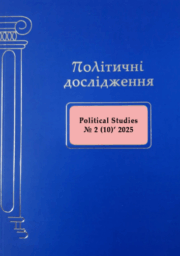
Scientific journal «POLITICAL STUDIES»

Новини

Оголошення

