
“What’s New in Metternich’s Garden? Central and Eastern Europe and the Russian War in Ukraine” was the title of a public lecture given by Mykola Riabchuk, a leading researcher at the Department of Political Culture and Ideology at the German Historical Institute in Warsaw.
The main question that the lecturer tried to clarify was why post-communist countries with approximately the same historical experience of Russian domination are now taking very different positions vis-a-vis the ongoing Russian aggression in Ukraine. Economic ties and dependencies, according to the scholar, are not decisive in this case, because even by 2022, Russia accounted for only a few percent of the trade turnover of Central and Eastern European countries. More important is the internal political dynamics in these countries, as well as their experience of relations not only with Russia and the USSR (roughly the same), but also with Ukraine and the West (quite different).

Taking into account cultural and historical factors, the speaker averred, is essential for both governmental and public diplomacy.
On February 17-21, 2025, the University of Innsbruck, Austria, hosted the Aurora International Peace Conference on the theme “The Role of Higher Education in Peacebuilding”. The conference aimed to provide a platform for discussing critical questions about how higher education institutions can respond to complex global circumstances by promoting cultures of peace through educational initiatives, activities and policies. The conference engages with the following key questions:
- How can the universities and institutes utilize their mission (teaching, research, third role) in the best way to support conflict prevention, transformation, and peacebuilding?
- Which capacity-building programs (teacher training and professional development) for the staff and students could and should be introduced to respond to different stages of the peacebuilding process?
- What can we learn from practitioners in the peace-building sector to enhance the role of universities in becoming agents of peace in conflict-affected societies?
The conference welcomed over 170 international experts—both scholars and practitioners in the peacebuilding sector and related fields—higher education policymakers, academics, and students from Aurora universities, their partners, and beyond to discuss the challenges and opportunities of universities in promoting peace.
Leading Research Scientist of the Ethnopolitics Department of Kuras Institute of Political and Ethnic Studies of the National Academy of Sciences of Ukraine, Ph.D. (Political Science), Associate Professor Anastasiia Dehterenko presented a research study Impact of the Ethnopolitical Management on Peacebuilding: The Case of the System of Educational Resilience in Panel 14: Experiences of HEI from War Zones and with Post-War Reconstruction, Recovery, and Reconciliation II. Anastasiia Dehterenko presented the results of the research project, which was supported by the German scientific foundation Gerda Henkel Stiftung in 2023, and the second round of research has already begun on January 1, 2025. The researcher emphasized that the Ukrainian Northern Pryazov’ye is a unique region of Ukraine, which has been partially a war arena since 2014. Since 2022, residents of the area have been forced to leave their homes and become refugees from the war. Given that the territory of the Ukrainian Northern Pryazov’ye is home to 85% of the Greeks in Ukraine, it is appropriate to talk about the resilience of the Greeks of the Ukrainian Northern Pryazov’ye.

Anastasiia Dehterenko
In the Paper at the Peace Conference, ethnopolitical management, which has a global impact on peacekeeping, was considered as the example of the system of ensuring the educational resilience of territorial communities in this region, with an emphasis on the work of Mariupol State University. The researcher presented the methodology for measuring ethnopolitical resilience and offered recommendations for the Venice Commission. The issue of ethnopolitical management must gain new relevance, in particular in connection with the displacement of the population and the integration of war refugees, as well as Ukraine’s preparation for EU accession, when one of the conditions was to improve the situation of Ukraine’s national minorities. The system of ethnopolitical management in Ukraine is an important resource component of the country’s post-war reconstruction. Improvement of the political and legal framework for the protection of the rights of national minorities in Ukraine, as one of the important requirements for Ukraine’s accession to the EU, is inextricably linked to the reform of the entire system of state ethnopolitical management.
Mykola Riabchuk, a leading researcher at the Department of Political Culture and Ideology of our Institute, took part in the winter school organized by the Central European University in Budapest for Ukrainian students as part of the international program „Invisible University for Ukraine”. At the podium discussion titled „History of the Present: Wartime Narration Between Neutrality and Judgement”, he addressed the problem of academic impartiality during the war, which is difficult to maintain, especially for Ukrainians as the primary of the Russian genocidal assault, but which still is mandatory as a sine qua non precondition for a sober academic analysis and eventual elaboration of adequate policies. In his view, the situation of scholars during the war might be more difficult emotionally than in peacetime but essentially it is the same since they still are obliged to use the same mechanisms of critical thought, inward reflection and self-control that bolster up academic objectivity of their analysis and are usually required and strictly observed in peer-reviewed journals. On the hand, yet, as the citizens of this or that country and, generally, as human beings with particular views, preferences and emotions, scholars have a broad opportunity to engage in debate in more partisan way as public intellectuals – by giving interviews, publishing op-eds, and communicating with mass media. During the war like today’s, it is probably not just an option but also a duty.

After the discussion, at the request of the Review of Democracy, Mykola Riabchuk recorded a podcast about the peculiarities of Ukrainian democracy and the problems it encounters during the war.
On 27 January 2025, on the occasion of International Holocaust Remembrance Day, we held the traditional 18th annual Roundtable „Holocaust Commemoration and the Ukrainian Society: Heritage and the Challenges of Today”. The XVIII Roundtable was organised by the Ukrainian Center for Holocaust Studies, the Goethe-Institut in Ukraine, and the House of Europe.
This year’s dedication marked the 80th anniversary of the liberation of Auschwitz-Birkenau, the end of World War II, 80th anniversary of the United Nations, 30 years to the Srebrenica genocide, and also 11 years of russian war against Ukraine. Discussions focused on the importance of remembering the Holocaust and preserving Jewish heritage today, especially in the context of ongoing conflicts.
At the opening, Anatolii Podolskyi, a Leading researcher in the Department of Ethnopolitical Science of our Institute, Head of the Ukrainian Center for the Study of the History of the Holocaust, Candidate of Historical Sciences, delivered a welcoming speech. In his speech, A. Podolsky emphasized the importance of remembering the Holocaust and protecting the Jewish heritage today, during the full-scale phase of the Russian war against Ukraine, the loss of lives and destruction. He also mentioned the difficulties and challenges of remembering the war during the war.

The Remembrance, Heritage, Museums session (moderated by Anastasiia Haidukevych-Kachuro) explored the creation of a Babyn Yar museum (speaker: Vitalii Nakhmanovych) and the challenges involved. Participants also discussed the National Museum of the Holodomor-Genocide (by Lesya Hasydzhak) and the Genocide Museum Territory of Memory in Odesa (by Tymur Korotkyy), highlighting their relevance during the current war. The Tracks of Memory project (introduced by Matthias Richter), using interdisciplinary tools to commemorate heritage, was also presented. Two major public cultural projects were shared: the exhibition Ukrainian-Jewish Century. Pictures and Stories from the 1920s through 2024 by Centropa (introduced by the founder, Edward Serotta) and audio lessons on the Holocaust by Lesya Yurchyshyn and Oleksandr Voroniuk, both praised as adaptable educational tools.

Session Remembrance through Education (moderated by Olha Limonova) covered teaching the Holocaust to various age groups. Anna Lenchovska from the NGO Educational Centre Tolerspace discussed methods for working with teenagers during three years of war. Nadiia Ufimtseva presented a manual for teaching Holocaust history in higher education, highlighting key challenges.Olena Zaslavska shared an example of an effective university curriculum, the Interdisciplinary Certificate Program in Jewish Studies at A. Krymsky Institute of Oriental Studies, discussing the challenges it faces and solutions.
We sincerely thank everyone who joined the Roundtable live, and to all Ukrainian and foreign speakers for sharing their experiences. In February, videos of the presentations will be posted on the UCHS YouTube channel. Thanks to our partners, Goethe-Institut in Ukraine and the House of Europe programme, for their support in organizing this event. As a reminder, the UN General Assembly adopted Resolution 60/7 in 2005, proclaiming 27 January as International Holocaust Remembrance Day, highlighting the importance of education and awareness to prevent future hatred, bigotry, racism, and prejudice.

Programme of the Roundtable in English
„Different Faces of ‘Pragmatism’: Eastern European Countries Against the Russian War in Ukraine – A Mixed Response” was the title of a public lecture given in Paris at the Sorbonne European Center for Social and Political Studies by the Chief Researcher of the Department of Political Culture and Ideologies Mykola Riabchuk. In his presentation, the Ukrainian scholar discussed different stances of East European nations in regard of the Russian war in Ukraine and hypothesized the possible reasons for these differences. It appeared that neither the common ‘Communist’ past and semi-colonial dependence on Moscow nor common belonging to the European ‘family’ of nations institutionalized in the EU and NATO do not guarantee their unanimity on such an important issue.

Sorbonne University
Security concerns and economic ties with Russia (energy import in particular) do play some role but, in some cases, they are remarkably downplayed while in some other cases they are notably overblown. The main determinant of the stances and policies of East European governments, according to Dr. Riabchuk, is their commitment to the normative values of the EU or, alternatively, willingness to sacrifice this commitment for the sake of populist policies and electoral success.
On January 22, 2025, the Kuras Institute of Political and Ethnic Studies of the National Academy of Sciences of Ukraine hosted a roundtable dedicated to the Day of Unity of Ukraine “National Communities of Ukraine – Historical Events and Modernity in the National Context”.
The scientific and practical event was organized by the Council of National Communities of Ukraine together with the scientists of the Institute.
The event was attended by scholars, MPs, representatives of state authorities and public associations of national communities of Ukraine. Before the roundtable, a minute of silence was observed in memory of the fallen fighters for the freedom of Ukraine.
The discussion was moderated by Professor, Vice President of Kyiv International University Oleh Zarubinsky.

During the round table
The participants were greeted by the Deputy Director for Research of the Kuras Institute of International Relations of the National Academy of Sciences of Ukraine Oleksandr Maiboroda, Chairman of the Council of National Communities of Ukraine, Chairman of the National Congress of Armenians of Ukraine Ashot Avanesyan, Project Assistant of the Council of Europe Office in Ukraine Natalia Oliynyk, MPs Maksym Tkachenko and Pavlo Frolov, Deputy Minister of Youth and Sports of Ukraine Andriy Chesnokov, representative of the Ukrainian Parliament Commissioner for Human Rights Oleksandr Osipov, Deputy Head of the State Service of Ukraine for Ethnic Policy and Freedom of Conscience Ihor Losovsky.
During the roundtable, the participants discussed a number of topical issues related to current socio-political processes, strengthening social unity and interethnic solidarity, and countering Russian military aggression.
The participants heard reports from the staff of the Department of Ethnopolitical Science of the Kuras Institute of Political and Ethnic Studies of the National Academy of Sciences of Ukraine. In particular, Doctor of Political Sciences, Professor, Chief Researcher Oleh Kalakura (“Crystallization of National Culture in Ukraine”), Candidate of Historical Sciences, Junior Researcher Valerii Novorodovskyi (“Challenges to Social Cohesion of Ukrainian Society”), Candidate of Philosophy, Leading Researcher Nataliia Kochan and Candidate of Historical Sciences, researcher Oleksiy Lyashenko.
During the roundtable, the participants discussed a number of topical issues related to current socio-political processes, strengthening social unity and international solidarity, and countering Russian military aggression.

During the round table

Oleg Kalakura speaks
The participants of the roundtable emphasized that the Day of Unity of Ukraine is a reminder that in the face of war and the challenges of our time, only through unity, solidarity, mutual respect and mutual support is it possible to defeat the enemy and post-war recovery.

Participants of the event
On January 14, 2025, Ukrinform hosted a roundtable discussion “Violation of the right to education in the state language in the occupied Crimea”. The public discussion was attended by representatives of the authorities, academia and the Ukrainian public. Among the speakers were Andriy Shchekun (representative of the Crimean Ukrainian Council, coordinator of the Humanitarian Policy group of the Crimean Platform expert network), Taras Kremin (Commissioner for the Protection of the State Language), Margarita Sokorenko (Commissioner for the European Court of Human Rights), Denys Chystikov (Deputy Permanent Representative of the President of Ukraine in the Autonomous Republic of Crimea), Klyment (Kushch) (Metropolitan of Simferopol and Crimea of the OCU, Head of the Orthodox Mission to Assist Victims of Human Rights Violations and Persons Deprived of their Liberty) and others.
During the event, representatives of the public and law enforcement agencies informed about the facts of criminal actions of the aggressor country, the Russian Federation, in the field of education in the temporarily occupied territory of Ukrainian Crimea. Information was presented on criminal proceedings for unlawful actions that violate the right to education, as well as materials on monitoring the criminal activities of “officials” of the so-called “Ministry of Education, Science and Youth of the Republic of Crimea”.

During the round table
Information was made public about criminal proceedings on unlawful actions that violate the right to education, as well as materials on monitoring the criminal activities of “officials” of the so-called “Ministry of Education, Science and Youth of the Republic of Crimea”. The participants of the event discussed possible further steps of Ukraine in the context of the implementation of the judgments of the International Court of Justice of January 31, 2024 and the European Court of Human Rights of June 25, 2024.

Pavlo Gai-Nyzhnyk
Pavlo Gai-Nyzhnyk, Leading Research Fellow at the Department of Political Culture and Ideology of the Institute, Doctor of Historical Sciences, took part in the roundtable. In his speech, he emphasized the need to create a humanitarian and educational front in the temporarily occupied Crimea, which would include the use of the latest technologies to influence cyberspace and the Internet.
The event also included a presentation of the book “Formation of the Modern National Consciousness of Ukrainians in Crimea: Tendencies, Prospects and Assimilation Threats (Late XIX – Early XXI Centuries), compiled, edited and co-authored by Pavlo Hai-Nyzhnyk, a leading researcher at the Institute, Doctor of Historical Sciences.
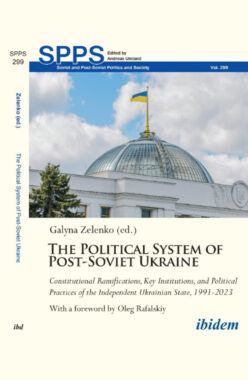
An electronic version of the analytical report “Institutional Capacity Traps in the System of Public Administration in Ukraine” is available on the Institute’s website in the section “Our Publications”.
The analytical report is devoted to the review of the institutional capacity of public authorities and local self-government bodies in Ukraine. Based on the results of the study, using numerous indices and indicators, analysis of legislation, sociological surveys and statistics, the authors formulated “institutional capacity traps” in the system of public authorities in Ukraine, which cause the underdevelopment of the system of checks and balances and, as a result, the degradation of the institution of political responsibility, social elevators, and do not contribute to strengthening public confidence in the state.
The book is intended for politicians, scholars in the field of public administration, political science, law and sociology; civil servants and representatives of local self-government interested in improving the efficiency of governance; experts and analysts involved in civil service reforms, students and postgraduates, and anyone interested in the development of government in Ukraine.
On December 1, 2024, Ukrinform hosted a roundtable discussion on “Civic Education for Veterans as Active Participants in Social and Political Processes in Ukraine”. The event was organized by the Razumkov Center with the support of the Hanns Seidel Foundation in Ukraine. The format of the event combined an offline discussion in the Ukrinform hall and an online connection.
Head of the Department of Political Institutions and Processes of our Institute, Doctor of Political Sciences, Corresponding Member of the National Academy of Sciences of Ukraine, Professor Halyna Zelenko took part in the roundtable. In her speech, the scholar emphasized the formation of a new social stratum in Ukraine – war veterans, and possible obstacles related to the political activity of veterans. In particular, the ban on registration of new political parties during martial law and legislative restrictions on the political activities of military personnel may become an obstacle to the creation of new political forces of veterans, while existing political parties may try to use their authority in their own interests. The roundtable was an important step in the public discussion of civic education for veterans. The participants agreed that this area is extremely important for Ukraine’s democratic development and the integration of veterans into social and political life.
The project “Civic Education for Veterans as Active Participants in Social and Political Processes in Ukraine” aims to develop mechanisms to help veterans adapt to peaceful life, raise their political awareness and ensure their participation in building a democratic state.
On December 10, 2024, the Living Memory Exhibition Center of the Babyn Yar National Historical and Memorial Reserve hosted a public discussion entitled “The Holocaust and Social Responsibility: Lessons for Today.”
During the discussion, historians, political scientists, archivists, and cultural experts considered the Holocaust not only as a historical event, but also as a phenomenon that has relevant lessons for preventing any manifestations of mass crimes today. Particular attention was paid to the role of society in confronting injustice and fighting for the protection of human rights and everyone’s responsibility for the future. The event was moderated by Roza Tapanova, director of the Babyn Yar National Historical and Memorial Reserve. Public figures and scholars took part in the discussion.

During the event
Anatolii Podolskyi, a leading researcher at the Department of Ethnopolitical Science of the Institute, PhD in History, made a presentation on “Memory of the Past as a Weapon in Modern Warfare”. In his speech, the scholar emphasized: “the historical calendar of modern Ukraine is already a true history and memory, unlike the times of the communist dictatorship. We must study, remember, and analyze our past. At the same time, it is important that academic research does not turn into propaganda.”

Anatoliy Podolsky speaks
The public discussion also featured video addresses by Oleksandra Matviychuk, Nobel Peace Prize laureate in 2022, human rights activist, and head of the Center for Civil Liberties, and Pavlo Kozlenko, director of the Holocaust Research Center and Genocide Museum Territory of Memory. The discussion was attended by Kyrylo Vyslobokov, director of the Archival Information Systems company, and Yurii (Amir) Radchenko, PhD in History and researcher at the Mykola Hayevyi Center for Contemporary History at the Ukrainian Catholic University.
Kuras Institute of Political and Ethnic Studies of the National Academy of Sciences of Ukraine has been included in the global register of research organizations – Research Organization Registry (ROR).
The ROR was created to identify research organizations and aims to integrate research institutions into the open scientific infrastructure.
The identifier is supported in the metadata of a number of scientific platforms, including Crossref and ORCID.
The ROR is used in journal publishing systems, data repositories (in particular, for state registration and accounting of scientific papers and dissertations in the Ukrinform), platforms that provide international research grants, open access workflows, and other components of the research infrastructure. ROR ID is designed to eliminate ambiguity of institutional affiliation, improve identification and tracking of research conducted by the institution, etc.
ROR ID of the institution:
https://ror.org/0067sfd77
ROR data is free and publicly available in accordance with the requirements of the CC0 1.0 Universal Public Domain license.
Use of a unique identifier (ROR ID):
- Ensures correct attribution of scientific institutions, associated researchers, publishers, informative for granting organizations, etc;
- facilitates interaction between different systems, databases and research platforms, facilitating information exchange and collaboration;
- helps to improve the identification and accessibility of research organizations, which contributes to effective interaction and search for partners for cooperation;
- allows for more accurate tracking of scientific results;
- promotes the implementation of international standards for the identification of research organizations, transparency and open access to scientific information, which is important for the development of open science.
From September 30 to October 2, 2024, the University of Regensburg and Think Space Ukraine, with the support of the German Federal Ministry of Education and Research, held a conference “Shifting Borders, Changing Landscapes: Research on Industrial Regions in Transition”. The conference was devoted to the study of the past and present of the industrial regions of Eastern Europe – Upper Silesia and Donbas. The conference was also aimed at creating a space for a broader dialogue with scholars who study European industrial zones and border areas, and conduct comparative research.
I took part in the conference and delivered a presentation “Donbas vs. Galicia: Different Modes of Othering and Mythologization” by Mykola Riabchuk, a leading researcher at the Department of Political Culture and Ideologies of the Institute. In his presentation, the scholar argued that the othering of both regions was largely based on old Soviet myths, although they were used in different ways. The post-Soviet stereotyping of Galicia was essentially a continuation of old Soviet myths that demonized the region as extremely nationalistic and xenophobic, while in the case of Donbas, the old Soviet myth of the region as a showcase of “developed socialism” was caricatured into its opposite – the embodiment of all possible social pathologies. However, after 2014, the representation of both regions in the public discourse, according to the researcher, has changed significantly due to a deeper understanding of regional peculiarities and their more responsible political interpretation.

University of Regensburg
Prior to the conference, a photo exhibition of works by four prominent artists whose lives are closely connected with Upper Silesia and Donbas was organized for the participants: Viktor Maruschenko (1946-2020), Karolina Jonderko (1985), Oleksandr Chekmenov (1969), and Michal Kala (1948).
On September 26, 2024, the All-Ukrainian Scientific and Practical Forum was held in Kyiv: „Greeks of Ukraine: Preserving Identity in the Context of Russian Aggression. Socio-political, historical, cultural and linguistic aspects”. The event was initiated by the State Service of Ukraine for Ethnic Affairs and Freedom of Conscience in cooperation with the Federation of Greek Societies of Ukraine and Mariupol State University.
The forum was attended by representatives of Greek communities, government institutions, international organizations and academia, united by a common desire to preserve the centuries-old history and culture of the Greeks in Ukraine. Particular attention was paid to the problems faced by Greeks living in the temporarily occupied territories, given that 85% of Ukrainian Greeks lived in the Ukrainian Northern Pryazov’ye before the war.
The forum was attended by scholars of the Department of Ethnopolitical Science of our Institute: Anastasiia Dehterenko, Leading Research Scientist of the Ethnopolitics Department, PhD (Political Science), Associate Professor and Oleksiy Lyashenko, Researcher, Candidate of Historical Sciences.

In the scientific discussion „The Greeks of Ukraine in the sociopolitical life of Ukraine in the context of the Russian-Ukrainian war, their contribution to countering Russian aggression”, Anastasiia Dehterenko, made a presentation on „Ethnopolitical management in the system of resilience of territorial communities of the Ukrainian Northern Pryazov’ye”. Speaking during the scientific discussion, Anastasiia Dehterenko noted that the main goal of the resilience of territorial communities is to preserve the viability of the community, its social, economic, and institutional structure in the face of war. At the same time, resilience is something that needs to be systematically measured and tracked using resilience indices, and to measure ethnopolitical resilience, it is necessary to use a monitoring system of such a resilience tool as ethnopolitical management.
On August 28, 2024, a reading and discussion „Russia – a threat to Europe” with journalists Gesine Dornblüth and Thomas Franke took place in Braunschweig (Germany). The book „Putin’s Poison – Russia’s Attack on European Freedom” was presented. The study was published on September 9, 2024. The most controversial issues were the insidious and sophisticated methods used by the Russian regime to infiltrate the societies of Armenia, Georgia, Ukraine and the Baltic States, as well as to threaten Europe. Christoph Giesa moderated the discussion.
Kuras Institute of Political and Ethnic Studies of the National Academy of Sciences of Ukraine was represented by leading researcher, PhD in Political Science, Associate Professor Anastasiia Dehterenko, who has been fruitfully cooperating with the Friedrich-Naumann-Stiftung für die Freiheit and the Gerda Henkel Stiftung for the second year in a row.
The discussion „Russia as a Threat to Europe” was supported by the Friedrich-Naumann-Stiftung für die Freiheit, which offers political education programmes in Germany and around the world based on the ideas of liberalism and encourages people to participate in political life through events and publications actively. The foundation was founded on May 19, 1958, is headquartered in Potsdam with offices throughout Germany, and is engaged in political dialogue with more than 60 countries.

As part of the scientific discussions in Braunschweig and Berlin on August 28–30, 2024, Anastasiia Dehterenko also gave lectures on «Protection and Inclusion of New Waves of War Refugees: Risks and Opportunities» and conducted an information campaign on the protection and inclusion of new waves of Ukrainian refugees within the framework of cooperation with the NGO „Ukraine Resilience Development Academy” and with the financial support of the Ukrainian Women’s Fund.
On the 5th of September, Dr. Mykola Riabchuk, a Principal Research Fellow at the Department of Political Culture and Ideology, delivered a keynote lecture at the opening ceremony of regional IPS conference – the summit of the Central and East European alumni of the International Parliamentary Scholarship Program of the German Bundestag. The site for the conference in two borderland cities – Suceava and Chernivtsi (Stefan cel Mare University in Romania and Yuri Fedkovych University in Ukraine) – were chosen to facilitate the trip for Ukrainian participants and to enable the reciprocal visit of foreigners (upon their consent) to Ukraine.
In his lecture, entitled “Reshaping the Global Order in the 21st Century – Challenges for Democratic Resilience in Central and Eastern Europe and Beyond” Dr. Riabchuk emphasized the exceptional importance of Ukraine’s currents resistance to Russian aggression and its victory (or defeat) for both the eventual global order (or, alternatively, complete disorder) and for the triumph (or collapse) of democratic principles in the region and elsewhere.

Mykola Ryabchuk speaks
On the same day, he took part in a panel discussion with the German MP from the Green Party Robin Wagener and Ukrainian Ambassador to Romania Ihor Prokopchuk on “Democracies in Central and Eastern Europe – the Results of Their Development since 1989-1991 and Stability Today”. In his brief intervention, Dr. Riabchuk stressed the importance of the liberal component in true democracy, neglect of which often results in ochlocracy and populism.
On August 23, 2024, Head of the Department of Political Institutions and Processes, Corresponding Member of the National Academy of Sciences of Ukraine, Galyna Zelenko, gave a scientific report “Institutional capacity of Ukraine in conditions of war” at the meeting of the Presidium of the National Academy of Sciences of Ukraine.
In her report, G. I. Zelenko presented the results of a three-year study of the Department of Political Institutions and Processes.
SIGMA and Worldwide Governance Indicators, Fragile State Index, etc. were used to analyze the institutional capacity of the state.
In her speech, G.I. Zelenko noted that indices of the state’s institutional capacity in Ukraine began to decline even before the great war in 2021. While the regression during the war is insignificant, that, in combination with social self-organization, explains why Ukraine survived the first years of the war.

Meeting of the Presidium of the National Academy of Sciences of Ukraine
But for the most part, in her speech, G. I. Zelenko focused on the analysis of “traps of failure”. According to the researcher’s conclusion, they are established in Ukraine at the formal-institutional level, namely, teleological (tentative) constitutionalism involves the adoption of procedural laws that would make it possible to implement the norms of the constitution. However, in Ukraine, they were either not adopted, or were adopted with great delay (the Law on the Cabinet of Ministers, on the Impeachment of the President, on the Regulations of the VRU were adopted more than 10 years later, while there are no laws on the President of Ukraine, the Verkhovna Rada of Ukraine at all).
After all, Ukraine has an absolutely unbalanced system of public power, in particular, an underdeveloped mechanism of checks and balances. And if there is a legal vacuum, it is filled with illegal practices.

Galyna Zelenko is speaking
In Ukraine, in the late 1990s and early 2000s, the process of primary capital accumulation was largely completed thanks to the voucher privatization model. As a result, FPGs were formed in Ukraine and Ukraine received the “capture state” phenomenon. Further, the logic of the political process was subordinated to the preservation of the status quo of the FPG, which turned out to be the actual source of power in the state, and not the people, as is commonly believed. The impossibility of influencing the authorities in a conventional way (due to non-working tools of political participation) also caused the Maidans.
After all, now the main “traps of failure” are as follows:
– a completely broken government (problem of dual subordination) and a destructive vote of no confidence, which means that even if the government is given a two, it cannot be automatically dismissed;
– a half-accepted government (the government works without a program, which is absolute nonsense for European practice), which means that there is no document by which the parliament can evaluate the effectiveness of the government’s work;
– the absence of a regulated status of the parliamentary opposition and the unregulated activity of the parliamentary coalition, which causes parliamentary corruption and parliamentary groups “for sale”;
– the conditional effect of the imperative mandate, and hence the impossibility of punishing deputies for frank collaborationism, activities that pose a threat to national security. After all, there is no procedure for such cases.
– the absence of a rule on mandatory party affiliation of the minister, which erodes the political responsibility of the ruling coalition;
– the absence of a rule on the report of ministers to the parliament in the event of their dismissal, which eliminates the political responsibility of both the cabinet and the parliament;
– a destructive vote of no confidence in the government, when recognizing the government’s work as unsatisfactory does not mean its automatic resignation, and therefore government crises due to the long procedure of forming governments are programmed automatically;
– an absolutely ineffective institution of political parties – that is, in essence, there is no one to perform the function of mediation between society and the government.
As a result, the institution of political responsibility in general has completely failed. And therefore, with such a system of government organization, Ukraine will not be able to fully move towards the EU, because the system of government organization will come into conflict with the standards and practices of the EU; nor maintain the appropriate level of legitimacy and capacity of the authorities to wage war against the Russian Federation.
On 12-15 August 2024, the General Conference of the European Consortium for Political Research (ECPR) took place at University College Dublin (Ireland).
The European Consortium for Political Research (ECPR) is an independent academic association founded in 1970. The Consortium was initiated by Jean Blondel and Stein Roccan. Together with Peter de Janosi of the Ford Foundation and other prominent European scholars, they developed and implemented the concept of the European Consortium for the Promotion of Political Science. Twelve European universities founded the ECPR. Today, ECPR has 350 institutional members from nearly 50 countries. The organization includes leading universities and tens of thousands of scholars and students engaged in research and teaching of political science.
The annual General Conference of the European Consortium for Political Research is a significant scientific event aimed at developing research in all areas of political science. Due to its comprehensive coverage and inclusive approach, it allows scholars from different continents and countries to come together and present and discuss the results of their research work.
The General Conference, which took place on 12-15 August 2024, brought together more than 2,500 participants at University College Dublin (Ireland) and on the online platform of the European Consortium for Political Research (ECPR) General Conference. This year, there were 61 sections and about 500 panels discussing the most pressing issues of political science.
For the second year in a row, the Ukrainian research institution Kuras Institute of Political and Ethnic Studies of the National Academy of Sciences of Ukraine was represented at the General Conference of the European Consortium for Political Research (ECPR).
This year, the research of scientists from Kuras Institute of Political and Ethnic Studies of the National Academy of Sciences of Ukraine was presented at the section „International migration: Policies and politics”. The panel „Protection and inclusion, or return to the country of origin of new waves of refugees: risks and opportunities” was moderated by the scientists of the Department of Ethnopolitics of the Kuras Institute of Political and Ethnic Studies of the National Academy of Sciences of Ukraine: Anastasiia Dehterenko – Leading Research Scientist of the Ethnopolitics Department, PhD (Political Science), Associate Professor (Chair of the Panel), Oleksiy Lyashenko – Researcher, Candidate of Historical Sciences (Co-Chair of the Panel), Lyudmyla Mazuka – Senior Researcher, Candidate of Historical Sciences (Moderator of the Panel) and Oleg Kalakura – Chief Researcher, Doctor of Historical Sciences, Professor (Moderator of the Panel).

The panel „Protection and inclusion, or return to the country of origin of new waves of refugees: risks and opportunities” was held online on 13 August 2024 on the platform of the General Conference of the European Consortium for Political Research (ECPR) at University College Dublin (Ireland).
The following reports were presented by Kuras Institute of Political and Ethnic Studies of the National Academy of Sciences of Ukraine:
- „The cultural segment of preserving the identity of Ukrainian refugees from the war in Ukraine’s ethnic policy”, Paper Author & Paper Presenter – Oleg Kalakura;
- „Protection and inclusion of new waves of refugees from the war: risks and opportunities”, Paper Author & Paper Presenter – Anastasiia Dehterenko;
- „State structure and ethnopolitical resilience of Ukraine: historical retrospective and political impacts”, Paper Author & Paper Presenter –Oleksii Liashenko;
- „Assimilation or return: how to ensure children’s freedom of choice”, Paper Author & Paper Presenter – Liudmyla Mazuka.

Back in March 2024, the European Consortium for Political Research (ECPR) invited the international academic community to discuss international migration issues at the University of Lüneburg (Germany). A total of 450 scholars from different countries were invited to participate in the joint seminar session on 25–28 March 2024.
During the seminar „Attractive States, Desirable Migrants: Examining Immigration Promotion Policies” (https://ecpr.eu/Events/Event/WorkshopDetails/14436) within the framework of the joint seminar session of the European Consortium for Political Research (ECPR) at the University of Lüneburg in Germany from 25 to 28 March 2024 (Lüneburg, Germany), a research by Leading Research Scientist of the Ethnopolitics Department, PhD (Political Science), Associate Professor at Kuras Institute of Political and Ethnic Studies of the National Academy of Sciences of Ukraine Anastasiia Dehterenko was presented.
The study „The Ukrainian «desirable» immigrants targeted by state promotion in EU: risks, opportunities and prospects” was conducted and presented at a workshop as part of a joint research project and with the financial support of the Gerda Henkel Foundation (Germany).
From August 13 to 17, 2024, the annual scientific and educational seminar-school “Holocaust History: Study, Teaching, Memory” was held in Kyiv, organized by the Ukrainian Center for the Study of the History of the Holocaust in cooperation with the Yad Vashem Memorial (Jerusalem). The participants of the seminar-school were teachers of history and social disciplines of educational institutions from 13 regions of the country.
Lectures were given at the school-seminar by Anatoliy Podolskiy, a leading researcher of the Department of Ethnopolitics of our Institute, Candidate of Historical Sciences, and Head of the Department of Political Culture and Ideology, Doctor of Historical Sciences, Professor Yuriy Nikolaiets.

Anatoliy Podolskiy is speaking
Anatoliy Podolskiy in his lesson on the topic “The relevance of learning about the history of the Holocaust during the Russian-Ukrainian war” drew attention to the fact that historians and educators in Ukraine today, in order to understand the behavior and crimes of the modern Russian political regime, during the Russian aggression against Ukraine should compare the crimes of dictatorial regimes and totalitarian ideologies of the last century, in particular Stalin’s communism and Hitler’s National Socialism. Comparative studies will help to understand the nature of the aggressor country, which is now opposing us and aims to destroy our statehood, Ukrainian cultural and political identity. It is obvious that the hatred of the sovereignty of Ukraine, the Ukrainophobia of Putin’s criminal regime have their origins in totalitarian ideologies of centuries ago.

Yuriy Nikolaiets is speaking
Yuriy Nikolaiets in his lectures “Crimes of Nazism, Communism and Rashism in Modern Scientific and Journalistic Discourse” emphasized that the crimes of fascists and communists are rooted in the idea of the former greatness of the state and the prospects for realizing its geopolitical interests, and the asymmetric dissemination of information contributes to the formation of ideas about crimes, their scope and consequences and is a prerequisite for the development of criminal behavior practices of the future. The appearance of modern rashism, as a type of fascist ideology, is connected with the large-scale economic lag of the Russian Federation from the leading countries of the world and the desire of its leaders to ensure the realization of certain economic interests through the spread of the “Russian peace”, including through the conduct of hostilities.
During five days, participants had the opportunity to take part in lectures, discussions, trainings, discuss various aspects of the history of the Holocaust in Ukraine and Europe, the politics of totalitarian regimes, Ukrainian-Jewish relations in the interwar period and during the Holocaust, features of the ideology of Nazi anti-Semitism, interdisciplinary approaches to the history of the Holocaust, other genocides of the Second World War and modern times, issues of historical memory, the influence of Russia’s war against Ukraine on the research and memory of the Holocaust, other relevant topics.

Participants of the school seminar
August 16, 2024 at the Kuras Institute of Political and Ethnic Studies of the National Academy of Sciences of Ukraine, a round table was held “Separatist movements of Catalonia and Donbass: threat assessments in the context of modern state building”.
The co-organizers of the event were the Kuras Institute of Political and Ethnic Studies of the National Academy of Sciences of Ukraine, Center for Historical Research “RIPOLLET” (Spain), Central State Archive of Higher Authorities and Administration of Ukraine, GS “Institute of Strategic Research and Security”.
Scientists from the Institute of Ukrainian History of the National Academy of Sciences of Ukraine, the National Academy of the Security Service of Ukraine, the National Academy of Internal Affairs, the State University of Trade and Economics, Cherkasy National University, other scientific institutions and educational institutions took part in the work of the round table.

Welcome speech by Oleksandr Mayboroda
The President of the RIPOLLET Historical Research Center (Spain), Eduard Ballesteros, PhD (“The Movement for the Independence of Catalonia: Trajectories and Debates on Spanish Democracy”), Doctor of Historical Sciences, Professor, Director of the Central State Archives of Supreme Bodies of Power and Administration of Ukraine Larisa Levchenko (“Attempts to create autonomies in the East of Ukraine: historical experience of 1917 and 2014”), Doctor of Political Science, Professor, chief researcher of the Department of Political Institutions and Processes of the Kuras Institute of Political and Ethnic Studies of the NAS of Ukraine Vasyl Kozma (“Degradation of Donetsk territorial patriotism and the development of separatist movements: causes and nature”), Director of the Institute of Strategic Studies and Security, Phd Pavlo Lysyansky (“External factors in the organization of separatist movements in Donetsk and Luhansk Region in the 1990s–2000s”), Doctor of Historical Sciences, Professor, Head of the Political Culture and Ideology Department of the Kuras Institute of Political and Ethnic Studies of the National Academy of Sciences of Ukraine Yuriy Nikolaiets (“The role of the media in the organization of separatist movements in Donbas in the 1990s-2000s”) made speeches during the round table. The Candidate of Political Sciences, leading researcher of the Kuras Institute of Political and Ethnic Studies of the NAS of Ukraine Rostyslav Balaban was a moderator of the meeting.

During the work of the round table
The participants of the round table noted the fundamental difference between the situation in Catalonia and the territory of the Ukrainian Donbass. Emphasis was placed on the fact that the separatist movements of Donbas were organized with the active assistance of the Russian Federation.
During the discussion, it was noted that the majority of the ethnically Russian population of the Ukrainian Donbas did not see its future as part of the Russian Federation in 2014. The majority of residents of Donetsk and Luhansk regions advocated the preservation of these regions as part of Ukraine and expressed outrage that the Ukrainian authorities and law enforcement agencies made too little effort to eliminate separatist centers.

During the discussion
The nature of the actions of law enforcement agencies during the illegal referendum in Catalonia sparked the discussion. Scientists also expressed slightly different views on the prospects of punishing all participants of the separatist movement in Donbas.
Condemnation caused the spread of theses about “bandit Donbas” by certain political forces of the “orange camp” in the early 2000s. Labeling the citizens of the entire region as criminals was certainly outside the legal field, but this did not stop those interested in spreading relevant information.
Scientists agreed that the long-term reintegration of the region will be complicated, since many of its residents took direct part in the hostilities against Ukraine as part of illegal armed formations and the Armed Forces of the Russian Federation. It was also possible to reach an agreement on the issue of the impracticality of the post-war reconstruction of the destroyed monofunctional settlements of Donbas.

Participants of the round table
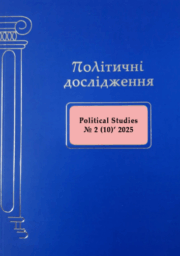
Scientific journal «POLITICAL STUDIES»
Новини
Оголошення

