
On August 5, 2024, an online presentation of the scientific project “Bykivnia, Babyn Yar, Bucha — between the massacre and its memory” took place. The project will focus on research on the crimes of communism, Nazism and rashism in Ukraine.
During the presentation of the new research project, Anatoliy Podolskiy, a leading researcher of the Department of Ethnopolitics of our Institute, Candidate of Historical Sciences, spoke. In his speech, the scientist emphasized that today it is important not only to compare the crimes of the three dictatorial regimes, but also to explain their nature, under which circumstances there is a real opportunity for mass murders and their justification. This project shows that it is possible and worthwhile to compare two totalitarian regimes of the 20th century without diminishing the memory of either of them, and it is also worth analyzing rashism in the context of communism and Nazism. A. Podolskiy also focused on the historical context of Nazi crimes in Babyn Yar during World War II and the German occupation of Ukraine.
During the event, a website was presented on which, in the format of stories about three places of memory in Kyiv and its surroundings – about burials in Bykivna, Babyn Yar and Bucha – the crimes of the three occupation regimes on the territory of Ukraine were revealed: communism, Nazism, rashism. At first, the site will be available in Ukrainian, with English and German versions coming soon.
During the presentation of the project, the following also spoke:
Anton Drobovych, Candidate of Philosophical Sciences, Head of the Ukrainian Institute of National Remembrance, Ihor Konkolevskyi, Professor, Director of the Center for Historical Studies of the Polish Academy of Sciences in Berlin, Roman Podkur, Candidate of Historical Sciences, Senior Researcher of the Department of History of State Terror of the Soviet Era, Institute of the History of Ukraine of the National Academy of Sciences of Ukraine, Head of the National Rehabilitation Commission, Larisa Yakubova, Doctor of Historical Sciences, Head of the Department of History of Ukraine 20-30 years of the 20th century of the Institute of the History of Ukraine of the National Academy of Sciences of Ukraine, corresponding member of the National Academy of Sciences of Ukraine, Iryna Ozarynska, artist, performer, author of the silent book “The Triangle of Evil: Communism, Nazism, Rashism”, Svitlana Lyakhovets, author of the idea and project coordinator, head of the NGO Svitarta, Tetyana Sheptytska, Candidate of Philological Sciences, deputy general director for scientific work of the National Historical and Memorial Reserve “Bykivnian Graves”, Ihor Bartkiv, head of the Archive Department of the Buchansk City Council.
The discussion was moderated by Nadiya Goncharenko, a senior researcher at the Institute of Cultural Studies of the National Academy of Sciences of Ukraine.

During the discussion
The following issues were discussed during the discussion:
- reinterpretation of totalitarian regimes in the European culture of memory, in particular, including the crimes of communism and rashism;
- perception of communism, Nazism and rashism through the prism of humanistic values;
- coverage and condemnation of the crimes committed by the Nazi and communist totalitarian regimes in Ukraine, as well as the crimes of their successors – the Rashists;
- impunity of evil as a guarantee of its reproduction on a larger scale;
- the names and faces of killers who thought they would remain hidden;
- empathy for victims, regardless of the length of time of the crimes committed against them.
The project is implemented by the NGO Svitarta with the support of the EVZ Foundation
Project partners:
- Ukrainian Institute of National Memory
- Zentrum für Historische Forschung Berlin
- Lietuvos istorijos institutas
- Branch archive of the Security Service of Ukraine
- Memorial reserve “Bykivnia graves”
- National Historical and Memorial Reserve “Babyn Yar”
- Archive Department of the Buchan City Council
The Department of Political Institutes and Processes of the Kuras Institute of Political and Ethnic Studies of the National Academy of Sciences of Ukraine and the Association of Political Sciences of Ukraine conducted a study “Instruments of legitimation of power during the period of martial law”. The purpose of the research is to identify and analyze the tools that can be used (according to the current legislation) to maintain trust in domestic political institutions under the conditions of “prolonged” (during the martial law regime) electoral legitimation in order to preserve democracy in Ukraine. By “legitimate democratic political regime” we understand a system with a high level of support and recognition by citizens of the activities of power structures (parliament, president, government, local self-government bodies), which guarantees maximum compliance with laws and democratic procedures, the implementation of which is not limited by the relevant law on the introduction of military state in Ukraine.
The scientific tasks of the research include:
- A matrix of factors shaping the general legitimacy of institutions of public power has been developed. The approach to assessing the level of legitimacy in democracies by M. Stephen Weatherford was used, which was supplemented by the authors of this study taking into account the Ukrainian context
- The basic tools of legitimation of such institutions as the president (10 tools), the parliament (11 tools), the government (11 tools), local self-government bodies (12 tools) are singled out, the use of which is not limited to the legal regime of martial law in Ukraine
- The level of experts’ understanding of the importance and application of specific legitimation tools of each of the researched institutions, the implementation of which is able to support the development of the Ukrainian political system in the direction of democracy, even in the conditions of full-scale aggression of the Russian Federation against Ukraine, is determined. The method is an online survey of experts in the period from May 12 to June 15, 2024. 261 experts participated in the survey, of which 76% are scientists (political scientists, lawyers, sociologists, economists, public administration specialists)
- According to experts, there are gaps between the importance of tools and the level of their implementation
- Averaged levels of importance and application of legitimation tools (according to expert evaluations) were established for each institute, clustered into the following thematic groups: “normative-legal”, “practical-instrumental” and “communicative” (according to the approach of R. Amossi)
- A wide selection of tools is offered, the comprehensive introduction of which can improve the management system and the practice of inter-institutional relations in the country in wartime conditions, as well as after the renewal of electoral procedures.
Among the basic conclusions of the study:
- The most important features of a legitimate modern government institution in Ukraine are citizens’ trust in it, its ability to guarantee security and real efficiency, carried out within the limits of the Constitution (according to experts’ assessments)
- The development of national security policy, conducting foreign policy activities, and guaranteeing compliance with the Constitution are very important tools for legitimizing the institution of the president during martial law. According to experts, the most important practices for the legitimation of the parliament are its clear and transparent observance of law-making procedures, the formation of the government and the implementation of parliamentary control over it, as well as the demonstration of deputy integrity. The top tools of the government’s legitimation (in terms of importance) are the trust in it of international partners, its clear public communication and the realization of the responsibility of the Cabinet of Ministers of Ukraine before the Verkhovna Rada. As for local self-government bodies, for their legitimation, according to experts, such tools as fair use of local budgets by self-government bodies, communication with territorial communities and effective resolution of local issues/problems are very important
- Most of the identified legitimization tools for all institutions were classified by experts as “rather important” and “very important”, while their use by the parliament, government and local government in conditions of full-scale war was recognized by experts as mostly irregular. The smallest (but still quite large) gap in expert assessments of the importance of legitimization tools and their practical application at the presidential institute
- According to experts, the Verkhovna Rada of Ukraine uses, among the clustered tools of legitimation, first of all the tools of the practical group. While the most important, according to experts, for maintaining the legitimacy of the parliament today are the tools of the regulatory and legal group. In order to maintain a high level of legitimization of the institutions of the government and the president, according to experts, the tools of the practical group are the most important. The tools of the same group, according to experts, are those that are used more often than others by the CMU and the President. The problem of such “coincidence” is the presence of large gaps between the assessments of the importance and application of the tools (especially in the government case).
- Even the transition to the thorough implementation of the tools of legitimation of the existing institutions should not negate the need to improve the legislation regulating the institutional design of the political system of Ukraine, which needs changes. Preparation for the redesign of the country’s political system should actively take place at the level of scientific and expert discussion during the legal regime of martial law.
The 20th annual Warsaw East European Conference (WEEC) with the headline topic “How to Deter Russia: Resilience of Ukraine and the Western Community” was held at the Center of East European Studies of Warsaw University on July 1–3.
On its second day, Dr. Mykola Riabchuk, a Principal Research Fellow of the Department of Political Culture and Ideology of our institute and a long-time member of the program council of WEEC, moderated the panel on “Media Under Siege: Tackling Disinformation and Propaganda” and, at the end, he took part in the concluding discussion on “The Future of Ukraine: Resilience, Internal Stability, European Integration”.

In his presentation, he focused primarily on the problem of rule of law (rather than “rule by law”), that has not been solved in Ukraine within the past thirty years, and argued that no other problems can be effectively tackled without the proper solution of that crucial one. First of all, he averred, the legal conditions – judiciary, law-enforcement, anti-corruption – strongly determine economic development, direct foreign investment in particular, and secondly, they largely influence public trust in state institutions, enhance (or undermine) social stability and disable (or enable) external propagandistic manipulations.

During the discussion
On June 13–14, Dr. Mykola Riabchuk, a Principal Research Fellow of the Department of Political Culture and Ideology of our Institute, took part in a two-day international conference “Language Ideologies in the Successor States of the USSR – Soviet Legacies and New Developments” at the University of Giessen.
In his presentation, titled “«Language of Our Defenders»: (De)legitimization of Russian During the War”, he defined the language situation in Ukraine as still quite ambiguous, resulting from both the ambivalent character of Ukrainian post-Soviet society and from ambiguous policies of all the subsequent governments.

Mykola Ryabchuk reports
The 2014 Russian invasion and, especially, the all-out war launched in 2022 did not put an end to that ambivalence, though substantially limited its scope and scale. While the protracted struggle between the “Ukrainophone” and “Rusophone” ideologies in Ukraine seems to be won by the former, the so called “centrist” ideology that downplays the significance of language issue and effectively supports the postcolonial status-quo, still enjoys popularity in Ukrainian society and may successfully compete with the “Ukrainophone” ideology in the future. Russian language, ostracized and delegitimized in public usage as the language of the aggressor state, is re-legitimized, paradoxically, in private usage as a “language of our defenders”, i.e. language of thousands of Russian-speaking patriots of Ukraine who defend their country from Russian aggression. As long as the public and private spheres are clearly separated and the official use of Ukrainian is strictly observed, the “peaceful co-existence” of two language looks possible, even though some tension might be unavoidable.

Mykola Ryabchuk among the conference participants
On June 27, 2024, at the Kuras Institute of Political and Ethnic Studies of the National Academy of Sciences of Ukraine held a round table presentation of the results of the scientific study “Adaptive changes in the political field of Ukraine in the conditions of war”.
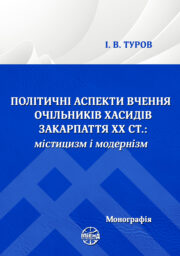
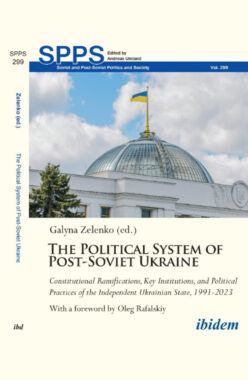
In his opening speech, Director of the Institute, Vice-President of the National Academy of Sciences of Ukraine, Doctor of Historical Sciences, Professor, academician of the National Academy of Sciences of Ukraine, Oleg Rafalskiy, emphasized the relevance of the investigated problem and the results of the study, which contains a detailed analysis of the changes taking place in the political field of Ukraine under the influence of the war unleashed by Russia. Emphasis is placed on the importance of the political analysis carried out by scientists of the activities of the key institutions of the political system: in the mode of its functioning, in the institutions of parliamentarism, the presidency, executive and judicial branches of power. An important research direction is the analysis of modern social and political processes, the search. The mentioned and other issues are part of the political science subjects, which are the subject of the conducted analysis, the results of which are presented on the pages of the collective monograph.

Oleg Rafalskiy is speaking
In continuation of the presentation, Head of the Department of Political Institutions and Processes, Doctor of Political Sciences, Professor, Corresponding Member of the National Academy of Sciences of Ukraine, Galyna Zelenko, noted that the author team focused on the key aspects of political changes in Ukraine caused by the conditions of martial law – on functional changes in the country’s political system, on new formats of relations between government and society, on innovations in the implementation of the Euro-Atlantic course of the Ukrainian state. The subject area of the analysis of changes in the country is the functioning of political and power institutions, the nature of political governance in accordance with the activation of social processes in the spiritual, cultural, ethnopolitical spheres, and the search for ways to integrate Ukraine into the global democratic space.

During the work of the round table
During the round table, the project executors gave short presentations of their sections:
– “Transformation of the political regime in Ukraine during full-scale Russian armed aggression” (Galyna Zelenko, Head of the department, Doctor of Political Sciences, Professor, corresponding member of the National Academy of Sciences of Ukraine);
– “The problem of the institutional capacity of the parliament during the war” (Vitaliy Pereveziy, scientific secretary of the Institute, Candidate of Historical Sciences, Associate Professor);
– “Structural and functional changes of executive power” (Svitlana Sytnyk, senior researcher, Candidate of Political Sciences, Associate Professor);
– “Political aspects of changes in the judicial branch of the Ukrainian government” (Svitlana Brekharya, senior researcher, Candidate of Political Sciences);
– “Moral and psychological unity of Ukrainians in repelling Russian armed aggression” (Yuriy Shaihorodskyi, Deputy Director of the Institute, Doctor of Political Sciences, Professor);
– “Management mechanisms for preventing political radicalism and strengthening political consensus” (Nataliya Kononenko, leading researcher, Candidate of Political Sciences);
– “Ethnopolitics during the war” (Viktor Kotygorenko, Head of the department, Doctor of Political Sciences, Professor);
– “War and crystallization of the Euro-Atlantic vector of Ukraine” (Oleksandr Mayboroda, Deputy Director of the Institute, Doctor of Historical Sciences, Professor, corresponding member of the National Academy of Sciences of Ukraine);
– “Mechanisms of public diplomacy in the formation of international support for Ukraine” (Leonid Kiyanitsa, senior researcher, Candidate of Political Sciences);
– “Securitization of the socio-political space of Ukraine in the face of armed aggression” (Maxym Kyjak, senior researcher, Candidate of Philosophical Sciences).
Scientists of our Institute took part in the work of the round table and spoke: Chief Researcher, Doctor of Political Sciences, Professor Vasyl Kozma, Leading Researcher, Candidate of Political Sciences Rostyslav Balaban, Leading Researcher, Candidate of Historical Sciences Anatoliy Podolskiy, Leading Researcher, Senior Researcher employee, Candidate of Political Sciences Iryna Ovchar, and others. More than 30 guests joined the discussion of the research topic online. Among them are employees of scientific institutions, teachers of higher education institutions, representatives of the media and public organizations.
On June 20, 2024, the round table “Ukraine – Hungary: current state and prospects of interstate relations” was held, organized by the Kuras Institute of Political and Ethnic Studies of the NAS of Ukraine. The following also participated in the preparation and holding of the event: The National Institute for Strategic Studies, Uzhgorod National University, Ferenc Rakoczi Transcarpathian Hungarian Institute, Transcarpathian Regional Center for Socio-Economic and Humanitarian Studies of the National Academy of Sciences of Ukraine, Razumkov Center, Association of Political Sciences of Ukraine, Ukrainian Academy of Political Sciences.
The purpose of the event was a scientific and expert evaluation of the current state and ways of strengthening the strategic partnership between Ukraine and Hungary in the conditions of and after the Russian-Ukrainian war, devoid of political bias.
The professional discussion revolved around ethnopolitical aspects of Ukrainian-Hungarian interstate relations, issues of temporary protection of Ukrainian refugees from the war, economic and military-technical cooperation between the two countries, as well as the role of Ukrainian-Hungarian relations in ensuring security on the European continent.
The Director of the Kuras Institute of Political and Ethnic Studies of the National Academy of Sciences of Ukraine, academician of the National Academy of Sciences of Ukraine Oleg Rafalskiy addressed the participants of the round table. He emphasized the importance and relevance of the event, stressing that the issues of modern relations between the two neighboring states require in-depth scientific analysis, because their strategic partnership is inevitable, and in the future it will develop within the framework of the European Union and joint security structures.

Screenshot
Oleg Rafalskiy
Viktor Yelenskiy, head of the State Service of Ukraine for Ethnopolitics and Freedom of Conscience, spoke about the achievements and problems of the ethnopolitical vector of interstate cooperation.

Victor Yelenskiy
President of the Razumkov Center, editor-in-chief of the magazine “National Security and Defense” Yuriy Yakymenko singled out the most urgent, in his opinion, questions that need answers and which are aimed at ensuring the national interests of both countries, European and global security.

Yuriy Yakymenko
Scientists who worked in the conference hall of the Institute, as well as scientists who joined online, took part in the discussion. Among the participants are employees of the event’s organizing institutions, as well as scientists from other research centers of Ukraine and Hungary.

Cilla Fedynets
The Hungarian side was directly represented in Kyiv by Ph.D., senior employee of the Center for Social Sciences of the Hungarian Research Network Cilla Fedynets, online – associate professor of the Department of Economics and Management of Janos Kodolanyi University (Budapest) Botond Geza Kalman. The discussion attracted the attention of the Minister of Foreign Affairs of Hungary for the Development of Good Neighbor Policy, the head of the Hungarian delegation of the Mixed Hungarian-Ukrainian Commission on Ensuring the Rights of National Minorities, Ferenc Kolmar.

During the discussion
Employees of the staff of the Verkhovna Rada of Ukraine and the Cabinet of Ministers of Ukraine, in particular, the Ministry of Foreign Affairs, also showed interest in the discussion.
Scientific evaluations, conclusions and proposals will find their coverage in the collection of materials of the round table and will be directed to specialized institutions of state power.
Television story about a scientific event (news program “Details”)
On June 20–22, 2024, the II International Scientific and Practical Conference “Transformative Processes of Social and Humanitarian Education in Modern Ukraine in the Conditions of War: Challenges, Problems and Prospects” was held, which brought together 188 scientists from Ukraine, Poland, the Czech Republic, Slovakia, Austria, Germany and the USA. The organizer of the conference was the Faculty of Social and Humanities of the West Ukrainian National University. Co-organizers are eight foreign institutions of higher education.
The member of the scientific committee of the conference was the Doctor of Historical Sciences, Professor Tetyana Bevz – chief researcher of the Department of Theory and History of Political Science of our Institute. She spoke at the plenary session with the report “Identity and stability of Ukrainian society in the conditions of war: dynamics, influences and prospects”.

Tetyana Bevz is performing
The speaker noted that with the beginning of a full-scale war caused by Russia’s armed aggression, the national identity of Ukrainians became an important source of social stability. The existential threat contributed to strengthening the sense of civic belonging among different ethnic, linguistic and regional groups. Ukraine demonstrated resilience as its citizens, defense forces, government and residents of occupied towns and villages united against the invasion. This resilience grows out of a previously formed strong national self-perception, where belonging to the Motherland prevails over ethnic or linguistic differences. Language, history and culture are key markers of identity. And also – the stability of the Ukrainian people. Ukrainians have proven that they are a stress-resistant nation. The resilience of Ukrainians in the war with the Russian Federation inspires the whole world.

During the conference
The initiative of representatives of Ukrainian civil society “National Platform of Sustainability and Cohesion”, the speaker noted, identified five factors that underlie Ukrainian sustainability: self-organization in all its forms; self-defense; social cohesion; values - inner freedom and human dignity, as red lines that cannot be crossed – and total creativity, innovation.
Tetyana Bevz emphasized that stability is manifested in 1) a common goal – victory in the war; 2) faith in Victory (confidence in it is unchanging); 3) the system of values, which is aimed at preserving a dignified life (81% of Ukrainians noted that the greatest value for them is life, 79% – dignity); 4) a strong support network in the community; 5) trust in the authorities; 6) respect for one’s culture and the culture of others; 6) in the ability to cope with life’s challenges (under conditions of war, Ukrainians study, look for new ways to support their own business, make plans); 7) change in language preferences (Ukrainians abandon Russian in favor of the Ukrainian language as a symbol of resistance); 8) democracy and freedom. Further development of democracy is an important factor in the sustainability formula.
The report aroused the lively interest of the participants of the event, and received many favorable reviews.
On June 20, 2024, the First International Financial Forum “Modern Finances: Global Challenges and Modern Trends” began at the Western Ukrainian National University (Ternopil). Kuras Institute of Political and Ethnic Studies acted as one of the co-organizers of this large-scale scientific gathering, which was attended by a wide range of domestic and foreign experts, representatives of authorities, the scientific and educational community, and more than a hundred participants from Ukraine and many European countries.
Vice-president of the National Academy of Sciences of Ukraine, director of the Kuras Institute of Political and Ethnic Studies, academician of the National Academy of Sciences of Ukraine Oleg Rafalskiy addressed the participants of the forum with a welcome speech. Congratulating the participants of the forum on behalf of the Presidium of the National Academy of Sciences of Ukraine and the staff of the Institute, he noted that the organizers of the event first of all set themselves the task of establishing communication between representatives of the scientific environment and business, state authorities and the banking sector. The quality of the discussion, its multidimensionality will depend on the pluralism of views that will be presented in it. Therefore, the participation in the forum of political scientists who, among other things, investigate the institutional capacity of state institutions and the policies implemented by them, in particular in the financial and economic sector, is not accidental.

Oleg Rafalskiy
Oleg Rafalskiy expressed his confidence that the establishment of such a discussion platform is a significant contribution of scientists and practitioners of the financial sphere to the quality of Ukrainian politics and, ultimately, to political stability in the state.

During the work of the Forum
Kuras Institute of Political and Ethnic Studies of the National Academy of Sciences of Ukraine – noted O. Rafalskiy – is honored to be among the founders of this forum.
June 12-13, 2024 at the Kuras Institute of Political and Ethnic Studies of the National Academy of Sciences of Ukraine International Scientific and Methodological Seminar “History of Genocides in Ukraine: Study of Experience and Contemporary Challenges” was held.
The organizers of the event were the Kuras Institute of Political and Ethnic Studies of the National Academy of Sciences of Ukraine, the Ukrainian Center for the Study of the History of the Holocaust and the Shoah Memorial (Memorial de la Shoah) in Paris.
The purpose of the event was a professional discussion of Ukrainian and French scientists and educators on the issues of researching and teaching the history of the Holocaust and other genocides of the 20th century. How important is the memory of the genocides of the past for understanding and comprehending the events of modern Russian aggression and the war against Ukraine.
Director of the Institute, Academician of the National Academy of Sciences of Ukraine, Doctor of Historical Sciences Oleg Rafalskiy welcomed the participants of the seminar and emphasized the importance of researching the history of crimes of totalitarian regimes of the last century in order to understand the nature of the modern dictatorial Russian regime, which is waging war against Ukraine.
The moderators of the scientific seminar were Anatoliy Podolskiy, a leading researcher of the Department of Ethnopolitics of our Institute, Candidate of Historical Sciences, and Bruno Boye, the head of the Educational Department of the Shoah Memorial in Paris.

Anatoliy Podolskiy and Bruno Boye
The participants of the two-day event were researchers, teachers of history and social sciences of secondary schools and higher education institutions of Ukraine. The organizers prepared a rich program for 25 participants. During two days, classes, lectures and workshops devoted to the history and memory of genocides on the territory of Ukraine took place at the seminar.
Lecture topics presented during the seminar
- Holocaust Remembrance Today. Historical parallels, relevance of commemoration.
- A multitude of crimes against humanity. Modern qualification.
- Post-Holocaust Suffering and Memory: What’s Wrong with “Never Again”?
- The multitude of reactions of local non-Jews to the Holocaust.
- Methods, approaches, challenges to teaching about the history of the Holocaust and genocide.
- How to use Holocaust photographs in the educational process.
- Museum of military childhood. Relevance of the context for modern Ukraine

Participants of the seminar
Lecturers at the seminar were Ukrainian and French scientists: Toma Shopar, Oleksandr Voronyuk, Pascal Zahari, Lesya Hasydzhak, Virginia Sansiko, Svitlana Osipchuk
On June 14, 2024, another regional online dialogue of the International Political Science Association (IPSA) was held on the topic “Exchange of best practices in professional communication and work with youth in national associations.”
IPSA President Prof. Pablo Oñate spoke at the event. He recalled IPSA’s April 2020 decision to establish a format of virtual meetings to connect with IPSA collective members, share experiences and discuss regional issues at the level of presidents and/or vice presidents (executive directors/general secretaries) of collective members.
Currently, 58 national associations participate in such regional groups. The participation of the Russian Association of Political Science in all IPSA events has been suspended indefinitely due to the Russian military aggression against Ukraine. Regional groups have a maximum of 17 participants, which enables optimal communication and exchange of ideas. Since 2023, regional seminars-dialogues have become a regular subcommittee of IPSA, which is chaired by Emilia Palonen (President of the Political Science Association of Finland) in 2023-2025.
In the course of the regional dialogue, as part of the second group, which includes APNU, the heads of national associations of Belgium, Croatia, Denmark, Finland, Georgia, Hungary, Italy, Poland, Serbia, Slovakia, Switzerland, Turkey, Great Britain and the Regional (Northern) Association took part political sciences.
During the event, methods of involving young people in the activities of national associations were discussed; publication activity of national associations; information dissemination practices and activities of associations regarding digitization, making materials available for open access (this is a trend of recent years); publication of information bulletins; activity through social networks and creation of thematic pages in social networks; the role of audiovisual communication in national associations.

During the meeting
On behalf of the Association of Political Sciences of Ukraine, the first vice-president of APNU, Head of the Department of Political Institutes and Processes, Professor Galyna Zelenko took part in the scientific event. She informed her colleagues about APNU news, in particular, about the next APNU congress, which was held in January 2024, about the problems in the association’s activities caused by the full-scale Russian military invasion, about the renewal of membership in the Association, and about the forms of work that the association will introduce after the renewal. This concerns the development of the association’s website, the creation of a database of political science experts, scientific research under the auspices of APNU, joint scientific events with universities and research institutions, publishing activity, and the development of activities in social networks.
The next round of IPSA regional dialogues will take place in January 2025.
On June 13-14, 2024, the international scientific and practical conference “National stability of states in conditions of global security turbulence” was held in the walls of Pereyaslav-Khmelnytsky State Pedagogical University named after Hryhoriy Skovoroda. The co-organizer of the scientific event was the Kuras Institute of Political and Ethnic Studies of the NAS of Ukraine.
Scientists of our Institute took part in the work of the international conference. Among them: Doctor of Political Sciences, Professor Oleg Kalakura, Candidates of Historical Sciences Oleksiy Lyashenko and Valeriy Novorodovsky, Doctor of Political Sciences, Professor Vasyl Kozma, Candidates of Political Sciences Nataliya Kononenko, Rostyslav Balaban and Iryna Ovchar.

During the conference
During the plenary session, Oleg Kalakura, Oleksiy Lyashenko and Rostyslav Balaban gave their reports.

Employees of the Institute among the participants of the scientific event
The key theses of the conference were voiced by domestic and foreign participants of the plenary session.
The materials of the international conference will be published in an online collection based on the results of the scientific and practical event.
Program of the international scientific and practical conference
On May 27, 2024, Mykola Riabchuk, a leading researcher at the Department of Political Culture and Ideology of our Institute, took part in the podium discussion “Imperialism and Identity” as part of the two-day international conference “Beyond Western Colonialism”. The scientific event was organized by the European University of Florence.
In his presentation Mykola Riabchuk discussed some peculiarities of Russian-Ukrainian relations that were not marked by racial differences between the two nations and therefore did not contain any racial discrimination of the colonized group by the colonizer. But they contained a good portion of discursive and social supremacism, based on the alleged cultural superiority of urbanized Russians over mostly rural Ukrainians.

European University of Florence
Instead of a racially-based exclusion, the colonized people subjected to a forcible social inclusion into the dominant group at the price of abandoning their distinct (Ukrainian) identity, jettisoning their arguably inferior (“black”) language and culture, and thereby passing for “whites”, i.e. for Russians. This peculiar “inclusiveness” of the Russian empire has been largely ignored by the international experts, so the century-long colonial dominance of Russians over Ukrainians remained unnoticed. Now, as the repressive, genocidal character of that dominance came to the fore, the Ukrainian-Russian relations should be properly re-examined from the decolonial perspective, and more adequate policies vis-à-vis both countries should be applied.
The international scientific conference entitled “Deportations in the Soviet Union: history, trauma and memory” was held on June 6, 2024 in Warsaw (Poland). It was organized by the Institute of Political Sciences of the Polish Academy of Sciences and the Juliusz Mieroszewskich Dialogue Center.
The directors of these institutions, Professor Grzegorz Motyka and Doctor of Political Sciences Ernest Vycyshkiewicz, congratulated the participants and emphasized the importance of continuing the study of the painful problems of the past, which are kept silent in modern Russia.
In addition to Polish and Ukrainian scientists, researchers from Latvia, Armenia, Georgia, Kazakhstan, Moldova, Uzbekistan, Kyrgyzstan, as well as probably the most authoritative researcher of Soviet deportations, Pavel Polyan, who currently lives in Germany, were invited to participate in the conference.
The conference opened with an introductory speech by Professor Wojciech Matersky, who analyzed the history of deportations in European and other countries. Issues related to deportations to Central and Eastern Europe and the Caucasus were discussed at three meetings. It was also about Central Asia as a place where the deportees were.

During the conference (Photo by Y. Shapoval)
As part of the conference, a discussion was organized on the understudied aspects of deportations. The main researcher of the Department of Theory and History of Political Science of our Institute, Doctor of Historical Sciences, Professor Yuriy Shapoval took part in this discussion.

A discussion on understudied aspects of deportations
From left to right: Professor Grzegorz Hrytsyuk (Poland), Professor Hranush Kharat’yan (Armenia), Professor Ziyabek Kabuldinov (Kazakhstan), Pavel Polyan (Germany), Yuriy Shapoval (Ukraine)
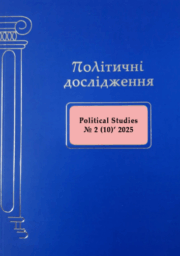
On the website of the Institute, in the section “Our publications”, there is an electronic version of the scientific publication – the journal “Political Studies” No. 1 (7)’ 2024, the founder and publisher of which is the Kuras Institute of Political and Ethnic Studies of the NAS of Ukraine.
In the next issue of the magazine, articles on the problems of the theory and history of political science, research on political institutions and processes, political culture and ideology, scientific investigations on the problems of ethno-political science and ethno-political science, etc. are published.
Acceptance of manuscripts for the next issue of the journal will begin in July 2024.
On May 31, 2024, as part of the program of the 12th International Book Arsenal Festival, a presentation of the book “Bullets for Shooting (My little one, my little one…)” took place in Kyiv. The work was written in 1974–1977 by film director, writer, dissident Heliy Snegiriev (1925–1978). It was published twice abroad (in 1977–1978 and in 1983). In Ukraine, the first edition appeared in 1990. The book tells about the demonstration process of the “Union for the Liberation of Ukraine” (“Union for the Liberation of Ukraine”), which took place in Kharkiv in the spring of 1930 and became a prologue for the planned destruction of representatives of the Ukrainian intelligentsia.
The Kyiv publishing house “KOMORA” has prepared a new edition with two forewords: academician Ivan Dzyuba and film critic Serhiy Trimbach. The scientific editor of the book is the chief researcher of the Department of Theory and History of Political Science of our Institute, Doctor of Historical Sciences, Professor Yuriy Shapoval. He prepared comments and notes, as well as a lengthy afterword. It is based on the previously secret materials of the Soviet special services, concerning the biography of Heliy Snegiriev and unknown aspects of the preparation, progress and consequences of the IED case. Writer Oksana Zabuzhko and journalist Oleksandr Zinchenko presented the new book together with Serhiy Trimbach and Yuriy Shapoval at the presentation, which was moderated by Anastasia Zatvornytska, an employee of the “KOMORA” publishing house.

During the presentation.
From left to right: Anastasia Zatvornytska, Serhii Trimbach, Oksana Zabuzhko, Yuriy Shapoval, Oleksandr Zinchenko
May 28 at the Kuras Institute of Political and Ethnic Studies of the National Academy of Sciences of Ukraine, a working meeting was held with the participation of representatives of scientific institutions, co-executors of the targeted interdisciplinary project “Solidarity of Ukrainian society in war conditions and prospects for preserving and reproducing the solidarity social potential in the post-war development of the country” (2024-2025).
The meeting was attended by: director of the Kuras Institute of Political and Ethnic Studies of the National Academy of Sciences of Ukraine, academician of the National Academy of Sciences of Ukraine Oleg Rafalskiy, deputy directors of the Institute Oleksandr Mayboroda and Yuriy Shaihorodskyi, academic secretary Vitaly Pereveziy; director of the Institute of Economics and Forecasting of the National Academy of Sciences of Ukraine, academician Valery Geets and head of the Department of Socio-Economic Problems of Labor Viktoriya Blizniuk; director of the Institute of Sociology of the National Academy of Sciences of Ukraine, corresponding member of the National Academy of Sciences of Ukraine Yevhen Holovakha and chief researcher of the Institute Viktor Stepanenko.
The purpose of the meeting was to coordinate the actions of institutions in the process of implementing a scientific project, which is aimed at researching the phenomenon of solidarity of Ukrainian society in one of the most critical moments of Ukrainian history – during the Russian-Ukrainian war. The participants of the meeting agreed that in the process of research it is worth emphasizing not only the analysis of the manifestations of an extremely high level of solidarity, which was characteristic of Ukrainian society in the initial phases of the war, but also the identification of factors that affect social solidarity in the current conditions, challenges and threats this process.
Academician Valery Geets emphasized that scientists should show their prognostic skills and already now describe potential lines of divisions capable of disrupting social unity. The corresponding member of the National Academy of Sciences of Ukraine, Yevgeny Holovakha, agreeing with his economist colleague, gave as an example that confirms his hypothesis the fact that sociologists in their surveys already observe differences in the positions of representatives of different age groups regarding the ways of development of modern processes.

During the meeting
Summing up the discussion, Academician Oleg Rafalskiy noted that the working meeting proved the presence of a whole set of problems that are extremely urgent to solve within the framework of the scientific project. He emphasized that despite the fundamental orientation, the research has an important applied value, therefore, based on the results of the project, it is necessary to prepare a series of analytical materials that will contribute to the adoption of balanced state decisions.
On May 24, 2024, the II scientific and practical conference “War for Ukraine: 20th – 21st centuries” was held at the National Museum of the History of Ukraine in the Second World War.
The director of the museum, Candidate of Historical Sciences, Yuriy Savchuk, in his introductory speech, emphasized the importance of realistic coverage of the place and role of Ukrainians during the Second World War, but also the need to study the history of the struggle against Russian aggression, which began in 2014 and was scaled up in February 2022. Four reports were heard at the plenary session, moderated by the head of the Department of Military Historical Research of the Institute of History of Ukraine of the National Academy of Sciences of Ukraine, corresponding member of the National Academy of Sciences of Ukraine, Doctor of Historical Sciences, Professor Oleksandr Lysenko.
Among the speakers is Major of the Armed Forces of Ukraine, Doctor of Historical Sciences, Professor Ivan Patrilyak. He delivered a report on the topic “Defense of the South of Ukraine: miscalculations and victories”. The head of the genealogical and heraldic research sector of the Institute of Ukrainian History of the National Academy of Sciences of Ukraine, Doctor of Historical Sciences, senior researcher Valery Tomazov focused on the problems of preserving the material and non-material culture of the Nadazov Greeks in the conditions of the Russian-Ukrainian war.
Scientists of our Institute took part in the work of the conference. Head of the Department of Political Culture and Ideology, Doctor of Historical Sciences, Professor Yuriy Nikolaiets in the report “The use of social networks in the modern Russian-Ukrainian information war” noted that the convenience and speed of media file transmission, the lack of political censorship and the possibility of forming an individual information field. At the same time, the speaker emphasized the vulnerability of social networks under the conditions of the spread of hostile information and psychological special operations, the possibility of manipulation of content and its sources in social networks.

From left to right: Yuriy Shapoval, Ivan Patrilyak, Yuriy Savchuk, Oleksandr Lysenko, Valeriy Tomazov, Yuriy Nikolaiets
Chief Researcher of the Department of Theory and History of Political Science of our Institute, Doctor of Historical Sciences, Professor Yuriy Shapoval analyzed the assessments of the initial stage of the Second World War, given by film director and writer Oleksandr Dovzhenko. The report was based on previously secret materials of the Soviet special services. The materials of permanent surveillance of Dovzhenko vividly emphasize his non-conformist moods and experiences, add many new touches to the painting of a realistic portrait of the father of Ukrainian cinema in the era of wartime disturbances.

The conference was broadcast and recorded for presentation on social networks
The trilogy “Ukrainian National Conservatism: The Hetman Movement” by Pavlo Hay-Nyzhnyk, a Doctor of Historical Sciences, leading researcher of the Department of Political Culture and Ideology of our Institute, was presented at the Bohdan Khmelnytsky National University of Cherkasy.
The trilogy tells about the ideology and theory of Ukrainian national conservatism. The three volumes of the book combine the theory and ideology of Ukrainian conservatism not only in historical, but also in political contexts.
Currently, the first book of the trilogy, which chronologically covers the period from 1900 to 1936, is presented. It examines and analyzes the formation of the theoretical and ideological foundations of Ukrainian national conservatism, particularly in the concepts of V. Lypynsky and M. Mikhnovsky, developed by them before the revival of Ukrainian statehood at the end of 1917 – the beginning of 1918. The program principles and activities of the Ukrainian Democratic-Bread Party (UDHP) and the Ukrainian People’s Community (UNH) are highlighted. In particular, it is about the state-political position and activities of Hetmans of All Ukraine P. Skoropadsky, V. Lypynsky, M. Mikhnovsky, D. Dontsov, S. Shemet, V. Andrievsky and others. The grounds and course of the creation and activity of the Ukrainian Union of Wheat Growers-Statesmen (USHD) are revealed, the ideology of national conservatism, the theory of labor monarchy and classocracy of V. Lypynsky is analyzed. The activities and political outlook positions of P. Skoropadsky, N. Kochubey, O. Nazaruk, O. Skoropys-Yoltukhovsky, A. Motrezor, M. Timofeyev, S. Shemet, V. Kuchabsky and others were considered. The cause-and-effect aspects of the conflict between V. Lypinsky and P. Skoropadsky, which led to a split in the USHD and the creation of the Brotherhood of Ukrainian Classocrats-Monarchists, Hetmantsiv (BUKMG), are highlighted. The formation and activity of Ukrainian conservative, classocratic, and monarchist organizations in Europe, North and South America, Asia, and Australia, which were components of the world Hetman Movement, were tracked and analyzed.

Presentation of the first book of the trilogy at Bohdan Khmelnytsky National University of Cherkasy
“Ukrainian National Conservatism: The Hetman’s Movement” is a historical and political trilogy that highlights and analyzes the development of the ideology of Ukrainian national conservatism and its theoretical foundations from the beginning of the 20th century and until the beginning of the 21st century. In particular, the development of Ukrainian conservatism as a type of socio-political thought, the model of the construction of the Ukrainian State, its political and economic system, etc., the foundations of Ukrainian national conservatism, the theory of classocracy and the concept of labor monarchy, as well as the course of the birth and activity of the Hetman Movement in emigration are considered.

During the presentation
The work is full of excerpts from program documents, works and speeches of theoreticians, ideologists and leading figures of Ukrainian national conservatism and the Hetman Movement. Numerous, previously little-known and unknown sources of a historical and political science nature have been introduced into scientific circulation, in particular from the documentary base of the Soviet, German, Polish, American, British, etc. special services in combination with documentary materials of Ukrainian political parties and organizations related to Ukrainian state formation, national liberation front, national-conservative politics and the world Hetman Movement. The political activity of conservative-hetman organizations was traced, highlighted and analyzed both in the context of the all-Ukrainian political system and its national liberation struggles, and in view of the geopolitical and domestic political situation in Europe and the world.
The first book of the trilogy was published in 2023 by the Kyiv publishing house “Samit-knyga” (Kyiv: Samit-knyga, 2023, 544 p.) and became one of the winners of the “Book of the Year – 2023” rating in the nomination “Sofia” (political science/sociology /cultural studies). In all categories, almost 700 publications were evaluated according to 58 expert questionnaires.
On May 16, 2024, Aspen Institute Kyiv together with the Association of Lawyers of Ukraine held the Dialogue “Social contract: dimensions of justice”. People’s deputies of Ukraine, representatives of the judiciary and anti-corruption bodies, media, scientists, representatives of civil society institutes and international organizations took part in the event.
At the panel discussion of the event with the speech “Justice and the court of public opinion: how to find a balance?” Doctor of Political Sciences, Professor, Corresponding Member of the National Academy of Sciences of Ukraine, Head of our Institute, Galyna Zelenko, spoke. In her speech, she focused on explaining the reasons for the sometimes excessive pressure of society on the judiciary. According to the researcher, it is caused by mistrust of the judiciary. And since Ukraine is a country where the informal institution of public opinion mostly worked weakly, public pressure often took unconventional forms. Therefore, the balance between justice and public opinion lies in the plane of strengthening trust in the judiciary through an adequate communication policy, the implementation of judicial proceedings exclusively on the legal plane, and the clarity of court decisions.

During the meeting

Galyna Zelenko is speaking
In general, the participants of the session “Justice and the court of public opinion” agreed that to ensure transparency in the administration of justice, effective mechanisms of public control are needed, which will eliminate bias on the part of the public. In this regard, a campaign against disinformation, which can distort the understanding of justice, is needed; measures to ensure the principle of transparency of judicial decisions and accountability of judges as key aspects of ensuring justice; activation of public education in legal matters in order to prevent society from passing “judgments without trials”; regarding fact-checking — as one of the methods of preventing emotional coloring during coverage of sensitive news. It is necessary to establish communication work: to explain the news of the justice sector to society in an understandable language.
On May 17, 2024, the 5th international scientific conference “Research, development and innovation from the perspective of global ethics” was held in Chisinau (Republic of Moldova). The motto of the event was the call: “Together for peace!”. Among the participants are scientists from Moldova, Ukraine, Romania and Uzbekistan. The organizer of the scientific event is the Technical University of Moldova.
The main researcher of the Department of Theory and History of Political Science of our Institute, Doctor of Historical Sciences, Professor Tetyana Bevz and Doctor of Public Administration, Professor, Professor of the Department of Public Policy of the Educational and Scientific Institute of Public Administration and Civil Service of Taras Shevchenko Kyiv National University Tetyana Vasylevska took part in the conference.
In the speeches of Ukrainian researchers, it was noted that the war in Ukraine and its consequences changed not only our country, but also Europe, the world and our ideas about it. Ukrainians, probably like no other, yearn for just peace. In this situation, it was noted in the speeches, we are facing a number of complex problems, including ethical ones: dignified treatment of veterans; inclusive state strategy; sensitive attitude towards people with disabilities; military ethics; environmental disasters caused by military actions; solidarity; trust in the authorities; understanding the problems of historical memory, refugees from the war, life under occupation, other moral aspects of modernity.

During the conference
The war poses especially acute problems of meaning and life for Ukrainians, prompts a rethinking of key questions: will goodness and justice win; whether there are foundations for world solidarity, mutual understanding, peace; does ethics provide grounds for creating such a world in which fundamental human rights – to life and safety – are respected.
The speakers expressed confidence that on this path, Moldovan, Romanian, Ukrainian and Uzbek scientists, like all people of good will, will be together in the search for the ethical foundations of peace and freedom.
Scientific journal «POLITICAL STUDIES»
Новини
Оголошення

