
On the 135th anniversary of the birth of the Holodomor researcher Dmytro Soloviy (1888–1966), on the pages of the popular Kyiv Post resource, the chief researcher of the Department of Theory and History of Political Science of our Institute, Doctor of Historical Sciences, Professor Yuriy Shapoval posted a story about the scientist-researcher of the tragic during the Holodomor in Ukraine 1932–1933
Dmytro Soloviy left behind a motley, multi-genre printed heritage. It is important to emphasize – Yu. Shapoval notes – that Dmytro Soloviy was one of the first to turn to the study of the Holodomor in Ukraine, to a comprehensive analysis of the causes and consequences of this tragedy. He was one of the first to start collecting the testimonies of those who managed to survive the Holodomor, he wrote not only about the socio-economic, but also about the political causes of this phenomenon.
Publication of Yu. Shapoval in Kyiv Post
Kuras Institute of Political and Ethnic Studies of the National Academy of Sciences of Ukraine became a co-organizer of the VII round table “History in us and we in history: psychology of historical memory”. Special project: “Civilizational subjectivity of Ukraine – Unity. Progressivness. Effectiveness” (offline-online mode), which took place on October 19, 2023 at the Institute of Social and Political Psychology of the National Academy of Sciences of Ukraine.
The deputy director for scientific work of the Kuras Institute of Political and Ethnic Studies of the National Academy of Sciences of Ukraine, head of the Department of Theory and History of Political Science, Doctor of Political Sciences, Professor Yurii Shaihorodskyi addressed the participants of the round table with a welcoming speech.
Employees of the Department of Theory and History of Political Science of our Institute took an active part in the work of the round table.
Tetyana Bevz, Doctor of Historical Sciences, Professor, chief researcher of the Department of Theory and History of Political Science, started the work of the round table with the report “Political value of the unity of Ukraine in the conditions of a full-scale war “, emphasizing that the idea of unity was and remains a basic national value for Ukrainians. The actualization of the topic of unity in the conditions of a full-scale war appeared with new force. After all, unity is both independence and territorial integrity of the state. The topic of Ukraine’s territorial integrity has become particularly acute since the occupation of Crimea and parts of the Donetsk and Luhansk regions. The report analyzes separate legislative amendments related to the reintegration of the occupied territories. Considerable attention is paid to the topic of territorial concessions proposed by some politicians and experts. The positions of the Ukrainian authorities, foreign researchers and the results of sociological studies regarding the restoration and preservation of the territorial integrity of the state are analyzed. The military and political leadership of the country, the speaker emphasized, are working hard on the strategy of deoccupation of Ukrainian territories, on freeing them from Russian aggressors.
The speaker emphasized that the unity and integrity of Ukrainians remain the fundamental values of Ukrainian statehood, which Ukraine today defends against Russian military aggression with the belief in the inevitable restoration of the state’s sovereignty and territorial integrity.

During the work of the round table
Vyacheslav Yaremchuk, Doctor of Political Science, Associate Professor, leading researcher of the Department of Theory and History of Political Science, gave a speech “The phenomenon of unity as a powerful component of Ukraine’s national stability in the conditions of the Russian-Ukrainian war.” In particular, the report discussed the fact that a special role in national stability (including such components as national security, stability of the state and its institutions) is played by the phenomenon of unity, which is a kind of connection between members of society, something that unites them into a single whole. It is not only a matter of territorial and ethnic unity, but also a no less stable and important unity – mental (perception and interpretation of the world), as well as psychological, cultural and educational, etc. In this sense, we are talking about aggregate social capital, which is able to ensure the safety and well-being of citizens, a high level of their readiness and effectiveness in responding to threats and challenges to the civilizational progress of Ukraine.
Employees of the Department of Theory and History of Political Science of the Kuras Institute of Political and Ethnic Studies of the National Academy of Sciences of Ukraine: Mykola Gorbatiuk – Candidate of Historical Sciences, senior researcher; Oleksandr Chorny – Candidate of Philosophical Sciences, Research Fellow; Valery Machuskyi – Candidate of Pedagogical Sciences, junior researcher; graduate student Maryna Baranivska.
“Mapping the “Nation from Nowhere”: Imperial Knowledge and the Challenges of Decolonisation” was the title of a lecture given by Mykola Riabchuk, a leading researcher at the Department of Political Culture and Ideology of our Institute, PhD in Political Science, on 11 September at the University of Ghent (Belgium).
He draw his arguments on the concept of “Imperial Knowledge”, understood as a system of state-sponsored narratives that pursue a two-fold goal: glorification of the empire, its supposedly great, ‘universal’ culture and ‘unique’ historical role, and – depreciation, marginalization or sheer appropriation of cultures of subordinate nations, monopolization of a God-given (or History-given) right to speak on their behalf and mediate between them and the world – thus silencing them and making completely invisible.

That “knowledge”, conceived in Russia in the 18th century, has been developed, institutionalized and disseminated globally as presumably ‘scientific truth’. Still worse, it completely excluded the alternative voices, in particular voices of subjugated nations, from the public debate. All this made the Imperial Knowledge a root cause of many eventual problems, including a centuries-long international misperception of Russia, ignorance of Ukraine, and disastrously wrong Western policies vis-à-vis both countries and the entire Eastern Europe. The ongoing Russo-Ukrainian war, framed as a blatant attempt at a neo-imperial conquest, makes the task of revision and deconstruction of Imperial Knowledge highly urgent and topical – as a part of a much broader decolonization agenda.
Video recording of the lecture
Olena Andreeva, a junior researcher at the Department of Political Institutions and Processes of our Institute, Doctor of Philosophy in Political Science, has been selected to participate in the program for building the potential of young professionals “Prospects of multi-level governance, decentralization and human rights”.
The program is organized by Lund University as part of the Swedish Institute for Young Professionals Academy (SAYP). Every year, the university conducts comprehensive training intensives for young professionals from the countries of the Eastern Partnership of the EU and the Western Balkans. This program is aimed at exploring best practices in building governance structures in Sweden, as well as sharing experiences, enhancing knowledge and networking in the fields of public administration, policy-making and sustainable governance.

Lund University (Sweden)
An important part of the program is the exchange of experience between participants from different countries, such as Lithuania, Moldova, Georgia and Armenia, regarding the implementation of decentralization measures based on the principles of respect for human rights, through academic research, the work of public organizations, and the activities of public administration bodies. This year, five Ukrainian participants – representatives of the scientific community, institutions of civil society and local self-government – are taking part in the international academic program.
On September 25-26, 2023, an international conference was held in the city of Vicenza (Italy) on the topic “Russian Empire-USSR-Russian Federation: the evolution of Russian nationalism and its relations with Ukraine and other nationalities”. The organizers of the conference were the Foundation of the Institute of History (Vicenza), the Olympic Academy (Vicenza), the Institute of Resistance and Modern History of the Province of Vicenza, the Socio-Cultural Institute in Vicenza, the non-governmental organization Il Ponte/Mist.
Authoritative Italian scientists were invited to the conference, including Andrea Graziosi, Giovanna Brogi, Alberto Mazoero, Simona Merlo, Niccolò Pianchola and others. Among the issues discussed were the radicalization of Putinism, Russian nationalism in the Soviet Union from 1945 to its collapse, the evolution of Ukraine from a post-Soviet state to a national state in 1991–2022, the problems of the Holodomor as a political tool, the issue of relations between the Baltic states and Russia after the Cold War and many other interesting and important problems.
The only scientist from Ukraine invited to the conference was the Chief Researcher of the Department of Theory and History of Political Science of our Institute, Doctor of Historical Sciences, Professor Yuriy Shapoval. He delivered the report “Vasyl Shulgin’s Transformation of Ukraine into the Russian Grand Duchy. An unknown pamphlet of a Russian monarchist from 1938”.

Opening. (Photo by Yu. Shapoval)

Yuriy Shapoval and one of the organizers of the conference, Professor Andrea Graziosi of the University of Naples
On September 21-24, 2023, the 16th Ukrainian-Polish meeting took place in the city of Yaremche – a traditional, unique scientific forum in Ukraine that unites Ukrainian and Polish social scientists. This year, more than 130 intellectuals: scientists, experts and diplomats took part in the discussion of current problems of interstate relations against the background of Russian military aggression.
On behalf of the co-organizers of the Forum – the Kuras Institute of Political and Ethnic Studies of the National Academy of Sciences of Ukraine, the deputy director of the Institute for Scientific Work, Scientific Head of the Department of Global Political Development, Doctor of Historical Sciences, Professor, corresponding member of the National Academy of Sciences of Ukraine Oleksandr Mayboroda spoke. He expressed confidence that the Ukrainian-Polish meetings will produce valid and valuable opinions and proposals regarding the convergence of the positions of our countries on various issues of their mutual relations.
In his report, the scientist noted that now, when problems in relations between states are exposed and exacerbated, the international system is facing the threat of chaos, therefore a special role is given to the institute of public diplomacy. The speaker recalled that in times of crisis, when it is difficult for rulers to reach a consensus in interstate relations, the phrase “the people are wiser than the rulers” becomes popular. This phrase is, of course, a metaphor, and ordinary people expect wiser decisions and actions from representatives of the ruling class. The wisdom of the ruling class, the scientist noted, lies in the ability to listen to popular opinion.

Oleksandr Mayboroda is speaking
Oleksandr Mayboroda also emphasized that Ukraine and Poland together face the geopolitical danger that is looming from Russia. The joint Ukrainian-Polish struggle for the freedom of Europe, for the democratic order, for the rights of peoples and human rights is now the core of relations between the Republic of Poland and the State of Ukraine.
The work of the meetings was concentrated in six sections, which discussed important geopolitical, military, humanitarian, economic components of Ukrainian-Polish relations, determined their priorities and prospects.
Acting Head of the Department of Political Culture and Ideology of the Kuras Institute of Political and Ethnic Studies of the National Academy of Sciences of Ukraine, Doctor of Historical Sciences, Professor Yuriy Nikolaiets gave a speech at the section “Military aid of Poland and the West for Ukraine: an appropriate response to security threats at the regional and global levels.”

Yuriy Nikolaiets reports
The Chief Researcher of the Department of Ethnopolitics of our Institute, Doctor of Political Sciences, Professor Oleg Kalakura took part in the work of the section “Ukraine Reconstruction: Challenges, Prospects, Directions”.

Conference participants
On 4–8 September 2023, the General Conference of the European Consortium for Political Research (ECPR) took place at Charles University in Prague.
The European Consortium for Political Research (ECPR) is an independent academic association founded in 1970. Jean Blondel and Stein Rokkan initiated the Consortium. Together with Peter de Janosi of the Ford Foundation and other prominent European scholars, they developed and implemented the concept of the European Consortium for the Promotion of Political Science. Twelve European universities founded the ECPR.
Today, ECPR has 350 institutional members from nearly 50 countries. The organization includes leading universities and tens of thousands of scholars and students engaged in research and teaching of political science.
The annual General Conference of the European Consortium for Political Research is a significant scientific event aimed at developing research in all areas of political science. Due to its comprehensive coverage and inclusive approach, it allows scholars from different continents and countries to come together and present and discuss the results of their research work.
The General Conference, which took place on 4–8 September 2023, brought together more than 2,000 participants at Charles University in Prague and online. This year, 67 sections and more than 500 panels were held to discuss the most topical issues in political science.
For the first time since the ECPR was established, a Ukrainian research institution was represented at the General Conference of this organization. This institution, following a competitive selection process, was the Kuras Institute of Political and Ethnic Studies of the National Academy of Sciences of Ukraine.

Ukrainian scientists – participants of the ECPR General Conference
The section „Ethnopolitical Resilience of Ukraine” was held at Charles University in Prague and online (chaired by Anastasiia Dehterenko, Leading Research Scientist of the Ethnopolitics Department of the Kuras Institute of Political and Ethnic Studies of the National Academy of Sciences of Ukraine, PhD (Political Science), Associate Professor, and Viktor Kotygorenko, Head of the Ethnopolitics Department of our Institute, Doctor of Political Science, Professor).
The panel „Ethnopolitical Resilience of Ukraine: Humanitarian Aspects” was held online on September 5, 2023. Professor Anatoly V. Oleksiyenko from the Hong Kong Institute of Education made presentations at the panel (topic: „Internationalization and Geopolitics of Knowledge Production in the Embattled Ukraine”), as well as researchers of our Institute:
- Leading Research Scientist of the Ethnopolitics Department, Candidate of Philosophical Sciences Natalia Kochan (topic: „Profiling Civil Dimension of Religion”);
- Acting head of the department, Doctor of Historical Sciences, Professor Yurii Nikolaiets (topic: „The informational aspect of political resilience of Ukraine”);
- Chief Research Scientist of the Ethnopolitics Department, Doctor of Political Science, Professor Oleg Kalakura (topic: „Ethno-cultural resilience of Ukrainian society in the context of Russia’s war against Ukraine”);
- Researcher of the Ethnopolitics Department, Candidate of Historical Sciences Oleksiy Liashenko (topic: „Identity as a factor of ethnopolitical resilience of Ukraine”);
- Junior Research Scientist of the Ethnopolitics Department, Candidate of Historical Sciences Valeriy Novorodovskyi (topic: „The participation of national minorities in public life in the conditions of the Russian-Ukrainian war”).
On September 6, 2023, the online panel „Resilience of the Ukrainian Nation and National Identity” was held. The presentations were made by the scientists of our Institute:
- Senior Research Scientist of the Ethnopolitics Department, Candidate of Historical Sciences Liudmyla Mazuka (topic: „The role of Ukrainians abroad in countering Russian aggression and in the reconstruction of Ukraine”);
- Head of the Ethnopolitics Department of our Institute, Doctor of Political Science, Professor Viktor Kotygorenko (topic: „The resilience of the modern Ukrainian nation: dynamics, potential, threats”);
- Chief Research Scientist of the Department of Political Culture and Ideology, Doctor of Political Science Volodymyr Kulyk (topic: „Impact of Russian aggression on Ukrainian ethnonational identity”),
as well as a leading researcher at the V.M. Koretsky Institute of State and Law of the National Academy of Sciences of Ukraine, Doctor of Political Sciences Vira Yavir (topic: „Transformation of the Ukrainians’ ethnopolitical resilience phenomenon in the context of the Russian-Ukrainian war”).

During the ECPR General Conference (at Charles University in Prague)
On September 7, 2023, at Charles University in Prague, the issues of Ukraine’s ethnopolitical resilience were discussed at the panel „The phenomenon of Ukraine’s ethnopolitical resilience: analyzing security and management issues”. The discussion was focused on the scientific papers of Dr. Oksana Huss from the Università di Bologna (topic: „Role of civic tech for resilience of Ukraine in the asymmetric war”), journalist Karin Kőváry Sólymos from Masaryk University (topic: „Hungarian revisionist narratives as a means of tension-building against Ukraine”) and Leading Research Scientist of the Ethnopolitics Department of the Kuras Institute of Political and Ethnic Studies of the National Academy of Sciences of Ukraine, PhD (Political Science), Associate Professor Anastasiia Dehterenko (topic: „Ethnopolitical management in Ukraine and selected EU states: a comparative analysis”).
On September 7-8, 2023, within the framework of the section “Transformation of the World System under the Influence of the Russian-Ukrainian War” (section chairs: Halyna Zelenko, Head of the Department of Political Institutions and Processes of the Kuras Institute of Political and Ethnic Studies of the National Academy of Sciences of Ukraine, Doctor of Political Sciences, Professor, Corresponding Member of the National Academy of Sciences of Ukraine, and Oleh Kondratenko, Leading Researcher at the Department of World Political Development, Doctor of Political Sciences, Associate Professor), two panels were held: “Genesis and trajectory of Russian imperial policy” (chairman: Doctor of Political Sciences Oleh Kondratenko) and “Russian-Ukrainian war; Strategic and military consequences” (chairman: Candidate of Political Sciences Leonid Kiyanytsia).
The Institute’s researchers made scientific reports:
- Doctor of Political Sciences, Associate Professor, Leading Research Scientist at the Department of World Political Development Oleh Kondratenko (topic: “The Essence and Traditions of Russian Imperial Expansionism”);
- Candidate of Political Sciences, Leading Researcher at the Department of Political Institutions and Processes Natalia Kononenko (topic: “Consolidation of society during the war and prospects for localization of the crisis of legitimacy of power in Ukraine”);
- PhD in Political Science, Research Fellow at the Department of World Political Development Leonid Kiyanytsia (topic: “Cooperation of Ukrainian Volunteer Organizations with European Governments and NGOs: Context of the Russian-Ukrainian War”);
- Junior Research Fellow at the Department of World Political Development Oleksandr Herasymenko (topic: “Main directions of influence of the Russian-Ukrainian war on the nature of interaction between civil society and the state in Eastern Europe”).
Scholars from a number of foreign institutions also took part in these panels and made presentations:
- Professor of the Free University of Brussels Olesia Tkachova (topic: “Political economy of military mobilization in authoritarian Russia: Evidence from Big Data Analysis”);
- Professor Jan Ludwik of Charles University (topic: “Russia-Ukraine. Frozen conflict: results of an expert survey”);
- Professor of the University of Defense of the Czech Republic Jan Ferina (topic: “War in Ukraine: Consequences for China in case of invasion of Taiwan”)
- Professor of Kadir Has University of the Republic of Turkey Dogush Sonmez (topic: “Putin’s Third Term (2012-2018): Is it a Russian Imperial Declaration?”)
- Professor Fabien Bossait, Ghent University of the Kingdom of Belgium (topic: “The influence of images on Russia’s actions in the neighboring region: a political psychology perspective”).
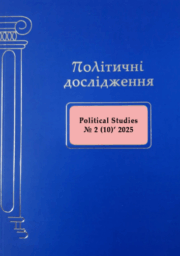
At its meeting on August 31, 2023, the National Council of Ukraine on Television and Radio Broadcasting registered the Kuras Institute of Political and Ethnic Studies of the National Academy of Sciences of Ukraine as a subject in the field of print media and entered the journal “Political Studies”, the founder and publisher of which is the Institute (decision of the National Council of Ukraine on Television and Radio Broadcasting No. 792 dated 31.08.2023, protocol No. 20).
On the website of the Institute, in the “Our Publications” section, the text of the monograph of the authors’ collective “Ethnopolitics in Ukraine in the context of modern socio-political changes: real state, challenges, prospects” is posted.
The monograph analyzes the experience of European countries’ policies in the ethnopolitical sphere and the possibilities of its use in domestic ethnopolitical practices. The dynamics of changes in national and civic identities in Ukraine and the impact of the Russian-Ukrainian war on these dynamics are studied. The problem of interrelation and mutual influence of ethnic policy and migration policy in the context of Russian aggression and subsequent reconstruction is actualized. The models of state policy in the religion sphere of Ukraine are comprehended, the essential features of secularization measures are substantiated. The peculiarities of the memory policy in context of the information war imposed by Russia are substantiated. The authors formulated proposals for public authorities and local self-government bodies on modeling and implementing domestic ethno-national policy in wartime and post-war modernization processes.
Ukraine celebrates the 32nd year of Independence!
Today, Ukrainians with weapons in their hands are defending their right to live in an independent and sovereign state, the right for freedom, the right to choose their own future.
Ukrainians are united in defending their independence, striving to restore territorial integrity and build a strong European state.
We are grateful to everyone who stands guard over our Motherland, and we honor those who sacrificed their lives in the fight for Ukraine.

On the day of the celebration of the 32nd anniversary of the restoration of the Independence of Ukraine, when our people are fighting against the Russian invaders for the life of their state, defending our will, honor, dignity and independence, we wish each other victory and the long-awaited peace.
We believe in our soldiers, in the strength of our spirit, in our victory!
Happy Independence Day, Ukraine!
Happy Ukrainian Independence Day to all of us!
On August 17, 2023, another discussion of issues of resuming the military modernization of Ukraine took place within the framework of the project “Voice of civil society reforming and implementing the recovery plan of Ukraine” (“Luhansk Declaration”). This project is administered by the public organization “Agency for Reconstruction and Development” with the support of the European Endowment for Democracy in partnership with the Center for Political and Legal Reforms. In total, 20 thematic discussions for the participants of scientists, representatives of civil society institutions, politicians and government officials have already taken place within the scope of the project.
The focus of the August discussion is the planning of the executive branch of government, its adaptation to the needs of the post-war transformation of Ukraine and institutional changes in the context of compliance with EU standards.
The leading researcher of the Department of Political Institutes and Processes of the Kuras Institute of Political and Ethnic Studies of the National Academy of Sciences of Ukraine, candidate of political sciences Natalia Kononenko took part in the discussion. The scientist focused on the fact that in order to increase the institutional efficiency of the executive power and its synchronization with the activity format of similar European institutions, it is necessary to supplement the State Administration Reform Strategy for the period 2022-2025. ). .2021) norms, goals and indicators for measuring the effectiveness of public administration developed by SIGMA for countries seeking EU membership. Nataliya Kononenko emphasized that SIGMA is one of the most prestigious analytical centers of the EU, which was founded by the Organization for Economic Cooperation and Development (OECD) and the European Union in 1992 and is an agent of the EU in matters of developing public administration standards for national European governments.
During August 13–17, 2023, the Ukrainian Center for Holocaust Studies organized the educational seminar-school “The History of the Holocaust in Ukraine: Study, Teaching, Memory.” The founder and head of the Ukrainian Center for Holocaust Studies, the leading researcher of the Kuras Institute of Political and Ethnic Studies of the National Academy of Sciences of Ukraine, Candidate of Historical Sciences Anatoliy Podolskiy and head of the Department of Political Culture and Ideology of the Institute, Doctor of Historical Sciences, Professor Yuriy Nikolaiets.

Yuriy Nikolaiets is speaking
In his speech “Multiple Crimes Against Humanity: Holocaust, Famine, Genocide, War Crimes and Their Modern Qualification”, Yuriy Nikolaiets characterized modern approaches to defining war crimes, highlighted the main limitations of the methods of waging war, recorded in international humanitarian law. He also identified separate actions of the Russian Federation in the war against Ukraine, which can be qualified as war crimes, namely: physical extermination of the part of the population of the temporarily occupied territories; deportations of the population of temporarily occupied territories; relocation of the population from the Russian Federation to the temporarily occupied territories; attacks on civilian infrastructure objects (including the unprecedented destruction of hydraulic structures, which was considered a war crime as early as the 3rd millennium BC in Ancient Egypt); tortures of prisoners of war and civilians; mobilization of the population of the temporarily occupied territories into the armed forces of the Russian Federation; the destruction of settlements, not due to the needs of conducting hostilities; forced removal and non-return of children. The scientist also highlighted analogies in the war practices of Germany in 1939–1945 and the Russian Federation in the Russian-Ukrainian war from 2014.

Anatoliy Podolskiy is speaking
Anatoliy Podolskiy in his speech “Peculiarities of the history of the Holocaust in the European context” emphasized the importance of understanding the typology and peculiarities of events from the history of the Holocaust on the territory of Ukraine and other lands of the European continent. Special attention of the speaker was given to modern academic and educational challenges, regarding the comparison of the crimes of National Socialism during the Second World War and the war crimes of the Russian occupiers in Ukraine during their aggression and war against our state. It was noted that the policy of state anti-Semitism of the Hitler regime in Germany during the Second World War has common features with the overt Ukrainophobic policy of Putin’s totalitarian regime during the Russian war against Ukraine.

Participants of the seminar
30 history teachers of comprehensive secondary educational institutions and teachers of higher education institutions from 16 regions of Ukraine took part in the work of the seminar-school.
On July 28, 2023, a round table “Actual issues of the protection of the national statehood in modern conditions” was held on the basis of the National Academy of the Security Service of Ukraine. The event was co-organized by the Security Service of Ukraine and the Center for the Protection of National Statehood. The main thematic areas of the round table were defined as: the Security Service of Ukraine as the main subject of the protection of national statehood; the legal grounds for the interaction of the Department and regional divisions of the National Statehood Protection Service of the Security Service of Ukraine with other subjects of the security sector, authorities and management on matters of national statehood protection; peculiarities of the investigation of crimes related to encroachments on state sovereignty, constitutional order, territorial integrity, and information security of Ukraine under the conditions of the introduction of the legal regime of martial law; foreign and national experience of countering special information operations based on the analysis of open sources of information, etc. The work of the round table was attended by acting head of the Department of Political Culture and Ideology of the Institute, Doctor of Historical Sciences Yuriy Nikolaiets and leading researcher of the Department of Political Institutions and Processes, Candidate of Political Sciences Rostyslav Balaban.

Yuriy Nikolaiets
In his report, Yuriy Nikolaiets noted that the emergence and development of the informational society made possible a sharp increase in the influence of mass communication on the development and course of interstate conflicts. In modern conditions, mass communications have become an important element of conducting hybrid warfare. Analysis of the information space of Ukraine allows us to state that the information war of the Russian Federation against Ukraine began immediately after the collapse of the USSR and was aimed against the establishment and development of Ukrainian statehood. Informational and psychological special operations were aimed at restoring a union state centered in Moscow, discrediting the processes of Ukrainian state-building and the ability of Ukrainian politicians to participate in effective state management, provoking inter-ethnic and inter-regional enmity, forming regional identity, discrediting law enforcement and judicial bodies, spreading in Ukrainian society negative attitude to service in the Armed Forces of Ukraine.
Means of mass communications were used to form separatist attitudes, irredentism in a number of Ukrainian regions. For this purpose, messages were spread about the so-called “Galician separatism”, the development of political Ruthenism, “the original belonging of Crimea and Donbas to Russia.” For a long time in Crimea and Donbas, local mass media, which acted quite legally, participated in the dissemination of anti-Ukrainian messages. Anti-Ukrainian statements were present even in the pre-election programs of a relatively large number of candidates for people’s deputies, program documents of individual public associations. The long-term absence of a balanced state information policy made possible the formation of anti-state sentiments in Ukrainian society. This was especially noticeable among the population of the South and East of Ukraine. The anti-Ukrainian informational campaign of the Russian Federation intensified at the beginning of the 21st century in the conditions of the pre-election struggle in Ukraine and the Orange Revolution and acquired clearly defined anti-state features already during the time when V. Yushchenko was the President of Ukraine. It was then that theses about “the existence of two Ukraines”, “the spread of fascism and neo-Nazism” in Ukraine and “the development of Ukraine as a Western project of ”anti-Russia”” were formed. Over time, the informational war became one of the most important components of the Russian-Ukrainian war, at the beginning of which the enemy managed to temporarily occupy Crimea and part of Donbas. The current position of the leading players on the world political arena will contribute to the preservation of the Russian Federation on the political map of the world in a certain “updated” form. In the near future, there are no prerequisites for the disintegration of the Russian Federation as a result of the sharp deterioration of the economic situation in this country. Therefore, it should be taken into account that the agreement concluded with the Russian Federation on the end of the war/special military operation will not mean the refusal of the Russian side to continue the hybrid war against Ukraine in the format of information warfare, economic and trade wars, political pressure and war in cyberspace, etc. And even Ukraine’s prospective accession to NATO cannot be a guarantee of the Russian Federation’s refusal to continue the hybrid war against Ukraine.

Rostyslav Balaban
In his speech, Rostyslav Balaban emphasized that the successes of the Armed Forces, Security Service of Ukraine, intelligence, volunteers, optimistic public mood and consolidation, all that today fills the essence of statehood, ensures its legitimacy and stability – can be leveled by corruption. Russia’s war against Ukraine revealed that the state management apparatus, law enforcement and judicial bodies are saturated with agents of the Russian Federation, whose task was the destruction of Ukraine’s statehood. As of August 2022, the Chesno movement declared that 348 politicians had become traitors. The large-scale spread of corruption has become a problem for Ukraine. Corruption schemes did not cease to exist even during the war, when new means appeared for the enrichment of corrupt officials. In Ukraine, there are still opportunities for obtaining illegal benefits due to imperfect competition and theft of property on a particularly large scale. Unfortunately, there are also rare cases of embezzlement of humanitarian aid that comes to our country from foreign partners. The growth of trust in the state, which took place in the conditions of a full-scale invasion of the Russian Federation, is threatened by the spread of information about corruption in power structures of various levels. Countering the spread of corruption does not lead to its elimination as a phenomenon. On the contrary, certain acts of corruption are becoming increasingly attractive to citizens. At the same time, the organization of repelling the aggressor gave rise to new creative initiatives, literature, humor, the emergence of new performers, some of whom are in the war zone, which can testify to the cultural phenomenon of revival and is an important component of state formation. Corruption has turned out to be a permanent institution that threatens the economic competitiveness of the state and the existence of statehood in general. Despite the presence of eight anti-corruption bodies and individual cases of detaining corrupt officials, the fight against corruption has not become systematic. It is fundamentally important that the fight against corruption does not become the destruction of opponents, the political opposition, a mechanism of raiding, which has a high probability. In order to ensure a more successful fight against corruption, the Security Service of Ukraine must undergo reform itself, since it has not escaped the problems inherent in the state system. Overcoming corruption is an important systemic step in the protection of the national state of Ukraine. The consequences will be an increase in the level of defense capability, an acceleration of economic development, an increase in trust in government institutions, and the formation of a comfortable environment for society.
The journal “Political Studies” is posted on the digital platform of the Library Portal of the National Academy of Sciences of Ukraine “LibNAS UA” in the “Journals of the Academy” section.
LibNAS UA is an information system designed to consolidate, unify, store and provide wide access to a complex of scientific data accompanying the results of the scientific activities of the National Academy of Sciences of Ukraine.
The library portal of the National Academy of Sciences of Ukraine adheres to the policy of open access to published material, recognizing as a priority the principles of free dissemination of scientific information and the exchange of knowledge for the sake of global social progress.
The information block of the portal contains the full texts of articles published on the pages of the journal “Political Studies”, the founder and publisher of which is our Institute.
Users of the portal have the opportunity (under the terms of the Creative Commons license) to freely read, download, copy content for educational and scientific purposes, as well as distribute it with a mandatory indication of authorship.
The organization and support of the digital format of the publication, despite its time-consuming nature, provides significant advantages for researchers in the process of finding sources of scientific information, partners, reporting and evaluating the results of scientific activity. In addition, such a system implements the strategic function of preserving the scientific heritage in digital format.
On July 15–19, 2023, the 27th IPSA World Congress of Political Science was held in Buenos Aires (Argentina). The theme of this year’s congress is “Politics in the Age of Cross-Border Crises: Vulnerability and Resilience.”
The challenges of the modern world are that the domestic and foreign policies of countries are always faced with complex cross-border issues, including climate change, cyber-terrorism, global migration flows, financial instability and the COVID-19 pandemic. Added to these problems is the war waged by Russia against Ukraine, and in fact against the whole world, which is rooted in Russia’s desire to change the rules of the game in the international arena, which are based on respect for the sovereignty and borders of countries, regardless of the size of their territories and economic development. These issues are transboundary in the sense that they cross national borders in an era of intense global connectivity. Disruptions in one part of the world quickly spread across the globe through highly integrated global networks.

27th IPSA World Congress of Political Science
The congress noted that transboundary issues reveal the dire consequences of the tragedy of the common heritage, as coordinated global responses are often inadequate and sometimes non-existent. Global collective actions, which are so urgently needed for the comprehensive solution of cross-border problems, have been found to be absent. States face the challenge of dealing with the influence on citizens and political institutions, often confused by the vulnerabilities evident at all levels of political life.

During the IPSA World Congress of Political Science
The focus of the Congress was essentially state capacity – as a crucial focus in terms of joint approaches of both state and non-state actors to solve the so-called “wicked” problems in the era of cross-border crises. Many governments experience a “rally-around-the-flag” effect with a surge in support following political upheavals due to a cross-border issue (financial crisis, political violence, natural disaster, etc.), but these effects are temporary in relation to normal politics through citizens, social movements, political parties and leaders inevitably declare themselves.

During the IPSA World Congress of Political Science
In order to explore, understand, and contribute to scholar and public debates about these complex cross-border challenges and opportunities, political science needs conceptual lenses and theoretical approaches that span traditional disciplinary boundaries and cut across social, cultural, economic, religious, ethnic, sexual and language boundaries.
Great attention at the Congress was paid to Russian military aggression against Ukraine. Within the framework of the congress, there were several panel discussions devoted to the socio-political situation in Ukraine, the nature of the political regime in the Russian Federation, the geopolitical situation around the Russian Federation, etc.

During the IPSA Council meeting
The 2023 congress will be historic for IPSA, as it will be attended by the largest number of delegates since the association was founded 74 years ago! More than 3,000 scientists, researchers, professionals and students from more than 100 countries gathered at the event. More than 2,800 papers were presented at the Congress in 650 panels covering a wide range of topics and perspectives in the field of political science.
In addition, attendees had the opportunity to interact with 20 international exhibitors, including publishers, associations, universities, government organizations and technology companies, who will showcase their latest publications, products and services.

Halyna Zelenko among the participants of the congress
The official representative of the Association of Political Science of Ukraine (APNU) at the congress was our colleague – the head of the Department of Political Institutes and Processes, Professor Galyna Zelenko, who participated in the elections of IPSA governing bodies.
According to the results of the elections from the Association of Political Science of Ukraine to the Council of IPSA, the president of APNU, the director of our Institute, Oleg Rafalskiy was re-elected.
Yuko KASUJO (Professor of the University of Tokyo, Japan) was elected President of IPSA, and Pablo Oñate (Professor of the University of Valencia, Spain) was elected General Secretary.
The next IPSA congress will be held in Seoul (South Korea) in two years.
According to the order of the Presidium of the National Academy of Sciences of Ukraine dated 04/05/2023 No. 184, in 2023, the regular competition of scientific research projects of young scientists of the National Academy of Sciences of Ukraine was organized in 2023 for their funding in 2023–2024. The Commission for Work with Scientific Youth of the National Academy of Sciences of Ukraine received 108 requests for funding of scientific research projects. The first stage of the selection was the work of the competition commissions of the branches of the National Academy of Sciences of Ukraine, which identified the best scientific projects and recommended them for participation in the competition.
According to the results of the competition, among its winners is the scientific project of young scientists of the Kuras Institute of Political and Ethnic Studies of the National Academy of Sciences of Ukraine Valery Novorodovskiy and Olena Dmytrenko “Civil society institutions of Ukraine: prospects for development in the post-war period“.
We sincerely congratulate our young colleagues on this success!
We wish to adequately realize the creative potential in the process of implementation of the approved and in all subsequent scientific projects.
On June 28-30, 2023, the Australasian Association for European History (AAEH) international conference was held in Canberra, the capital of Australia, at the Australian National University. This was the first gathering of scientists after the Covid-19 epidemic, to which traditionally, in addition to Australian researchers, researchers from various countries are invited.
The purpose of such conferences is, first of all, the exchange of experience in the study of European history of various periods, the identification of promising directions, as well as discussions around the delivered reports.
This year, researchers from Australia, Great Britain, Italy, Canada, Germany, the United States, and Taiwan took part in the conference.

During the conference (photo by Yu. Shapoval)
The organizers of the event decided to dedicate a special section to Ukrainian issues. For this purpose, the employee of the Institute of Cultural Studies of the National Academy of Arts of Ukraine, Nadiya Honcharenko, and the chief researcher of the Department of Theory and History of our Institute, Doctor of Historical Sciences, Professor Yuriy Shapoval, were invited to the conference. During the work of the section, they gave reports: “Transformation of historical narratives of the Second World War and the politics of memory in Ukraine” (N. Honcharenko) and “Memory of the Holodomor: what sources help to construct it” (Yu. Shapoval).

During a trip to Sydney
In the photo (right to left): one of the organizers of the conference, professor of the Australian National University Filip Slaveski, Nadiya Honcharenko, Yuriy Shapoval
On June 29, 2023, during the meeting of the Institute’s academic council, a solemn signing of the Cooperation Agreement between the Kuras Institute of Political and Ethnic Studies of the National Academy of Sciences of Ukraine and the Research Service of the Verkhovna Rada of Ukraine.
The signing of the document was accompanied by motivational speeches by the heads of the signatory parties. In his speech, the Director of the Institute Oleg Rafalskiy noted that the Institute has experience of long-term fruitful cooperation with the predecessor of the Research Service – the Institute of Legislation of the Verkhovna Rada of Ukraine. One of the main directions of scientific research of our institution and our new partner, the Research Service of the Verkhovna Rada of Ukraine, was and remains political institutions and processes, among which the parliament and parliamentarism have a prominent place.
In view of this, O. Rafalskiy noted, cooperation with the Research Service of the Verkhovna Rada becomes a priority for our partnership.

Oleg Rafalskiy and Lesya Vaolevska during the signing of the Cooperation Agreement
The head of the Research Service of the Verkhovna Rada of Ukraine, Lesya Vaolevska, emphasized that the institution headed by her combines expert and scientific functions. In view of this, its important task is to establish close ties with scientific institutions in order to use the intellectual potential of Ukrainian scientists for the formation and implementation of state policy in various spheres of life. Our cooperation, L. Vaolevska emphasized, will take the form of organizing joint expert and scientific events, mutual examination of draft laws, discussion of the possibilities of applying foreign experience in law-making activities, conducting trainings for employees of the Verkhovna Rada Apparatus and people’s deputies, etc. All these tasks will be implemented within the framework of the Cooperation Agreement between the Kuras Institute of Political and Ethnonational Studies of the National Academy of Sciences of Ukraine and the Research Service of the Verkhovna Rada of Ukraine.
On June 27, 2023, within the framework of the project “Youth Reflects on the Holocaust and the Second World War”, a scientific and methodological webinar (online) was held for university teachers, teachers of history and social sciences of secondary general educational institutions of Ukraine on the topic “Commemoration of the victims of the Holocaust today: key themes and the need for change”.
Anatoliy Podolskiy, a leading researcher of the Department of Ethnopolitics of our Institute, candidate of historical sciences, gave a lecture at the webinar.

Anatoliy Podolskiy is speaking
The conversation focused on changes in traditional approaches to commemorating Holocaust victims as a result of Russia’s full-scale war against Ukraine. The lecturer paid special attention to the discussion of new commemorative trends. A. Podolskiy proposed the following questions to the audience for discussion.
- How is our vocabulary changing?
- What topics are gaining special importance and relevance?
- How to identify new manipulations or outdated clichés and abandon them?
- What forms of commemorative events should change and how?

During the work of the webinar
35 participants of the webinar – scientists, lecturers, teachers, public figures from 13 regions of Ukraine – joined the discussion and actively participated in the discussion of the proposed issues.
The webinar was held on the initiative of the Kyiv Educational Public Association “Space of Tolerance” in partnership with the Ukrainian Center for the Study of the History of the Holocaust and with the support of the German Foundation “Memory. Responsibility. Future”.
June 20, 2023 at the Kuras Institute of Political and Ethnic Studies of the National Academy of Sciences of Ukraine presented the first scientific results of the scientific research “Institutional capacity of state authorities and local self-government in Ukraine: state and optimization directions” in the form of a round table “Institutional capacity of the state: assesment parameters“. The research, which is currently ongoing, is conducted under the leadership of a corresponding member of the National Academy of Sciences of Ukraine, Doctor of Political Sciences, professor, head of the Department of Political Institutes and Processes of our Institute, Galyna Zelenko.
In his introductory speech, Oleg Rafalskiy, director of the Institute, vice-president of the National Academy of Sciences of Ukraine, doctor of historical sciences, professor, corresponding member of the National Academy of Sciences of Ukraine, emphasized the problems of implementing development strategies, which were saturated with the thirty-year period of our state’s existence. The scientist noted that the vast majority of these strategies, unfortunately, were unable to achieve their goals and implement the tasks set. Among the main reasons – the Great War, which stood in the way of the implementation of plans, the focus on achieving victory. The country will face new challenges – post-war recovery in conditions of probable threats of Russian aggression.

Oleg Rafalskiy is speaking
Rafalskiy also noted that the scientists of the Institute, searching for tools and mechanisms to strengthen the institutional capacity of the state, are in the mainstream of tasks and problems that the state is trying to solve, because the task of building the institutional capacity of the state is one of the points of the National Revival Program of Ukraine, which was first presented last year in Lugano (Switzerland).

Vitaliy Pereveziy
Candidate of Historical Sciences Vitaliy Pereveziy presented the Ukrainian case of the institutional capacity of the national parliament. Doctor of Political Sciences Mariya Karmazina introduced the participants of the round table to the results of the analysis of the institutional capacity of the Institute of the President of Ukraine and outlined the prospects for its assessment. The problems of measuring the institutional capacity of the government in the context of post-war modernization, polycrisis and fragility were actualized by candidate of political sciences Nataliya Kononenko. Doctor of Political Sciences Tetyana Lyashenko presented the results of the analysis of the indicators for assessing the institutional capacity of public administration, which are used to measure its efficiency and development. Candidate of political sciences Svitlana Sytnyk’s speech was devoted to the peculiarities of measuring the institutional capacity of representative bodies of local self-government. Rostyslav Balaban focused the attention of the participants of the round table on the parameters of the institutional capacity of communities, which are indicators of the effectiveness of decentralization in Ukraine. Candidate of political sciences Svitlana Breharya characterized the role of judicial authorities in ensuring the institutional capacity of the state and emphasized the existing problems of applying relevant indicators for assessment. In her speech, Doctor of Philosophy in Political Sciences Olena Dmytrenko emphasized the importance of interaction between the state and civil society, and the need to take this parameter into account in the formation of indicators for measuring the institutional capacity of the state.

During the work of the round table
In the photo (from left to right) Oleg Zarubinsky, Galyna Zelenko, Yuriy Nikolaiets
The problems of the validity of the presented indicators for assessing the institutional capacity of the state, the peculiarities of their use by scientists and managers, became the subject of a discussion, which was attended by speakers and participants of the round table, in particular: a doctoral student of the Kuras Institute of the NAS of Ukraine Oleg Zarubinskyi, editor of the policy department of ZN.UA Iryna Vedernikova, associate professor of the Department of Legal and Information Technologies of the Khmelnytskyi Institute of Social Technologies of the University “Ukraine” Ihor Moroz, senior communications adviser in the Canadian Parliament Anna Lachikhina, scientists of Kuras Institute of the NAS of Ukraine Mykola Gorbatyuk, Yuriy Nikolaiets and others.
The public discussion of parameters for assessing the institutional capacity of the state became a kind of event for the concentration of intellectual resources of scientists, public experts, and politicians, and proved the importance of a professional discussion on solving institutional problems of Ukraine’s development.
Scientific journal «POLITICAL STUDIES»

Новини
Оголошення

