
ERIH PLUS is a European index of academic journals in the humanities and social sciences (HSS).
Scientific journals that meet a number of criteria are included in the system of indexing and referencing. In particular, the relevance of the journal for European researchers and research areas, the availability of a digital object identifier (DOI) and membership in Crossref, the availability of the journal in open access, the compliance of the editorial policy of the publication with European standards, the journal’s membership in other scientometric databases and its publication for at least two years.
In addition, compliance with the procedures of external independent review of manuscripts of articles, the appropriate level of the composition of the academic editorial board, the availability of the publication’s own publicly accessible website and accessibility on the Internet, and the provision of certain conditions for the quality composition of the journal’s authors are evaluated. Author composition of the journal is a separate requirement for its content. Authorship of the journal is analyzed by evaluating reviews for the last two years of publication.

The decision to include a journal in the European index of academic journals ERIH PLUS was made by the Advisory Group headed by Professor Alain Peyraube (CNRS, Paris, France). The experts include scientists from 33 European countries.
Thanks to the inclusion of the journal in the European index of academic publications ERIH PLUS, a wider circle of European scientists will be able to familiarize themselves with the content of the journal articles, which will contribute to the development of domestic political science and its integration into the European scientific space.
On December 27, 2023, a meeting of the Presidium of the National Academy of Sciences of Ukraine was held under the chairmanship of the President of the National Academy of Sciences of Ukraine, Academician Anatoliy Zahorodniy.
At the meeting of the Presidium of the National Academy of Sciences of Ukraine, the Head of the Department of Ethnopolitics of the Kuras Institute of Political and Ethnic Studies of the NAS of Ukraine, Doctor of Political Sciences, Professor Viktor Kotygorenko gave a scientific report.

Meeting of the Presidium of the National Academy of Sciences of Ukraine
The topic of the report concerned one of the aspects of the recently published study by scientists of the department on the dialectics of national-civil and ethnic in modern Ukrainian society. Emphasis was placed on the manifestations of this dialectic in the process of formation and development of the modern Ukrainian nation and the connection of the corresponding dynamics with the peculiarities of the development of the Ukrainian state and state policy from the beginning of the 1990s.

Viktor Kotygorenko
The report caused a lively discussion. Academician, People’s Deputy of Ukraine Oleksandr Kopylenko; academician of the National Academy of Sciences of Ukraine, academician-secretary of the Department of Economics of the National Academy of Sciences of Ukraine Ella Lybanova; Corresponding member of the National Academy of Sciences of Ukraine, head of the Donetsk Scientific Center of the National Academy of Sciences of Ukraine and the Ministry of Education and Culture of Ukraine, Volodymyr Ustymenko; academician, director of the Main Astronomical Observatory of the National Academy of Sciences of Ukraine, Yaroslav Yatskiv, director of the National Institute for Strategic Studies, Oleksandr Bogomolov, and President of the Razumkov Center, editor-in-chief of the journal “National Security and Defense” Yuriy Yakymenko joined the discussion.

Director of the National Institute for Strategic Studies Oleksandr Bogomolov

Yuriy Yakymenko, President of the Razumkov Center

President of the National Academy of Sciences of Ukraine Anatoliy Zahorodniy, Vice President of the National Academy of Sciences of Ukraine Vyacheslav Koshechko, Vice President of the National Academy of Sciences of Ukraine Oleg Rafalskiy
According to the results of the report and its discussion, at the suggestion of the President of the National Academy of Sciences of Ukraine, Academician Anatoliy Zagorodniy, the Presidium of the National Academy of Sciences of Ukraine decided: the scientific work of the Kuras Institute of Political and Ethnic Studies of the National Academy of Sciences of Ukraine in the field of ethnopolitics to approve and recommend continuing the development of relevant issues in cooperation with other scientific institutions of the National Academy of Sciences of Ukraine with an emphasis on the preparation of proposals and recommendations regarding methods and mechanisms for increasing the effectiveness of state ethnopolitical management.
On December 15, 2023, the Kuras Institute of Political and Ethnic Studies of the National Academy of Sciences of Ukraine together with the Institute of Social and Political Psychology of the National Academy of Sciences of Ukraine, the Association of Political Sciences of Ukraine and the Association of Political Psychologists of Ukraine held the All-Ukrainian scientific and practical conference “Ukrainian society: political and psychological dimension of generational change”.
About 50 domestic scientists – political scientists, psychologists, philosophers, sociologists, art critics – employees of Ukrainian scientific institutions and institutions of higher education took part in the conference. The participants of the conference gave reports on current problems of today. Special attention was paid by the speakers and participants in the scientific discussion to modern socio-political and socio-psychological problems caused by Russian military aggression in Ukraine.

The program of the All-Ukrainian scientific and practical conference “Ukrainian society: the political and psychological dimension of generational change”
Presentations at the conference were made by: Doctor of Psychological Sciences Nataliya Dovgan (“Dimensions of generational time: scientific hypotheses”), Doctor of Historical Sciences Tetyana Bevz (“Ideas of unity and territorial integrity of Ukraine – through the prism of the change of generations”), Doctor of Political Sciences Denis Yakovlev (“Generational Change in the Ukrainian Middle Class”), Doctor of History Yuriy Polishchuk (“The Impact of the Russian-Ukrainian War on the National Identity of Ukrainian Citizens”), Doctor of Public Administration Olena Sushiy (“Trauma as a Social Diagnosis of Ukrainian Society”), Doctor of History , correspondent member of the National Academy of Sciences of Ukraine Oleksandr Mayboroda (“Value Dominants of Ukrainians and the Global Discourse on the Alternative Between Democracy and Authoritarianism”), Doctor of Political Sciences Oleg Kondratenko (“Scenarios of the Geopolitical Future of Ukraine and Contours of the New World Order”), Doctor of Political Sciences Vyacheslav Yaremchuk (“Civil Society of Ukraine in the Conditions of a Large-scale Russian-Ukrainian War”), Doctor of Political Sciences Vasyl Kozma (“Politics in the Age of Artificial Intelligence”).

Participants of the scientific and practical conference “Ukrainian society: the political and psychological dimension of generational change”
Scientists from the Institute of Social and Political Psychology of the National Academy of Sciences of Ukraine, the Institute of Sociology of the National Academy of Sciences of Ukraine, the Maxim Rylsky Institute of Art History, Folklore and Ethnology of the National Academy of Sciences of Ukraine, and institutions of higher education of Ukraine joined the discussion of the reports.
Employees of our Institute took an active part in the discussion of the reports: candidate of political sciences Rostyslav Balaban, candidate of historical sciences Mykola Gorbatyuk, candidate of philosophical sciences Maksym Kiyak, doctor of historical sciences Yuriy Shapoval, graduate student Ihor Tsygvintsev.
Based on the results of the conference, it is planned to publish a collection of its materials.
On December 9, the world memorates the International Day of Remembrance of Victims of Genocide Crimes, commemoration of human dignity and resilience, and prevention of such crimes. In connection with this date, the leading researcher of the Department of Ethnopolitics of the Kuras Institute of Political and Ethnonic Studies of the National Academy of Sciences of Ukraine, candidate of historical sciences Anatoliy Podolskiy gave an interview on Public Radio. The topic of the conversation: “Why genocides became possible in the 21st century, and how Russia will be held accountable for its crimes in Ukraine.”
“The tragedy is that after the adoption of the Convention on the Prevention and Punishment of the Crime of Genocide, the killing of people did not stop. The legal point of view is important here: not every killing of a group of people is considered genocide and falls under the definition of war crimes. And as a historian, I can say about the historical context. When the convention was adopted 75 years ago, humanity had learned a few lessons from the Second World War.

Anatoliy Podolskiy during an interview
Because even in the last century, after 1948, there were many crimes: Mao Zedong’s China, Pol Pot’s crimes in Cambodia, Sudan, and Rwanda. These are also Russian crimes in Chechnya, Syria, Georgia. Also, soon it will be 10 years since they attacked our country, and almost two years of a full-scale invasion, during which Russians kill civilians…” – Anatoliy Podolskiy emphasized in his interview.
Audio recording and text of Anatoly Podolsky’s interview on the website of Public Radio
On the website of the Institute, in the “Our publications” section, an electronic version of the monograph “The Dialectics of the National-Civic and Ethnic in Ukrainian Society” is posted.
The monograph contains the results of a theoretical and praxeological study of the dynamics of the dialectical interaction of the national-civic and ethnic in the development of the identity of the Ukrainian nation, state building, social and cultural processes in Ukraine from the time of its sovereignty in the late 1980s and the declaration of independence in 1991 until 2022 – the first year of full-scale Russian aggression against Ukraine and its people.
It can be useful for scientists, teachers, students and politicians who are interested in the processes of formation of the modern Ukrainian nation and ethnopolitics in Ukraine.
During November – December 2023, Mykola Ryabchuk, a leading researcher at the Department of Political Culture and Ideology, gave several lectures at leading Japanese universities with the support of the Hokkaido University visiting researcher program. On November 26, he gave a lecture at Gakuin University in Kobe, “The Poisonous Magic of “Imperial Knowledge”” and the Challenges of Decolonization, outlining the mechanisms of the spread of Russian imperial narratives in the world and emphasizing the ultimate need for their deconstruction.
The lecture on November 30 at Keio University (Tokyo campus) was a kind of summary of the scientist’s previous research, highlighted in particular in the article “”Rallying around the flag”: civic identity as a factor of socio-political consolidation in the conditions of war”, supplemented with new data and observations.

Mykola Ryabchuk during a lecture at Tokyo University
The speech on December 2 at Tokyo University was devoted to the situation of Ukrainian literature and culture during the war, their losses, gains and institutional changes.

Mykola Ryabchuk with teachers and graduate students of Gakuin University in Kobe
Each lecture-report was accompanied by a public discussion – questions and answers, which collectively revealed, on the one hand, the still weak awareness of Japanese students with Ukraine, on the other hand, the significant interest and deep empathy of young Japanese for Ukraine, which defends its independence.
On December 7-8, 2023, the II All-Ukrainian Forum “Ukrainian Society in Conditions of War: Invincibility, Unity, Victory” was held. The organizers of the event were Hryhorii Skovoroda University in Pereiaslav and Taras Shevchenko Kyiv National University.
Well-known Ukrainian intellectuals, politicians, civil servants, scientists, and teachers took part in an expert discussion of the problems of maintaining a high level of consolidation of Ukrainian society, continuing European integration reforms, ways and means of winning the Russian-Ukrainian war, restoring sovereignty, territorial integrity, and post-war reconstruction.

During the work of the Forum
Kuras Institute of Political and Ethnic Studies of the National Academy of Sciences of Ukraine was introduced to the work of the Forum by our colleagues: Acting Head of the Department of Political Culture and Ideology, Doctor of Historical Sciences, Professor Yuriy Nikolaiets, Chief Researcher of the Department of Political Culture and Ideology, Doctor of Political Sciences, Professor Viktor Voynalovych, Chief Researcher of the Department of Ethnopolitics, Doctor of Political Sciences, Professor Oleg Kalakura, Leading Researcher of the Department of Political Institutions and Processes, Candidate of Political Sciences Rostyslav Balaban, Junior Researcher of the Department of Ethnopolitics, Candidate of Historical Sciences Valery Novorodovsky.

Participants of the Forum in Pereiaslav
In their speeches, they emphasized the importance of cooperation between the legislative and executive authorities with representatives of civil society institutions in various spheres of Ukrainian resilience: administrative, military, informational, educational, spiritual and cultural.
On December 10, 2023, the XVII international sociological readings in memory of N. V. Panina and Yu. I. Yakovenko “Ukrainian society and sociologists before the challenges of war and post-war development” took place at the Kyiv School of Economics University.
The scientific event was organized by the Institute of Sociology of the National Academy of Sciences of Ukraine, the Sociological Association of Ukraine, the Sociological Center named after N. V. Panina. The meeting aroused the great interest of domestic scientists and was called to discuss at a professional level a wide range of issues related to the problems of researching the transformational processes taking place in Ukrainian society in the conditions of war.
Two collective monographs were presented within the framework of the international scientific event:
- “Ukrainian society in the conditions of war. Year 2023” / edited by E. I. Holovakha and S. O. Makeev. (Institute of Sociology of the National Academy of Sciences of Ukraine);
- “Political system of Ukraine: constitutional model and political practices” / Zelenko G. I. (scientific editor) and others. (Kuras Institute of Political and Ethnonic Studies of the National Academy of Sciences of Ukraine).

Galyna Zelenko
Head of the Department of Political Institutes and Processes of the Kuras Institute of Political and Ethnic Studies of the National Academy of Sciences of Ukraine, Doctor of Political Sciences, Professor, Corresponding Member of the National Academy of Sciences of Ukraine, Galyna Zelenko, presenting the work of our colleagues, noted that the team of authors tried to understand in detail and structure all subsystems of the political system and analyze its applied manifestations in Ukraine, giving the answer on a number of urgent issues, among which, in particular, the following: omissions that made the effectiveness of certain elements of the established constitutional model practically impossible and, as a result, generated their weak institutional capacity; the correctness and expediency of the political choice made during the implementation of institutional construction, etc. However, the main thing is the search for tools to eliminate the existing problems, which currently prevent the further full-fledged democratic development of Ukraine.

Rostyslav Balaban, Yevhen Golovakha, Galyna Zelenko, Nataliya Kononenko, Vasyl Kozma
Scientists from the Department of Political Institutions and Processes of our Institute took part in the conference: Chief Researcher, Doctor of Political Sciences, Professor Vasyl Kozma, Leading Researcher, Candidate of Political Sciences Rostyslav Balaban, Leading Researcher, Candidate of Political Sciences Nataliya Kononenko, Senior Researcher, Candidate of Political Sciences Iryna Ovchar.
The Ukrainian non-party public union “Aspen Institute Kyiv” is a member of the international network of Aspen Institutes. The union supports the formation of value-oriented leadership, promotes the development of a culture of dialogue and creates opportunities for the exchange of ideas, engages business leaders, public administration, representatives of the academic community, media, cultural projects and civil society in the dialogue.
On November 25, “Aspen Institute Kyiv” held a seminar “(Re)interpretation of the social contract of Ukraine”. People’s deputies of Ukraine, representatives of the Cabinet of Ministers of Ukraine, the judiciary, business, charitable foundations, scientific institutions, military personnel, civil servants took part in the seminar.
Issues related to current problems of today were discussed. During the seminar, we discussed:
- The need for education at all levels: training, formal and informal education.
- Questions of morality and ethics in times of challenges; their influence on the institution of reputation, the ability to take responsibility.
- Consolidation of society and (de)centralization and their provision/support.
- Implementation of the security request with respect for all fundamental human rights.
- The economic component of the social contract in the context of ensuring economic freedoms, tax policy and support of the private sector.
- Investments in the development of human capital.
- Strengthening the prestige of the public service and attracting new personnel to it through decent wages and respect for public servants.
- The role of the state and interaction with society with an emphasis on the service state model with a people-centered system.

Nataliya Kononenko among the participants of the seminar
Candidate of political sciences, leading researcher of the Department of Political Institutes and Processes of the Kuras Institute of Political and Ethnic Studies of the National Academy of Sciences of Ukraine, Nataliya Kononenko. In particular, she emphasized that one of the focuses of the social agreement should be the preservation and improvement of democracy in Ukraine. In addition, the scientist drew the attention of those present to the fact that even under the current conditions – a full-scale Russian military invasion of Ukraine – the creation of a social agreement cannot replace the process of improving the state and its institutions.
The electronic version of the peer-reviewed collection of scientific works “Ukraine: Consolidation. Unity. Progressiveness. Effectiveness”.
The collection includes the materials of the VI round table “History in us and we in history: the psychology of historical memory” (special project “Ukraine: Consolidation. Solidarity. Unity”, October 19, 2022) and the VII round table “History in us and we in history: the psychology of historical memory” (special project “Civilizational subjectivity of Ukraine – Unity. Victory. Activeness”, October 19, 2023).
The publication was carried out within the framework of the Program of joint activities of the National Academy of Sciences of Ukraine and Kuras Institute of Political and Ethnic Studies of the National Academy of Sciences of Ukraine and the Institute of Social and Political Psychology of the National Academy of Sciences of Ukraine, as well as – in accordance with the plan for the implementation of scientific research work of the Department of Theory and History of Political Science of the Kuras Institute of Political and Ethnic Studies of the National Academy of Sciences of Ukraine “Concept of the unity of Ukraine: origins, evolution, political relevance” (state registration number: 0122U000572).
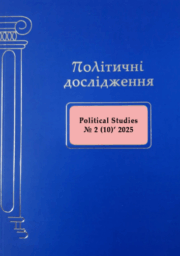
On the website of the Institute, in the section “Our publications”, there is an electronic version of the scientific publication – the journal “Political Studies” (No. 2 (6)’ 2023), the founder and publisher of which is the Kuras Institute of Political and Ethnic Studies of the NAS of Ukraine.
In this issue of the journal, articles on the problems of the theory and history of political science, research on political institutions and processes, political culture and ideology, scientific investigations on the problems of ethno-political science and ethno-political science are published.
Acceptance of manuscripts for the next issue of the journal will begin in January next year.
On November 25, 2023, when the whole country commemorated the 90th anniversary of commemoration of the victims of the Holodomor in Ukraine, the leading researcher of the Department of Ethnopolitics of the Kuras Institute of Political and Ethnic Studies of the National Academy of Sciences of Ukraine, candidate of historical sciences Anatoliy Podolskiy gave an interview to TRC “Kyiv” dedicated to these tragic events of the last century.
During the interview, the scientist emphasized the importance of honoring the memory of the Holodomor victims – especially today – during the Russian war against Ukraine. This memory will help us to persevere and defeat the enemy. A. Podolskiy noted that the current criminal Russian political regime is a continuation of Stalin’s policy of hatred for Ukraine and Ukrainians. It was during the sovereignty of Ukraine that a true policy and culture of memory of people who died during the Holodomor was formed. It is this kind of memory that restores dignity to the victims and helps Ukrainian society today to respect and sympathize with those who resisted communist crimes in those years and overcome the enemy today.

During the interview
Also, during his speech on the TV channel, A. Podolskiy drew historical parallels between the crimes of communism, Nazism, and racism. Totalitarian ideologies have always been and remain the greatest threat to humanity, the scientist emphasized.
Video recording of the interview
On November 16-17, 2023, an international conference on “The future and problems of publishing sources for the history of the 20th century” was held in Warsaw. The organizer was the Institute of National Remembrance of the Republic of Poland (INP RP) and the Historical Institute of the University of Warsaw. The speeches of researchers from Poland, Germany, the United States of America, Romania, and Ukraine covered a wide range of issues related to the publication of archival and other sources. First of all, European political history of the 20th century.
Scientists from Ukraine took part in the conference: Chief Researcher of the Department of Theory and History of Political Science of our Institute, Doctor of Historical Sciences, Professor Yuriy Shapoval, Researcher of the Institute of History of Ukraine of the National Academy of Sciences of Ukraine, Candidate of Historical Sciences Serhiy Kokin, Director of the Branch State Archive of the Security Service of Ukraine , Candidate of Historical Sciences Andrii Kogut.

During the conference (photo by Yu. Shapoval)
Yu. Shapoval gave a speech on the topic “Publication of memoirs, diaries and documents of the first secretary of the Central Committee of the Communist Party of Ukraine Petro Shelest “The true judgment of history is yet to come”. Problems, experience, meaning”.
Great attention was paid at the conference to Polish-Ukrainian cooperation in processing and publishing important sources about pages of common history.

In the photo from left to right: Serhiy Kokin, Doctor of History, Yolanta Karbazh-Vilinska, research associate of the INP Department of the Republic of Poland in Gdańsk, Yuriy Shapoval, Doctor of Historical Sciences, Professor, Majena Kruk, director of the Archive of the IPN, Andriy Kogut, Doctor of History, Marcyn Majewski, researcher employee of the Archive of the INP of the Republic of Poland
On the website of the Kuras Institute of Political and Ethnic Studies of the National Academy of Sciences of Ukraine, in the “Our publications” section, the text of the monograph of the senior researcher of the Department of Theory and History of Political Science, candidate of historical sciences, M. V. Gorbatiuk, “Political Elite of Vinnytsia Region: Organizational, Axiological and Behavioral Models.”
Based on a wide range of diverse sources and literature, the monograph examines the process of establishing of the regional political elite of Vinnytsia region – its structure at various historical stages, as well as the main mechanisms of recruitment and promotion channels of elite actors. The immanent connection of the old Communist Party elite of the Soviet era with the modern regional political elite of Vinnytsia region is shown. The key values and identities of the regional elite have been identified and characterized, and it has been established that the real values are in sharp contrast to the declared ones. The political behavior of representatives of the political elite of the region is covered in detail. The important role of informal connections and practices in the formation, structuring and functioning of the political elite of the region is clarified.
It is intended for social scientists, politicians, experts and everyone who is interested in regional political elites in Ukraine.
On October 26, Dr. Mykola Riabchuk, a Senior Research Fellow of the Department of Political Culture and Ideology, delivered a guest lecture in Sapporo, at the Slavic Research Center of the University of Hokkaido. In his presentation, entitled „Return of Geopolitics? Russian War in Ukraine and the Prospects for the New Global Order”, he outlined the challenges that the Russian aggression poses not only to its primary victim, Ukraine, but also to global politics and economy, international law, institutions and fundamental liberal values and principles.
In speaker’s view, the antiquated concept of „geopolitics”, promoted in Russia and supported by some „political realists” in the West, assigns overblown importance to the nations’ hard power which entitles them arguably to special rights and exclusive „geopolitical” interests, and ignores the role of soft power of alternative concepts – of freedom, dignity and sovereignty, which determine resilience of minor and presumably „non-historical” nations who reject the role of political pawns on the global chessboard and assert their own political agency and will.

Mykola Riabchuk
Ukraine provides a graphic example of such a resilience in its national-liberation, essentially de-colonial war, and ushers in a new global order that would be certainly more just and stable in the case of Ukraine’s much-coveted, though not inevitable victory.
The journal “Political Studies”, the founder and publisher of which is the Kuras Institute of Political and Ethnic Studies of the National Academy of Sciences of Ukraine, is included in the international scientometric database Index Copernicus.
The journal entered the ICI Journals Master List indexing database. This database includes scientific publications that have undergone a multi-stage process of parametric evaluation. The main requirements for publications that are included in the list of indexed ones are compliance by the editorial office with the principles of transparent activity, academic integrity, confirmation of the quality of the work of the editorial office, editorial board and reviewers of the publication.

Scientific publications that meet the criteria and conditions of indexing receive the ICV index (Index Copernicus Value), which is an indicator of the level of development of a scientific journal and its scientific impact.
On November 7, 2023, the World Congress of Holodomor Researchers “Unpunished Genocides Repeat!” was held at National Pedagogical Drahomanov University. The scientific event was timed to the 90th anniversary of the memory of Ukrainians, destroyed in 1932-1933 by the communist totalitarian regime. Among the co-organizers of the Congress is the Kuras Institute of Political and Ethnic Studies of the NAS of Ukraine.
At the plenary session of the congress with the scientific report “Historical parallels between the crimes of communism, Nazism, racism. Totalitarian ideologies as a threat to humanity. Ukrainian Dimension” was delivered by Anatoliy Podolskiy, a leading researcher of the Department of Ethno-Politics of our Institute, Candidate of Historical Sciences. In his speech, the scientist focused on comparing the anti-Ukrainian policy of the Stalinist, communist regime in the USSR in the 1930s and the anti-Ukrainian propaganda and Russian military aggression against Ukraine by the Putin political regime. The speaker presented a substantiated thesis about the historical connections and historical parallels between the crimes of communism and the crimes of racism against Ukrainians in the 20th-21st centuries.

During the work of the Congress
During the work of the Congress, reports were made by Pavlo Hrytsenko, Ph.D., Professor, Director of the Institute for Ukrainian Language of the National Academy of Sciences of Ukraine, Vasyl Marochko, Ph.D., Professor, leading researcher of the Institute of Ukrainian History of the National Academy of Sciences of Ukraine, Heorhiy Papakin, Professor, Director of the M.S. Hrushevsky Institute of Ukrainian Archeography and Source Studies of the National Academy of Sciences of Ukraine, Kostyantyn Kolesnikov, PhD, Professor, Head of the Department of History of the Academy of the Customs Service of Ukraine, Volodymyr Dutchak, serviceman of the Azov Brigade of the National Guard of Ukraine, PhD, Victoria Malko, Ph.D., Head of the Holodomor Research Center at the University of California, Fresno, other Ukrainian and foreign scientists.
According to the results of the work of the Congress, a corresponding resolution was adopted.
On November 3, 2023, an international conference on “Famine and Genocide” was held in Vienna, the capital of Austria. The organizer was the Institute of East European History of the University of Vienna and the Austrian-Ukrainian Commission of Historians. The meeting aroused the great interest of Austrian humanitarian scientists and was called to discuss at a professional level the question of the place of the Holodomor of 1932-1933 in Ukraine in the context of studying the phenomenon of genocide in the history of mankind in the 20th and 21th centuries.
Five speakers were invited to the conference, each of whom had a half-hour speech to highlight current issues on the topic of the international conference. Professor Wolfgang Müller, director of the Institute of East European History of the University of Vienna, opened the conference and gave an introductory speech. Swiss historian Professor Andreas Kappeler, who is a foreign member of the National Academy of Sciences of Ukraine, devoted his report to the coverage of the famine of 1932-1933 in Ukraine in the press of Central and Western Europe at the time. Historian, professor at Stanford University (USA) Norman Naimark, author of the high-profile studies “Fire of Hate: Ethnic Cleansing in Europe in the 20th Century” and “Stalin’s Genocides”, analyzed the place and significance of the Holodomor in a number of genocides experienced by mankind. Leading researcher of the Institute of Ukrainian History of the National Academy of Sciences of Ukraine, Doctor of Historical Sciences Valery Vasiliev devoted his report to the dynamics of relations between the center and the sub-center of power on the example of the leadership of Ukraine and Russia in 1932-1933.

November 3, 2023. Professor Wolfgang Müller speaks at the opening of the conference (Photo by Y. Shapoval)
The chief researcher of the Department of Theory and History of our Institute, Doctor of Historical Sciences, Professor Yuriy Shapoval took part in the conference. He focused on the problems of the methodology of reading the memories of contemporaries of the famine of 1932-1933, those who were not victims, but because of their ideological convictions took an active part in the implementation of the tragic Bolshevik social experiment.
It is important that the work of the conference on such a significant topic was not deprived of attention by the Embassy of Ukraine in Austria: Ambassador Extraordinary and Plenipotentiary of Ukraine, Candidate of Historical Sciences Vasyl Khymynets took part in the work of this scientific forum. It was he who in 2006, working as the first secretary of the Embassy of Ukraine in the Federal Republic of Germany, invited Professor Y. Shapoval to give a public lecture on the Holodomor in Ukraine at the Museum of the Berlin Wall.

Ambassador Extraordinary and Plenipotentiary of Ukraine, Candidate of Historical Sciences Vasyl Khymynets and Yuriy Shapoval

They have known each other for about 40 years. From left to right: one of the participants of the conference, Head of the Department of Modern History and the History of Eastern and Southeastern Europe at the University of Klagenfurt (Austria), Professor Dieter Pohl, Yurii Shapoval, Professor Andreas Kappeler
On the website of the Kuras Institute of Political and Ethnic Studies of the NAS of Ukraine in the “Our publications” section the text of the monograph of the chief researcher of the Department of Theory and History of Political Science, Doctor of Historical Sciences, professor, corresponding member of the NAS of Ukraine V. F. Soldatenko “Concepts of the Ukrainian Revolution and National Unity in in the light of political practice of 1917–1920” is publicated.
In the monograph, an attempt is made to recreate the complex and contradictory process of ideological substantiation of the organically interconnected concepts of the Ukrainian national-democratic revolution and national unity, to trace their essential evolution under the influence of the experience of implementation in social and political practice in 1917–1920. Scientific analysis and evaluations have been carried out in the context of historiographic trends of different periods and schools.
The study was carried out within the framework of the research work “The Concept of the Unity of Ukraine: Origins, Evolution, Political Relevance” (state registration number: 0122U000572).
The book is intended for scholars, teachers of history, political science, graduate students, and anyone interested in Ukrainian political history and contemporary socio-political development of Ukraine.
On October 26, 2023, the regional seminar of the International Political Science Association (IPSA) was held. Representatives of the national associations of Bulgaria, Croatia, the Czech Republic, Georgia, Hungary, Lithuania, Poland, Romania, Slovakia, Slovenia, Estonia, Latvia and Ukraine took part in the seminar.
On behalf of the Association of Political Sciences of Ukraine, the Head of the Department of Political Institutions and Processes of our Institute, Doctor of Political Sciences, Professor, corresponding member of the National Academy of Sciences of Ukraine Galyna Zelenko took part in the seminar.
The topic of the seminar was the coordination of efforts of national political science associations of the countries of the region to face global challenges.
Based on the results of the seminar, it was decided to prepare a collective monograph devoted to the analysis of the state of political science in the countries of the region; to hold a joint conference of national political science associations of the region in the spring of 2024 in Krakow, at which to discuss the challenges facing the countries of the region and the role of national associations in countering them.
Scientific journal «POLITICAL STUDIES»

Новини
Оголошення

