
The National Academy of Sciences of Ukraine has published the results of the competition for conducting scientific works under the program “Supporting the development of priority areas of scientific researches” for 2023-2024.
The scientific project of our Institute “Adaptive changes in the functioning of the political system of Ukraine in the conditions of war and post-war reconstruction” was recognized as the winner of the competition under the priority direction “Ukrainian society in the conditions of war, post-war transformation and European integration”.
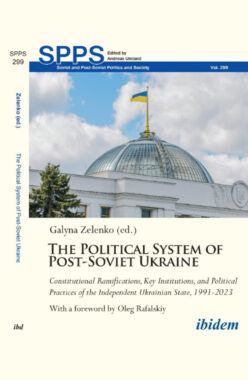
The text of the monograph „Crises of political development in Ukraine: causes, content and methods of leveling”.
The monograph analyzes political development crises as components of the modernization crisis syndrome. The neo-institutional approach, which is the basis of the proposed research, made it possible to analyze the development of Ukraine during the years of independence through the prism of crisis phenomena, which have a systemic and permanent nature and, in their combination, convergence and interpenetration, slow down, and sometimes make impossible, the processes of democratization. Crises of political development, among which the authors analyze the crisis of identity, the crisis of legitimacy, the crisis of penetration, the crisis of distribution, and the crisis of participation in their interaction, as well as due to extremely contradictory external influences due to a specific geopolitical environment (between two large centers of power, which is also analyzed in the monograph), have effectively led to the trials and tribulations that the Ukrainian state is currently undergoing.
The monograph is intended for social scientists, politicians, experts and anyone interested in the political development of Ukraine.
On December 22, 2022, during the meeting of the Institute’s academic council, a cooperation agreement was signed between the Volodymyr Vynnychenko Central Ukrainian State Pedagogical University and the Kuras Institute of Political and Ethnic Studies of the National Academy of Sciences of Ukraine.
The subject of the agreement was the combination of efforts of institutions for joint activities in the scientific, educational and social spheres in the following areas:
- exchange of scientific information, materials of international and all-Ukrainian conferences, monographic literature and professional publications, as well as special computer programs;
- participation in the development of joint research programs, the work of scientific conferences and symposia;
- professional development of scientific and pedagogical personnel;

Signing the agreement
- reviewing scientific and scientific-pedagogical products, scientific-methodical developments at the request of the Parties;
- creation of conditions for the publication of scientific products within the limits of scientific research work plans and publishing capabilities of the Parties;
- providing the opportunity for employment if there are vacancies and fulfilling the conditions of competitive selection.
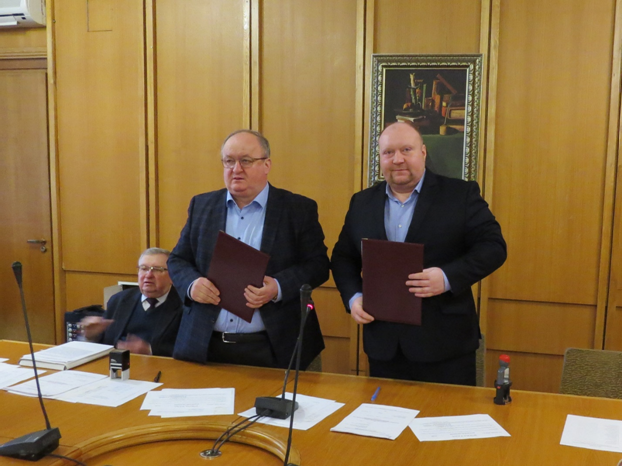
Oleg Rafalskiy and Yevgen Sobol exchange copies of the agreement
On behalf of the Kuras Institute of Political and Ethnic Studies of the National Academy of Sciences of Ukraine, Oleg Rafalskiy, the director, and Yevgen Sobol, the rector of the Volodymyr Vynnychenko Central Ukrainian State Pedagogical University.
The Cabinet of Ministers of Ukraine appointed our colleague – Doctor of Philosophy, Professor, famous religious scholar Viktor Yevgenovych Yelensky as the Head of the State Service of Ukraine for Ethnic Policy and Freedom of Conscience.
Among the main tasks of the State Service for Ethnic Policy and Freedom of Conscience is the implementation of state policy in the field of international relations, religion and the protection of the rights of national minorities in Ukraine.

Viktor Yelensky
Pursuant to the Decree of the President of Ukraine and the decision of the National Security and Defense Council of Ukraine, on December 6, 2022, the State Service for Ethnic Policy and Freedom of Conscience received the status of a central body of executive power with subordinate directly to the Cabinet of Ministers of Ukraine. Within a two-month period, the State Service for Ethnic Policy and Freedom of Conscience is tasked with conducting a theological examination of the Statute on the Administration of the Ukrainian Orthodox Church for the presence of a church-canonical connection with the Moscow Patriarchate, and if necessary, to take the measures provided for by the law.
The appointment of V. Yelensky as the Head of the State Service is an evidence of high confidence in him as a statesman, patriot and scientist.
The staff of the Institute congratulates its colleague on the appointment to a high state position, wishes him inspiration and perseverance in the implementation of complex tasks in the formation of state policy in the field of religion and ethnic communities.
On December 6-7, 2022, the conference “Thirty years after the collapse of the USSR from the perspective of Warsaw” was held at the University of Warsaw.
As part of the conference, a round table devoted to armed conflicts (wars) in the post-Soviet space and its prospects was held, the moderator of which was the Head of the Department of Political Institutions and Processes of our Institute, Doctor of Political Sciences, Professor, Corresponding Member of the National Academy of Sciences of Ukraine Galyna Zelenko.
The participants of the round table representing Azerbaijan, Belarus, Armenia, Kazakhstan and Uzbekistan characterized the essence of the armed conflicts taking place in their countries, the ratio of internal and external prerequisites of these conflicts.

During the round table
The main focus of the participants of the round table was on the impact of Russian military aggression against Ukraine on socio-political transformations in the post-Soviet space. The participants agreed that the future of the geopolitical space that will emerge from the so-called “post-Soviet” space, including the territory of present-day Russia, will depend on how the Russian-Ukrainian war ends. Probably, the Russian military aggression has already started the disintegration processes in these territories, since these countries, for the sake of self-preservation, on the one hand, are allegedly maneuvering in this military conflict, not accepting anyone’s side, and on the other hand, their society, in view of the dangers to their independence, understand the potential danger of Russian expansionist policy.
From November 28 to December 1, 2022, a meeting of the International Holocaust Remembrance Alliance (IHRA) was held in Gothenburg (Sweden).
Plenary sessions of the forum, which were attended by experts, political representatives, representatives of international organizations and civil society, contributed to the exchange of opinions regarding the development of the educational and scientific spheres of Holocaust memory.
On November 28, 2022, at the meeting of the Academic Working group of the International Alliance, the leading researcher of our Institute, Candidate of Historical Sciences, Anatoliy Podolskyi, spoke (online).

A. Podolskiy’s speech during the meeting of the IHRA Academic Working Group
In his speech, the scientist emphasized that during the Russian aggression and war against Ukraine, in particular after the enemy’s full-scale invasion into Ukrainian lands, new challenges appeared in the study and preservation of the memory of the Holocaust during the times of the defense of the country against the brutal war crimes of the occupiers. During the years of independence in Ukraine, a scientific school of humanitarian researchers was gradually formed on the issue of Holocaust Studies, this topic became an integral part of the study of the history of the Second World War in educational institutions of the country at all levels.
Also, it was during the years of sovereign Ukraine that the politics and culture of commemorating the victims of the Holocaust appeared and achieved significant success in society and the state.
The Russian aggressor in Ukraine kills people, destroys buildings, cultural monuments, memorial sites, including memorials and memorial signs to Ukrainian Jews – victims of the Holocaust. Bombs and rockets of the enemy hit the terrain of Babyn Yar in Kyiv, destroyed part of the memorial in Drobitsky Yar in Kharkiv. As a result of aggression and war, the teaching of the history of the Holocaust is also changing. Ukrainian scientists and educators have embarked on the path of comparing the crimes of Hitler’s and Putin’s dictatorships.
Russian aggression and the aggressive policy of the Russian occupiers, the speaker noted, are also destroying Ukrainian culture, which is connected with the history of the Jews of Ukraine, a culture that was carefully created during the years of independence. The enemy shows its cave-like, terrible and cruel Ukrainophobia and anti-Semitism.
Learn more about IHRA meetings
On November 22-23, 2022, in Kyiv Mariupol State University organized and held the 3rd International Scientific and Practical Conference “The Phenomenon of Post-Globalism Culture”. In addition to Ukrainian scientists, the participants of the event were scientists from Poland, Germany, France, the Czech Republic, and Greece.
At the plenary session of the conference, the leading researcher of the department of ethno-political science, PhD of political science, associate professor Anastasiia Dehterenko spoke with the report “Ethno-political management and the strategy of the revival of Ukraine in the post-war period“.
The speaker emphasized that at the strategic level of ethnopolitical management, it is necessary to ensure a clear legal framework for ethnopolitics with relevant legislative documents – the “Concept of State Ethnonational Policy of Ukraine”, the updated Law “On National Minorities in Ukraine”; at the tactical level – to ensure the formation of an effective mechanism for the development of specific methods and means of implementing the adopted decisions; on the operative level – in order to implement state ethnopolitics in the regions in conditions of full-scale war, constant population migrations and changes in the location of a large number of ethnic groups (Greeks of the Azov region, Bulgarians of the South, etc.), to identify the actual ethnic structure of the population in the regions, as well as temporary places of residence of a significant part of ethnic groups and to conduct an inventory of the possibilities of intensifying the work of regional centers of national minorities in Ukraine and abroad.
The relevance of the problem to which the report is devoted is due primarily to the fact that transformations in the system of ethno-political management can positively affect the daily life of thousands of Mariupol residents who were forced to leave the temporarily occupied city.
At the conference, the project “Green Corridors. Evacuation of students and teachers of the Mariupol State University from the occupied territory.”
On the website of the Institute, in the “Our Publications” section, is placed an electronic version of the scientific specialist publication – the journal “Political Studies”, the founder of which is the Kuras Institute of Political and Ethnic Studies of the National Academy of Sciences of Ukraine.
In the current issue of the magazine, articles on the problems of the theory and history of political science, the study of political institutions and processes, political culture and ideology, scientific researches on the problems of world political development, ethno-political science and ethno-state science are published.
Until March 14, 2023, the acceptance of manuscripts of articles that will be published in the next issue (No. 1 (5)’ 2023) of the journal continues. Publication will be made until April 30, 2023.
On November 14, 2022, Anatoliy Podolskiy, a Leading Researcher of the Department of Ethnopolitics of our Institute, Candidate of Historical Sciences, gave a lengthy interview to the Hromadske Radio. During the discussion, the issues of historical memory of the Second World War and the history of the Holocaust were discussed.
Why is it important to preserve historical and cultural memory and why was it impossible during the USSR? Why does historical memory help us now to resist the enemy who wants to destroy our state and cultural identity?
In his interview, Anatoliy Podolskiy said in particular: “What is happening now is very important. Russian aggression against us calls into question the teaching of the history of the Second World War, in particular, the history of the Holocaust. Now we can no longer teach the way we taught it until February 24, 2022. We are doomed to associations, comparing the crimes of communism and National Socialism with the crimes of Russia nowadays.”

Anatoly Podolsky during an interview
Also, during the discussion at Hromadske, it was emphasized that during the Soviet period the topic of the Holocaust was silenced, as were the topics of the Ukrainian national movement, the Holodomor, prisoners of war, and forced laborers. The Soviet regime was not interested in people, their suffering and grief. It was profitable for the communist dictatorship to highlight only examples of heroism… Today, we suffer from Russian imperial aspirations, the autocratic regime of our northern neighbor, in particular, because we did not sufficiently highlight the past and memory about it.
At the end of the discussion, A. Podolskiy noted: “Russian aggression has been going on for 8 years and 8 months. And we defend ourselves and destroy the enemy. We will win. Many people give their lives for Ukraine. Now there are many Ukrainian Jews at the front. They, like all citizens of Ukraine, defend their Motherland. Thus, we understand that the tragedy of the Holodomor, the Gulag, and the Holocaust is not someone else’s story. This is our common history…”
Full text and audio recording of the interview
Mykola Riabchuk, a leading researcher at the Department of Political Culture and Ideology of our Institute, gave lectures at US universities.
The topic of the scientists’ report: “Imperial Knowledge and Anti-Colonial Wars: What the Russo-Ukrainian ‘Conflict’ Teaches Us”. M. Riabchuk spoke with it on November 4 – at the Southern Methodist University (Dallas, Texas); November 10 – at Princeton University (New Jersey).

Southern Methodist University (Dallas, USA)
“Imperial knowledge” was described by the speaker (according to Edward Said) as a system of narratives aimed at silencing, undermining and provincializing the subjugated nations, making them voiceless and almost invisible on the international scene, insofar as the empire monopolizes the authority to speak and act on their behalf. The Russian Empire, the scientist emphasized, has created and disseminated this “knowledge” for several centuries with the help of powerful state institutions, transforming it into “international” knowledge, adopted in Western media, academia and mass culture and transformed into “common knowledge” and therefore unquestionable “truth” . As a result, the West got used to looking at Russia and its possessions through the prism of that “knowledge”, through “Russian eyes”, not understanding many important things and not reacting to them properly.

Princeton University (Princeton, USA)
The degradation of Putin’s regime into a fascist dictatorship and his genocidal war in Ukraine took place, to a large extent, thanks to the self-poisoning of the West with that “knowledge”, and thus self-blinding. Today, we finally have to radically revise that “knowledge” – within the framework of the belated decolonization of Western mentality and institutions.
On October 27-28, 2022, the 4th All-Ukrainian Scientific and Practical Conference “Political Processes of Modernity: Global and Regional Dimensions” was held on the basis of Vasyl Stefanyk Precarpathian National University. The event was co-organized by the Kuras Institute of Political and Ethnic Studies of the National Academy of Sciences of Ukraine.
Scientists of the Kuras Institute of Political and Ethnic Studies of the National Academy of Sciences of Ukraine, teachers of higher education institutions in Kyiv, Dnipro, Lviv, Uzhgorod, Chernivtsi, Ivano-Frankivsk, Vinnytsia, Odesa and other cities of Ukraine, as well as students of Vasyl Stefanyk Precarpathian National University took part in the conference.
The scientific event was opened and moderated by the Head of the Political Science department of the Vasyl Stefanyk Precarpathian National University, Doctor of Political Sciences, Professor Vasyl Klymonchuk. Professor V. Klymonchuk emphasized the importance of broad public discussion, critical understanding of modern political processes in their global and regional dimensions, development of proposals and recommendations regarding current problems.
The Vice-Rector for Scientific and Pedagogical Work of Vasyl Stefanyk Precarpathian National University, Doctor of Physical and Mathematical Sciences, Professor Serhiy Sharyn addressed the participants of the conference with a welcome speech. He emphasized that the current meeting of scientists is a response to fundamental requests of society and an understanding of the impact of political processes on the regional and global dimensions of politics, on the challenges facing Ukraine and the world in the context of modern events and a full-scale war.
The deputy director for scientific work of the Kuras Institute of Political and Ethnic Studies of the National Academy of Sciences of Ukraine, Doctor of Historical Sciences, Professor, corresponding member of the National Academy of Sciences of Ukraine Oleksandr Mayboroda, who outlined the main scientific directions of the conference, noted the special relevance of the scientific problems brought up for discussion and emphasized the feasibility of further cooperation between scientific institutions in the study of current problems of modern world and Ukrainian politics.
Among the main directions of the conference were:
- Theoretical and methodological approaches to the analysis of political processes;
- Political institutions and processes at the current stage of social development;
- Elections and electoral processes in Ukraine and the countries of Central-Eastern Europe: global and regional dimensions;
- Consolidation of Ukrainian society: ethnopolitical and valuable dimensions;
- Modern system of international relations. Conflicts and criseses of the 21st century;
- Russian-Ukrainian war: prerequisites, causes and course of the war, consequences for Ukraine, the countries of Central-Eastern Europe and the world.
Doctor of Political Sciences, Associate Professor, leading researcher of the Department of Theory and History of Political Science of the Kuras Institute of Political and Ethnic Studies of the National Academy of Sciences of Ukraine Vyacheslav Yaremchuk delivered the report “Ukrainian society in the conditions of the Russian-Ukrainian war (the first consequences of 2022)” at the plenary session of the conference.
The speaker noted that the Ukrainian society, being at the epicenter of the global conflict, received a deep moral and psychological trauma. However, in the conditions of a real threat of annihilation, Ukrainian society (which was largely expected) proved capable of mobilizing efforts in the fight against the aggressor. According to the speaker, a number of factors contributed to this, including a high level of consolidation of Ukrainians (the unification of society in the name of achieving a common goal, as a decisive basis for the self-preservation of the nation), the establishment of the phenomena of solidarity (the presence of agreed interests, a harmonious combination of social and personal) and unity (as a manifestation of the ethno-national consolidating process, the primacy of the territorial integrity of the country), based on the deep-rooted state, spiritual and cultural traditions of Ukrainians, aware of their uniqueness, continuity and inseparable connection of generations with their genetic roots, unification around a common core, which is the Ukrainian state. The consequence of the first months of the Russian-Ukrainian war was that, despite significant losses, the Ukrainian state and its society became stronger and more united. The radical liberation of Ukrainians from the remnants of hostile ideological stratifications and stereotypes, imperial Russian narratives about the past had a significant impact on both the projection of the formation of the future (including the European vector of development) and the consolidation of the Ukrainian political nation, which must be preserved against the background of the emergence of new realities, probable global and regional challenges and threats.

During Vyacheslav Yaremchuk’s report
The report “Russian-Ukrainian War as a Catalyst of Socio-Political Changes in Ukraine” by Galyna Zelenko, Doctor of Political Sciences, Professor, Corresponding Member of the National Academy of Sciences of Ukraine, was devoted to the problems of socio-political transformations in Ukraine under the influence of the full-scale military invasion of the Russian Federation into Ukraine.
The speaker, analyzing the consequences of the large-scale invasion of the Russian Federation into Ukraine, emphasized first of all the significant acceleration of the processes of nation-building. Political scientists compare the development trajectory of transit societies like the Ukrainian one to a square wheel, when a very, very strong push is needed to make it roll to a new edge. Maidans were such impulses in Ukraine. Now such an impetus was given by the war – incomparable in strength with the Maidans, since it is about the survival of the country in principle. What used to take decades is now changing in months or even weeks.
The scientist emphasized that the state of Ukraine turned out to be much stronger than it seemed. Moreover, the national stability of Ukraine, as the war showed, is primarily based on the ability to self-organize. Thus, the latest data of sociological studies indicate that the stage of civic (political) self-identification of Ukraine has passed. The full-scale invasion of the Russian Federation on the territory of Ukraine practically completed the processes of forming a political nation and significantly eliminated those socio-political divisions that have always created an identity crisis in Ukraine – religion, language, ethnicity, foreign policy orientations. The tragic realities associated with the full-scale Russian invasion contributed to the acceleration of the formation among Ukrainians of certain monadic communities, united around such stable ideologies as a strong nation, a strong state, a single state language, a common enemy, and protection through integration into the EU and NATO. Such results are currently a stable trend, as Ukrainian society has demonstrated them for the eighth year in a row. The national idea of resisting the war with Russia and national revitalization also became prominent in Ukraine. At the same time, problems of a systemic nature will remain in post-war Ukraine, which relate to the institutional capacity of the state. Although the war surprised us in this matter as well, because the state institutions demonstrated unexpected resilience and capacity. And this indicates significant qualitative changes in the system of political institutions.

During Halyna Zelenko’s report
After the plenary session was over, the conference continued its work in a sectional format. Scientists, teachers, graduate students, master’s students and students gave scientific reports and discussed theoretical and methodological approaches to the analysis of modern political processes, trends and direction of modern political processes, electoral processes in Ukraine and in the countries of Central-Eastern Europe, problems of consolidation of Ukrainian society in the ethno-political and value dimensions, dynamics and prospects for the development of political processes in Ukraine and the world, the events of the Russian-Ukrainian war.
Unfortunately, the work of the conference was affected by the realities of martial law in Ukraine. After a few hours of communication between scientists (discussion of speeches and debates), air alarms were announced in Kyiv and Ivano-Frankivsk, and later the electricity supply was turned off. Despite this, the moderators of the conference managed to bring the scientific event to completion, to formulate scientific and practical recommendations based on its results. Changes to the current format of the scientific and practical conference, which is being held for the fourth year in a row together with the Kuras Institute of Political and Ethnic Studies of the National Academy of Sciences of Ukraine at Vasyl Stefanyk Precarpathian National University were also proposed. It is planned that the next conference will receive international status.
October 19, 2022 at the Institute of Social and Political Psychology of the National Academy of Sciences of Ukraine as part of the scientific special project “Ukraine: Consolidation. Solidarity. “Unity” hosted the VI round table “History in us and us in history: psychology of historical memory”.
The event was organized by the Institute of Social and Political Psychology of the National Academy of Sciences of Ukraine and the Association of Political Psychologists.
Employees of the Department of Theory and History of Political Science of our Institute, Doctor of Historical Sciences, Professor, Chief Researcher Tetyana Bevz and Doctor of Political Sciences, Leading Researcher Vyacheslav Yaremchuk took part in the work of the round table and spoke with a speech.
In the report on the topic “The concept of “unity” in the political discourse of nowadays” Tetyana Bevz emphasized the undeniable relevance of the concept of “unity”/”cohesion” in the political and scientific discourse of nowadays. She emphasized that the cohesion of society is centered around ideas (it is primarily about the idea of national self-determination, the idea of the country’s independence); noted that it is a combination of several components: identity, trust, interaction and accessibility; cohesion, degree of integration of society, “unity” are considered as synonyms; and “cohesion” is an indicator of readiness for joint action, the ability of society or community to act together, in particular, in the face of challenges and threats.
In the political discourse, the speaker noted, “unity”/”cohesion” is referred to as: 1) “unity” as a factor that united society; 2) “unity” as a factor that united society and the government; 3) “unity” as a factor that united Ukrainians all over the world; 4) “unity” as a factor that united Europe in the conditions of the Russian-Ukrainian war; 5) “unity” as a factor that united the world.
Analyzing the understanding of the concept of “unity” in modern conditions, the speaker singled out several aspects of its understanding and interpretation: 1) one of the important factors in ensuring the unity of society is the development of the armed forces; 2) unity of citizens in readiness for joint defense of the state during military aggression; 3) unity and readiness to repel the aggressor is our strength and the guarantee of preserving Ukrainian statehood; 4) we are united in our desire for a just peace, well-being for Ukraine, and therefore for each of us, for future generations; 5) Ukrainians are united: “we are unanimous in our thoughts, united mentally and physically. Ukrainians are a strong and eternal nation”; 6) we are a single country, a single people, a single nation; 7) “The President of Ukraine has become a source of inspiration and motivator for the entire country”; 8) “Ukraine acquires an obvious, albeit hard-suffering subjectivity, and thus finally acquires the right to manage its own destiny”; 9) “Ukrainians are already doing what they need to do. They organized their society – in particular, civil society – to help the armed forces, created a volunteer movement, civil activism”; 10) “our nation is more united than ever. We now have common dreams, ideas and goals” 11) “unity/cohesion in the most difficult time for the country is the magic code of the Ukrainian nation, which gives it strength and indomitability.”
Summing up, the speaker noted that today national unity is our joint conscious choice, which we have chosen and are defending today; unity is the foundation of our success, the guarantee of a strong, independent state and the restoration of its territorial integrity; the concept of “unity” is the national idea of a united and indivisible Ukraine, the basis of opposition to the enemy, the basis of our stability and mutual support, the basis of relations between the government, citizens and civil society. Our task: to preserve the unity of the vision for the development of Ukraine after the victory!
In a report on the topic “Ukrainian society in the conditions of the Russian-Ukrainian war: consolidation in the name of victory”, Vyacheslav Yaremchuk noted that the large-scale Russian invasion of 2022, which threatened the existence of the state and the Ukrainian nation, started a new countdown for Ukraine, became a real historical test for Ukrainian society, a test of its ability to protect the Motherland, its right to life. It was argued that a number of factors played a decisive role in the consolidation of Ukrainian society and the mobilization of its efforts in the face of a dangerous challenge, among them the establishment of the foundations of the idea and value of the Ukrainian united state, historical memory, awareness of the uniqueness of the Ukrainian nation, the tradition of national liberation and independent state process, neutralization of the propaganda of our enemy, which had an integrating effect on society in its struggle for sovereignty and territorial integrity of the country.
The speaker emphasized that during post-war reconstruction it will be necessary to continue the course of reforms and European integration, he emphasized the importance of further maintaining a high level of social consolidation.
A meaningful discussion was held, dedicated to the study of the phenomenon of historical narrative and its influence on the national self-awareness of Ukrainians.
On October 25, 2022, at the Kuras Institute of Political and Ethnic Studies of the National Academy of Sciences of Ukraine held a meeting of the one-time specialized academic council on awarding the scientific degree of Doctor of Philosophy in the field of knowledge 05 – Social and Behavioral Sciences in the specialty 052 – Political Science.
According to the results of the dissertation defense on the topic: “Institutional capacity of the non-governmental sector in Ukraine”, a PhD student of our Institute, a junior researcher of the Department of Political Institutions and Processes Dmytrenko Olena Anatoliivna was awarded the degree of Doctor of Philosophy in the field of knowledge 05 – Social and Behavioral Sciences with a specialty 052 – Political Science.
On October 20-21, 2022, in the city of Regensburg (Germany), the Leibniz-Institut für Ost- und Südosteuropaforschung Regensburg held an international scientific conference on the topic “Wars in Ukraine in the 20th and 21st centuries: mass media, experts, misinformation”. In addition to the aforementioned Institute, the co-organizer of the conference was Odessa I.I. Mechnikov National University.
The key role in the preparation of this scientific forum belongs to the German-Ukrainian Commission of Historians (it annually organizes this kind of international gathering of scientists). One of the long-term members of this commission is the chief researcher of the Department of Theory and History of Political Science of our Institute, Doctor of Historical Sciences, Professor Yuriy Shapoval. He was a member of the organizing committee and a participant of the conference.

A group of conference participants
Oleksandr Pankieiev (Edmonton, Canada), Olena Bachynska (Odesa), Olga Kolyastruk (Vinnytsia), Yuriy Shapoval (Kyiv), Olga Bilobrovets (Zhytomyr), Victoria Vengerska (Zhytomyr), Polina Barvinska (Odesa), Serhii Stelmakh (Kyiv), Igor Shchupak (Dnipro)
The purpose of the scientific conference was to: analyze information and disinformation campaigns (with the potential for legitimization and delegitimization), assess the role of imperial, colonial and post-colonial narratives under the conditions of hostilities, show the media representations of the respective opponents of war and enemy images, and also point to media forms (visual, acoustic, text media). Scientists from Ukraine, Germany, Canada, Israel, and the USA took part in the conference.

Meeting of the German-Ukrainian commission of historians, October 22, 2022
After the conference, a working meeting of the German-Ukrainian Commission of Historians took place. In connection with the end of the mandates defined by the Commission’s charter, its co-chairs were re-elected. Professor Guido Gausman was elected co-chair instead of Professor Martin Schulze-Wessel. Professor Gelinada Grinchenko was elected co-chair from the Ukrainian side instead of Professor Yaroslav Hrytsak.
The text of the monograph “Political Process in Independent Ukraine: Summaries and Problems” is posted on the Institute’s website in the “Our Publications” section – the second, updated edition edited by Doctor of Historical Sciences, Professor, Corresponding Member of the National Academy of Sciences of Ukraine O. O. Rafalskiy.
The monograph, prepared by a team of authors under the leadership of Doctor of Historical Sciences, Professor, Corresponding Member of the National Academy of Sciences of Ukraine O. M. Mayboroda, is devoted to the study of modern problems of the political development of Ukraine. Issues related to the choice of the general strategic course of the state, the transformation of the socio-political system, and the ethno-political and spiritual evolution of Ukrainian society are analyzed.
The publication is addressed to scientists, teachers and students, everyone who is interested in the problems of socio-political development.
On the 13th of October, Mykola Riabchuk, a Senior Research Fellow at the Department of Political Culture and Ideology, took part in a roundtable discussion on the Russian Invasion, organized at Princeton with several other visiting scholars from Ukraine. In his speech,

Dr. Riabchuk discussed a desperate lack of the adequate Western knowledge about Ukraine, its deep penetration and contagion with Russian imperial narratives that precluded for years if not centuries the development of adequate policy vis-à-vis his country. Year by year, Ukraine was described as totally corrupt, dysfunctional and dramatically divided. Of a sudden, it appeared to be resilient, well-organized and strongly consolidated. What are the reasons of Ukraine’s strength and unity? It is a high time for the Western experts to reconsider their Russia-inflicted stereotypes about Ukraine and, more generally, about the region, that facilitated the Russian expansion and still hinder the efficient international response to it.
On October 6, 2022, the XIV All-Ukrainian scientific and practical conference “South of Ukraine in conditions of global socio-cultural transformations: issues of cultural, ethno-religious, ethnic and national-civic identities” was held in an online format on the basis of Zaporizhzhia Polytechnic National University. One of the co-organizers of the conference was the Kuras Institute of Political and Ethnic Studies of the National Academy of Sciences of Ukraine.
The purpose of the scientific and practical event was to develop new theoretical approaches to the implementation of state ethnopolitics, to implement the results of scientific research into the practice of the activities of state bodies, civil society institutions, and wide circles of the public.
Employees of the Kuras Institute of Political and Ethnic Studies of the National Academy of Sciences of Ukraine, Khortytsia National Reserve, Borys Grinchenko Kyiv University, Zaporizhzhia National University.
The reports of the participants of the scientific and practical conference were focused on the search and development of new theoretical approaches to the implementation of state ethnopolitics. Among the priority tasks of such a policy, the speakers emphasized, should be the protection of linguistic, ethno-cultural, religious and other rights, freedoms and values of citizens who live in the Ukrainian territories temporarily occupied by the Russian aggressor, as well as forced migrants.

During the scientific and practical conference
The deputy director of the Kuras Institute of Political and Ethnic Studies of the National Academy of Sciences of Ukraine, Doctor of Historical Sciences, Professor, Corresponding Member of NAS of Ukraine Oleksandr Mayboroda, Head of the Department of Ethnopolitics, Doctor of Political Sciences, Professor Viktor Kotygorenko, Head of the Department of Political Culture and Ideology, Doctor of Political Sciences, Professor Viktor Voynalovych, Chief Researcher, Doctor of Political Sciences, Professor Oleg Kalakura, Leading Researchers of the Institute: Doctor of Historical Sciences, Professor Yuriy Nikolaiets, Candidate of Political Sciences, Associate Professor Anastasiia Dehterenko, Candidate of Historical Sciences Anatoliy Podolskiy, Researcher, Candidate of Historical Sciences Oleksiy Lyashenko.
As the organizers of the conference noted, such scientific and practical events give historians, political scientists, sociologists, philosophers and local historians the opportunity not only to publicize the results of scientific research, but also to acquaint the general public with the diversity of ethnic cultures living on the territory of Ukraine, allow to preserve and renew creative connections between scientists of different generations, scientific schools and regions of Ukraine.
Kuras Institute of Political and Ethnic Studies of the National Academy of Sciences of Ukraine together with the V.I. Vernadsky Taurida National University was as a co-organizer of the international scientific and practical conference “Holocaust in Ukraine (Babiny Yar Tragedy Memorial Day)”, which took place on September 29, 2022 in Kyiv.
The conference, which was attended by scientists, teachers of higher education institutions, PhD students and undergraduate students, was dedicated to the 81st anniversary of the mass shooting of Ukrainian Jews by Nazi occupiers during the Second World War in Babyn Yar.

Anatoliy Podolskiy
Anatoliy Podolskiy, a leading researcher of the Department of Ethnopolitics of our Institute, Candidate of Historical Sciences, head of the scientific and educational NGO “Ukrainian Center for the Study of the History of the Holocaust”, in his report “The History of the Holocaust in Ukraine: Challenges and Prospects of Research” introduced the conference participants to the state and specifics of Holocaust research at the current stage, focused on existing gaps that require in-depth and systematic study.
The speaker drew special attention to the problems surrounding the construction of a modern memorial complex in Babyn Yar, stressing that the memory of the past, in particular the victims of the Second World War, the victims of the Holocaust in Ukraine today is also a battlefield with the Russian aggressor, a battle for our own Ukrainian identity and subjectivity in the realm of culture and politics of memory.

Vyacheslav Yaremchuk
Leading researcher of the Department of Theory and History of Political Science, Doctor of Political Sciences, Vyacheslav Yaremchuk, in his speech “The tragedy of Babyn Yar and modernity: consolidation of ukrainian society, its spiritual and cultural unity in the conditions of the large-scale invasion of the Russian Federation,” noted that the tragedy of mass murder in Babyn Yar in 1941–1943, against the backdrop of the modern Russian-Ukrainian war, the conduct of genocide by the aggressor country, ethnocide and linguicide against the Ukrainian people acquired a new symbolic meaning.
The speaker expressed his conviction that the Ukrainian state has all the capabilities to overcome the current dangerous challenge. The key to victory, and thus to the preservation of life, freedom and democracy, can only be joint actions of the entire society, awareness of the sense of unity, unification around a common core, which is the Ukrainian state and Ukrainian identity.

During the scientific conference
During the conference, researchers of the institute (V. Yaremchuk, A. Podolskiy, M. Gorbatyuk) familiarized the participants with the latest scientific publications of the Kuras Institute of Political and Ethnic Studies of the National Academy of Sciences of Ukraine and the Ukrainian Center for the Study of the History of the Holocaust. The books were transferred to the university library.
The scientific event took place within the framework of the “Autumn scientific marathon in Tavriysk: searches and prospects in modern conditions” on the V.I. Vernadsky Taurida National University and research topic of the Kuras Institute of Political and Ethnic Studies of the National Academy of Sciences of Ukraine “Concept of the universality of Ukraine: origins, evolution, political relevance”.
The All-Ukrainian interdisciplinary scientific and practical online conference “Problems of the Civilizational Subjectivity of Ukraine: The Mission of Science and Education”, which took place in Kyiv on 29–30 September, 2022, was dedicated to the discussion of the actual theoretical and practical problems of the development of Ukrainian society in the sphere of the formation of the subjectivity of the individual, community and society. One of the co-organizers of the event was Kuras Institute of Political and Ethnic Studies of the National Academy of Sciences of Ukraine.

Director of the Institute, Corresponding Member of the National Academy of Sciences of Ukraine, Vice President of the National Academy of Sciences of Ukraine Oleg Oleksiyovych Rafalskiy took part in the conference and gave a speech.
Devoting his speech to the problem of the subjectivity of Ukraine, O. O. Rafalskiy noted that from the first days of independence, our state had to solve at least two strategically important tasks on which the subjectivity of any modern country is based: the development of a sovereign national state and its integration into the system of international relations.

Oleg Rafalsky during the All-Ukrainian scientific and practical online conference
The solution of these tasks, the speaker emphasized, remains relevant even today, accompanied by the action of objective factors of the global level and the tendencies of modern social development. Russia’s war against Ukraine – the issue of state policy of national state security and sovereignty was sharply put on the agenda. In connection with this, the problem of the civilizational subjectivity of Ukraine in these conditions also acquired a distinct security meaning. Therefore, now, it is worth focusing attention on understanding the problem of civilizational subjectivity of Ukraine and finding answers to the questions: with what potential of material and spiritual values does it represent itself in the geopolitical space; what civilizational ideas and projects it implements in our lives and offers to the world; did the state take place as a subject of history and modernity?
The search for ways to solve these and other important problems, noted O. O. Rafalskiy, is now, as before, in the focus of attention of domestic scientists, employees of scientific institutions and institutions of higher education of Ukraine. Today, society needs objective scientific knowledge, an understanding of why our historical fate was so difficult, and sometimes tragic. The main task, the speaker emphasized, is to develop a clear algorithm of actions related to understanding what Ukraine offers to the world and what it seeks in it.
Our country made its choice in favor of freedom and democracy and continues to persistently implement the policy of the Euro-Atlantic vector of its development with a strong emphasis on the formation of civilizational subjectivity, which makes it possible to perceive our state as European. The world should get to know Ukraine, get an adequate idea of its tumultuous historical development, its interests and public feelings, feel all the components of subjectivity embedded in the Ukrainian mentality – stressed O. O. Rafalskiy.
Employees of the Kuras Institute of Political and Ethnic Studies of the National Academy of Sciences of Ukraine – Doctor of Historical Sciences, professor T. A. Bevz and Doctor of Political Sciences, Professor M. S. Karmazina took part in the work of the conference and made scientific reports.
The participants of the scientific event were scientists of the National Academy of Sciences of Ukraine and national branch academies, teachers of institutions of higher and postgraduate education, teachers of secondary schools, psychologists, social pedagogues, students and graduate students.
Video recording of the scientific and practical conference
On September 22-23, 2022, the 15th Ukrainian-Polish meeting took place in the city of Yaremche. This is the only regular scientific forum in Ukraine, which has been bringing together Ukrainian and Polish experts, diplomats and scientists for the exchange of thoughts for 15 years in a row.
This year’s topic of communication: “Ukraine and the Republic of Poland in conditions of critical global turbulence: new challenges, threats and opportunities”. The Forum was organized by Vasyl Stefanyk Precarpathian National University, The University of Warsaw School of European Studies, Kuras Institute of Political and Ethnic Studies of the National Academy of Sciences of Ukraine.
Director of the Institute, Corresponding member of the National Academy of Sciences of Ukraine Oleg Rafalskyi, who delivered a speech, noted that for 15 years, Ukrainian-Polish meetings in Yaremche have laid the foundation for close and mutually beneficial scientific cooperation. He also reminded that this year marks the 30th anniversary of the signing of the Treaty between the Republic of Poland and Ukraine on Good Neighborliness, Friendly Relations and Cooperation. So, since the beginning of the 1990s, no one – neither in Warsaw nor in Kyiv – had any doubts that the only right path for Poland and Ukraine is a strategic partnership of both countries. So Poland was the first country in the world to recognize the independence of Ukraine, showing solidarity with the state that was just beginning its path to freedom and democracy. Poland was the first country to extend a helping hand since the beginning of Russia’s full-scale war against Ukraine.
Speaking about the prospects of bilateral Ukrainian-Polish relations, Oleg Rafalskyi noted that they will be determined by Russian military aggression for a long time. Whereas in its foreign policy Russia thinks in the categories of the 20th century, when the country’s power is determined by territory, natural resources and weapons, and not by social capital and technology, which is typically for developed democracies, the purpose of this war is not only the subjugation of those countries that once belonged to the Soviet Union, but the formation of a zone of influence, thanks to which the very power of Russia will be formed as an argument for the non-Western world for the so-called “Turn to the East”, speaking in the terminology of Russian ideologues. Therefore, as unfortunate as it sounds, noted Oleg Rafalskyi, both Ukraine and Poland, in this case, are for Russia a tool to strengthen its own influence in the world, in the illusory system of world order that Russia intends to create. That is, the conscious formation of what Russian ideologues once again call “anti-Russia” is nothing more than an argument for internal use – for the Russian population, with the aim of mobilizing it for a long and protracted war, the purpose of which is the reformation of the entire system of international relations. Therefore, this conflict of civilizations will have long-term consequences, and will also require further consolidation of Ukrainian-Polish efforts to confront Russia and for the post-war recovery of Ukraine.
Scientists of the Institute took part in the work of the conference: Corresponding member of the National Academy of Sciences of Ukraine Halyna Zelenko, Doctor of Political Sciences Mariya Karmazina, Doctor of Historical Sciences Tetyana Bevz, Doctor of Political Sciences Oleg Kalakura.
Scientific journal «POLITICAL STUDIES»
Новини
Оголошення

