
CONFERENCE ON A “TRAUMA NATION” IN PRAGUE
On November 26-27, Dr. Mykola Riabchuk, a Senior Research Fellow at the Ethnopolitics Department, took a part in the international online conference “A Trauma Nation: Ukraine at a Crossroads”, organized by the Institute of East European Studies of the Charles University in Prague. He presented a paper “White Skins, Black Languages. Traumatic Experiences of Colonial Subjugation” that referred provocatively to the title of Franz Fanon’s classic book “Black Skin, White Masks”. He endeavored to check the applicability of some Fanon’s findings to the Ukrainian case and, more generally, to any quasi-colonial situation where no racial issues seem to be involved. The speakers’ main argument was that Ukrainians, indeed, were not discriminated against as individuals either in the Russian or Soviet empires insofar as they were considered the “same people” as Russians. Nonetheless, they were heavily oppressed as a group inasmuch as they rejected the “sameness” and insisted on distinct cultural, let alone political rights. It was Ukrainian language that symbolized Ukrainians’ “black skin” – the sign of backwardness, inferiority or, worse, political disloyalty and subversion. Fanon’s theory elucidates the mechanism of internalization of the dominant “white” ideology by the oppressed “black” community, resulting in the latter’s self-hatred and self-contempt. The inferiority complex induced by the dominant group within the subalterns and the incurred psychological trauma largely explain why even today, according to various sociological surveys, many more respondents speak Ukrainian at home that dare to do it in public. The only way for Ukrainian society to recover from the colonial trauma is to fully recognize its essence and eliminate the discursive and social-economic mechanisms that still reinvigorate it.
The video-record of presentation can be accessed at https://youtu.be/SUFJ7BXwlgw

On November 23, 2020, the National Democratic Institute in Ukraine, the Committees of the Verkhovna Rada of Ukraine on Legal Policy and on Digital Transformation organized an expert discussion of the draft Law “On Political Parties of Ukraine”. Among the experts invited by the organizers, Head of Department of Theoretical and Applied Problems of Political Science Galyna Zelenko took part in the event.
During the discussion, Galyna Zelenko expressed her views on the content of the proposed law, predicted the consequences of the introduction of certain provisions proposed in the law. The expert criticized the, in her opinion, excessive liberality of party legislation in Ukraine, which provokes a set of institutional problems that led to the establishment of multiparty system in Ukraine, discredits the institution of political parties and complicats the political structuring of Ukrainian society. During the discussion, Galyna Zelenko emphasized that the existing problems in party building cannot be solved only by adopting even an effective Law on Political Parties, as this problem requires an inventory of election legislation, institutionalization of power, etc.


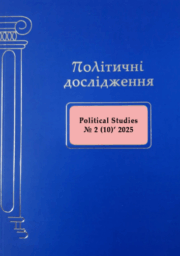
The founder of the publication is Kuras Institute of Political and Ethnic Studies of the National Academy of Sciences of Ukraine.
The thematic direction of the journal is presented by the following headings:
- Theory and history of political science. Political philosophy;
- Political institutions and processes. Political sociology;
- Political culture and ideology. Political psychology;
- Political problems of international systems and global development;
- Ethnopolitics and ethnostate studies. Fundamentals of national security.
More details – at the link: Information for authors. Requirements for manuscripts of articles (in Ukrainian)
Manuscripts of articles, which will be published in the first issue of the journal, are accepted until February 1, 2021.
E-mail address of the editorial office: editor_ipiend@ukr.net
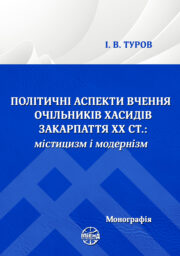
The book results from the research on “Ethno-political factors of consolidation of the contemporary Ukrainian society” carried out by the scholars of the ethno-political department of the Ivan F. Kuras Institute of Political and Ethnic Studies in 2017-2019. It presents the detailed analysis of ethno-political factors of consolidation of the contemporary Ukrainian society, outlines the conceptual framework for the analysis, and examines the available relevant studies on the topic. The dynamics of changing ethno-cultural and social identities in the aftermath of the Revolution of Dignity is scrutinized as the most complex and controversial phenomenon. Substantial attention is paid to the language and ethno-confessional aspects of societal consolidation, politics of memory and actualization of public space. As a corollary, the conceptual vision of evolving Ukrainian society is introduced and discussed.
The study targets the prospective audience of scholars and teachers, students and journalists, civic activists and NGO leaders, as well as policy makers and civic servants who elaborate, legislate, and implement in practice the strategies of national consolidation. (more…)
The proposed collective scientific work considers the issues of social and political activity and historical memory of the Jewish community in the context of Ukraine’s European integration. The paper examines the influences of historical memory on the formation of the political and cultural identity of the Jews of Ukraine, the role and contribution of the Jewish community to the European development of the country.
The collective monograph is intended for political scientists, historians, humanities students, all those who are interested in research in the sphere of Ukrainian Judaism and the modern development of political, social, religious and cultural life of the Jewish community of Ukraine. (more…)
On November 16, 2020, Kuras Institute of Political and Ethnic Studies of the National Academy of Sciences of Ukraine announced a competition for the post of a vacant post:
Chief Research Scientist (Doctor of Sciences) of the Department of National Minorities
The duration of the competition is one month from the date of the announcement.
The Institute does not provide residential space.
The documents are sent to:
01011 Kyiv – 11, 8 General Almazova St.
Kuras Institute of Political and Ethnic Studies of the National Academy of Sciences of Ukraine
Human Resources Department
Help by phone 285-70-49
The monograph deals with the multinational socio-political, socio-cultural space of Ukraine in 1990’s of 20 century – beginning of 21 century in the scientific discourse of scientists, polylogue of state bodies and public movements. A comprehensive study of national minorities is conducted as a subject of Ukrainian statebuilding, a determining factor of socio-cultural progress, socio-political transformations and, at the same time, political instability in the context of the foreign policy challenges of 1990’s of 20 century – beginning of 21 century, which brings Ukrainian society closer to the peculiar point of bifurcation – a new state, promising solutions for conflict resolution.
The monograph is the first special study of the history of national minorities of Ukraine in the context of socio-political transformations of 1990’s of 20 century – beginning of 21 century using a large array of historical and political materials and first introduced into scientific circulation archival documents. The book is intended for scholars, teachers, students and everyone interested in history.
On October 20, 2020, the XXIII All-Ukrainian Scientific and Practice Conference «Ukrainian Studies in the System of National Education, Science, Humanitarian Policy of the State» took place in the Research Institute of Ukrainian Studies.
The employees of Kuras Institute of Political and Ethnic Studies of the National Academy of Sciences of Ukraine took an active part in the work of the scientific event.
The speakers at the plenary session were: Doctor of Historical Sciences, Professor, Chief Research Scientist Tetyana Bevz («Ukrainian Identity and National Security in the Challenges of Modernity») and Doctor of Political Science, Leading Research Scientist Vyacheslav Yaremchuk («To the problem of formation and transformation of identities and values of the regional political elite of Ukraine (on the example of Ivano-Frankivsk region».

Tеtyana Bevz

Vyacheslav Yaremchuk
Under sectional sessions, Mykola Horbatyuk, Candidate of Historical Sciences, Senior Research Scientist made a report «Formation of the regional political elite of the Vinnytsia region (1991-2019) ».
The main features of the speech «Regional political elite of Lvyv region: peculiarities of formation (1990-2019) » during the discussion were presented by Candidate of Political Sciences, Researcher Alina Yasinska.
At the end of the sections work, the participants summed up the results of the conference, drafted and adopted a resolution on the state of Ukrainian studies, humanitarian education and science in Ukraine, with an appeal to public authorities and the scientific community.

From left to right: Vyacheslav Yaremchuk, Tetyana Bevz, Alina Yasinska, Mykola Horbatyuk
October 28, at Kuras Institute of Political and Ethnic Studies of the National Academy of Sciences of Ukraine, the Director of the Institute Oleg Rafalskiy had a meeting with the Director of the Representative office of the Polish Academy of Sciences in Kyiv Henryk Sobchuk during which they discussed new challenges and opportunities for cooperation between the Ukrainian and Polish academies after the election of the new leadership of the NAS of Ukraine and in he context of the pandemic; on one hand, it has largely paralyzed the usual forms of scientific communication, and on the other hand, it has given impetus to a more dynamic development of new mechanisms of interaction in the scientific world. During the visit of the Polish colleague, special attention was paid to the discussion of topics related to the problems that are the subject of research of the Institute, in particular the decentralization processes in Ukraine, actualized by local elections, ethnopolitical factors of the consolidation of Ukrainian society and the role of the Polish factor in this process.

Oleg Rafalskiy and Henryk Sobchuk
On October 26, 2020, Oleksandr Maiboroda, Deputy Director of Kuras Institute of Political and Ethnic Studies of the National Academy of Sciences of Ukraine, Doctor of Historical Sciences, Corresponding Member of the National Academy of Sciences of Ukraine, met with Talgat Kaliyev, Director of the Institute of Applied Ethnopolitical Studies of the Republic Kazakhstan. During the meeting the ethno-political situation in both countries was discussed, the prospects of mutual participation in joint research projects were considered.
On the right-to-left of the photo: T. Kaliyev, O. Maiboroda, Counsellor of the Embassy of the Republic Kazakhstan in Ukraine, S. Konovalov

On November 1, 2020, Kuras Institute of Political and Ethnic Studies of the National Academy of Sciences of Ukraine announced a competition for the post of a vacant post:
- Chief Research Scientist (Doctor of Sciences) of the Department of Ethno-Political Science
The duration of the competition is one month from the date of the announcement.
The Institute does not provide residential space.
The documents are sent to:
01011 Kyiv – 11, 8 General Almazova St.
Kuras Institute of Political and Ethnic Studies of the National Academy of Sciences of Ukraine
Human Resources Department
Help by phone 285-70-49
In late September and early October, Ukraine hosts days of remembrance dedicated to the 79th anniversary of Babyn Yar tragedy. On this occasion, a leading researcher at Kuras Institute of Political and Ethnic Studies of the National Academy of Sciences of Ukraine, Head of the Ukrainian Center for Holocaust Studies, Candidate of Historical Sciences Anatoliy Podolsky was an active participant on the air of Ukrainian national TV channels, where he gave his expert assessment not only of past but also current state of honoring the victims of Babyn Yar
Podolsky’s speech in the project “Position” on the parliamentary TV channel “Rada” can be viewed at: https://www.youtube.com/watch?v=ts-lNEYSJ_E
The discussion with the participation of A. Yu. Podolsky on the TV channel “Public” on the memorialization of the territory of Babyn Yar is available at the link:
On September 24-25, the XIII Ukrainian-Polish meeting took place, traditionally organized by Vasyl Stefanyk Precarpathian National University, the University of Warsaw, the editorial office of the newspaper “Kurier Galicyjski” and Kuras Institute of Political and Ethnic Studies of the National Academy of Sciences of Ukraine. This is the only regular scientific forum, which for 13 years in a row has brought together well-known Ukrainian and Polish experts, diplomats and scientists. It traditionally takes place in Yaremche, but 2020 has made its adjustments. So this year it is an online conference and its theme “For our and your freedom: lessons of the past and modern realities (to the 100th anniversary of the union of Simon Petliura and Józef Pilsudski and the Battle of Warsaw”). (more…)
On August 26, Dr. Mykola Riabchuk, a Senior Research Fellow of Ethnopolitics Department, moderated the online discussion on the Ukrainian edition of the Harvard professor Serhii Plokhy’s book “Forgotten Bastards of the Eastern Front”, organized by the Ukrainian Fulbright Circle. In his introduction, Dr. Riabchuk distinguished rich sources from both Ukrainian and American archives, explored by Prof. Plokhy, and praised in particular the ‘anthropocentric’ character of his study – the persistent attempts to present highly important historical events through the lives of concrete people, their letters, diaries, and memoirs. The history of short-lived (in 1944-1945) American bases of strategic aviation in Poltava region represents not only a little-known aspect of the Soviet-American WWII cooperation but also all the accompanying tensions and difficulties in the process, determined by fundamental ideological incompatibility of the partners and their underlying values. In the Q & A session that followed, Prof. Plokhy elucidated details of his Ukrainian research and presented a broader vision of the USA–USSR relations during and after the war. The video-record of the event is accessible at: https://www.youtube.com/watch?v=omVi9KH9mek&fbclid


On August 20, Mykola Riabchuk, the Senior Research Fellow of the Ethnopolitics Department, delivered a public lecture at the Kharkiv Museum of Literature, entitled “From ‘Little Rus’ to Ukraine: Ukrainian Identity in the longue durée historical perspective”. In his presentation, he problematized the traditionally negative attitude toward the ‘Little Russian’ identity as a kind of pathology, a product of destruction and degradation if Ukrainian identity under the imperial assimilationist pressure. In fact, the speaker averred, the ‘Little Russian’ identity is much more complex and ambivalent phenomenon, capable to perform different functions under various circumstances. Initially, in the 17-18th centuries, it was a form of symbolical affirmation of the higher status of Ukrainian (‘Little Russian’) elites within the new-born empire. In the 19th century, it became a form of survival of Ukrainian identity in the permissible garb of local patriotism. Under communism, it played a similar role in an ideologically modified form of the Ukrainian Soviet identity. And finally, since Ukraine’s independence, it acquired the features of a ‘Creole’ identity, akin to that of many other postcolonial states. On the one side, it reflects a substantial support for national independence and the discourses that legitimize it. On the other side, it still substantially differs in cultural codes and value-based attitudes from the historically informed ‘aboriginal’ identity. The lecture and the subsequent discussion are accessible [in Ukraiian] at: https://www.youtube.com/watch?v=GHQXDgaUpj8
Concise transcript has been published in “Zbrucz”: https://zbruc.eu/node/100091


On May 29, Mykola Riabchuk, a Senior Research Fellow of the Ethnopolitical Department, delivered an online lecture at the Shevchenko Scientific Society in Toronto on the topic of his recently published book – “Reducing Ambivalence. Ukrainian Identity After Six Years of War and Three Decades of National Independence”. In his presentation, Dr. Riabchuk argued that Ukrainian identity, contrary to some stereotypes, is quite strong and resilient, but still is not number one in the hierarchy of other identities for many citizens, insofar аs it gives priority, in some cases, either to local/regional identities or supranational (Pan-Slavonic, post-Soviet, Eastern Orthodox), or both. Emancipation from this archaic and retrograde ‘East Slavonic’ community, subsumed by Moscow under the rubric of “Russkii mir”, is nowadays a matter of national security and successful modernization.
The lecture and discussion (in Ukrainian, with slides in English) are accessible online at https://www.youtube.com/watch?v=bQGGW7Fz20s&feature

On May 20, 2020, scientists of the Institute Volodymyr Kulyk, Mykola Ryabchuk and Svitlana Nabok took part in the online presentation of the book “Interpretations of the Russian-Ukrainian conflict in Western scientific and expert-analytical works.” The monograph presents the results of a study, which, under the leadership of Vladimir Kulik, was carried out as part of the target research program of the National Academy of Sciences of Ukraine “The Sociocultural Space of Ukraine in the Formation of a National Strategy: Territorial Identities, Identification Symbols, Mental Practices”.
On May 18-19, 2020, on the Microsoft Teams platform, the International Research and Practical Conference “Ethnicity. Nationalism. Globalism was held. The organizers of the conference, together with Kuras Institute of Political and Ethnic Studies of the National Academy of Sciences of Ukraine, were The Ministry of Education and Science of Ukraine, Hryhoriy Skovoroda State Pedagogical University of Pereyaslav-Khmelnytsky, the European Association of Security (Poland), Istanbul Foundation for Science and Culture (Turkey), Izmail State University of Humanities, and Drohobych Ivan Franko State Pedagogical University, Donbass State Pedagogical University. In total, the event was attended by 150 scientists from 6 countries.
On the 8th of May, Dr. Mykola Riabchuk, the Senior Research Fellow of the Ethnopolitics Department, inaugurated the international conference “Peace and War”, that was organized by the Ukrainian PEN Center and University of “Kyiv Mohyla Academy” on the 75th anniversary of conclusion of the WWII in Europe. Held under the force majeure circumstances, the conference was streamlined in youtube and broadcasted by three major Ukrainian TV channels. As the chair of the conference organizing committee, Dr. Riabchuk greeted participants and called them in to pay a particular attention to the brazen attempts of some revisionist states, primarily Russia, to employ the weaponized history in its hybrid war against Ukraine as well as in its reckless confrontation with the international democratic community. Two dozen participants – the leading Ukrainian and international scholars, politicians and public intellectuals – discussed, within four thematic panels, the topical issues of the history of WWII and its consequences for the postwar Eastern Europe, Ukraine, and today’s world. The recorded streamline of the conference is accessible online at the PEN Ukraine website (scroll down the page to select the panel): https://pen.org.ua/en/mizhnarodnyj-proekt-myr-i-vijna-do-75-richchya-zavershennya-drugoyi-svitovoyi-vijny-v-yevropi/

As a result of a joint project carried out by Kuras Institute of Political and Ethnic Studies of the National Academy of Sciences of Ukraine and the Institute of Cultural Studies of the National Academy of Arts of Ukraine, a scientific monograph by Olexander Hrytsenko “Decommunization in Ukraine as a state policy and as a socio-cultural phenomenon» was published.
Scientific journal «POLITICAL STUDIES»
Новини
Оголошення

